A persistent musty smell with no visible water usually means something is staying damp where you cannot see it — inside a wall, under flooring, or beneath a cabinet. In most cases the cause is a slow hidden leak feeding mold or mildew in an enclosed space. Your nose is actually a good detector: a smell that stays in one spot day after day is pointing at a location. This article covers the signs to check, the most common hiding spots in Leesburg homes, and how professional leak detection finds what your eyes cannot.
A musty smell that stays in one spot usually means hidden moisture — often a slow leak inside a wall, under a sink, or beneath flooring. Check under sinks, around toilets, behind appliances, and near AC vents, and note where the smell is strongest. If it persists for more than a week or two, or any visible sign appears, have it investigated — hidden leaks only get easier to fix the earlier they are found.
In This Article
What To Do Right Now
A musty smell is your early warning system working correctly. Take these steps before the trail goes cold:
- Map the smell. Walk the house slowly and note exactly where the odor is strongest — which room, which wall, high or low. Write it down.
- Check the usual suspects. Open under-sink cabinets, look behind toilets, pull the washing machine forward a few inches, and sniff inside closets on exterior walls.
- Feel for dampness. Press baseboards and the bottom of drywall near the smelliest spot. Cool, soft, or discolored material is a strong clue.
- Check your air conditioning. Sniff at supply vents and the return grille. Look at the condensate drain line and drain pan for standing water or algae.
- Do not mask it. Skip the air fresheners — they hide the warning without fixing the moisture.
- Start a simple log. Note the date, where the smell is, and whether it changes with weather or AC use. This log is genuinely useful to a technician.
A musty smell that keeps getting stronger, or any soft drywall, discolored baseboards, or warped flooring along with it, means hidden moisture is spreading. Call (352) 703-8206 — we answer 24/7 and arrive in 30–45 minutes.
Signs To Look For
The smell itself is sign number one, but hidden leaks leave companions if you look closely.
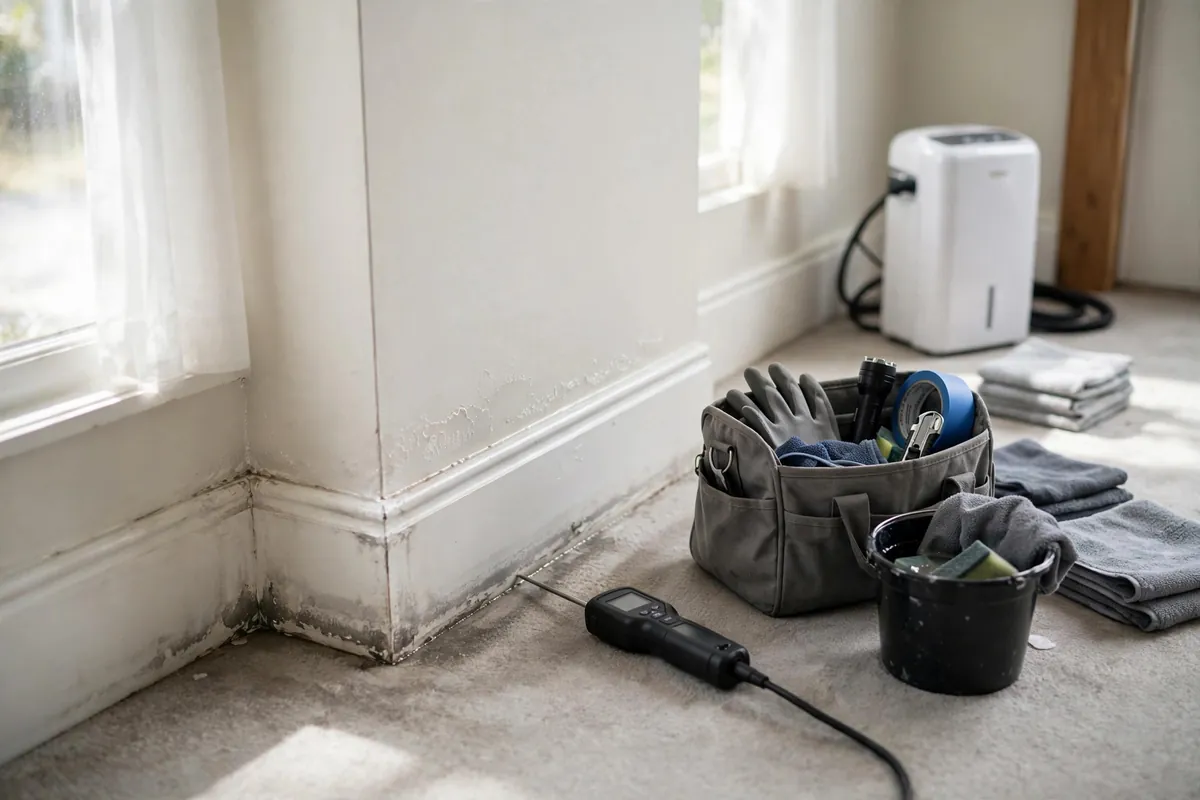
Baseboards are often the first visible casualty: paint that bubbles or peels low on the wall, wood that looks darker or feels soft, or a gap opening between the baseboard and the floor. Flooring tells its own story — laminate or wood with lifting edges, tile with grout that stays dark, or carpet that feels damp in one spot. On walls, look for faint discoloration, paint that has lost its sheen in a patch, or drywall that gives slightly when pressed.
Pay attention to timing. A smell that strengthens after showers, laundry, or dishwashing points toward a drain-side leak. One that appears when the air conditioner starts points toward the condensate system. A smell that never changes regardless of what you do suggests a pressurized supply leak feeding moisture continuously — the kind our whole-home leak detection service is designed to find.
Musty smells drift on air currents, so the strongest smell is not always at the source. Note where the smell is most consistent rather than where it is momentarily strongest — consistency marks the location.
Common Causes
When a musty smell traces back to a hidden leak, these are the hiding spots we find most often:
- Under-sink supply and trap leaks. A slow drip at a shut-off valve or trap keeps the cabinet floor damp. The closed cabinet concentrates the smell while hiding the water.
- Toilet base seepage. A failing wax ring lets a little water escape with every flush. It soaks the subfloor around the toilet while the bathroom floor looks normal.
- Shower and tub surrounds. Failed grout or caulk lets shower water into the wall cavity. The wall looks fine from the bathroom side while the cavity stays wet.
- Dishwasher and refrigerator lines. Supply lines to these appliances run through cabinets and walls where a slow leak goes unnoticed for months.
- Air conditioning condensate problems. A clogged condensate drain or cracked drain pan leaves water in the air handler area, and the duct system spreads the musty smell through the house.
- Slab-adjacent moisture. In homes on concrete slabs, water wicking at the slab edge or a slab leak can keep baseboards and lower drywall damp along an exterior wall.
Non-leak causes exist too: chronically high indoor humidity, a dirty evaporator coil, or poor bathroom ventilation can all smell musty. The difference is that these tend to affect the whole house or follow humidity patterns, while a leak-driven smell stays local. When the smell has a clear home base, treat it as a leak until proven otherwise.
What Happens If You Wait
A musty smell is the sound of a problem asking to be found early. Waiting rarely improves the situation.
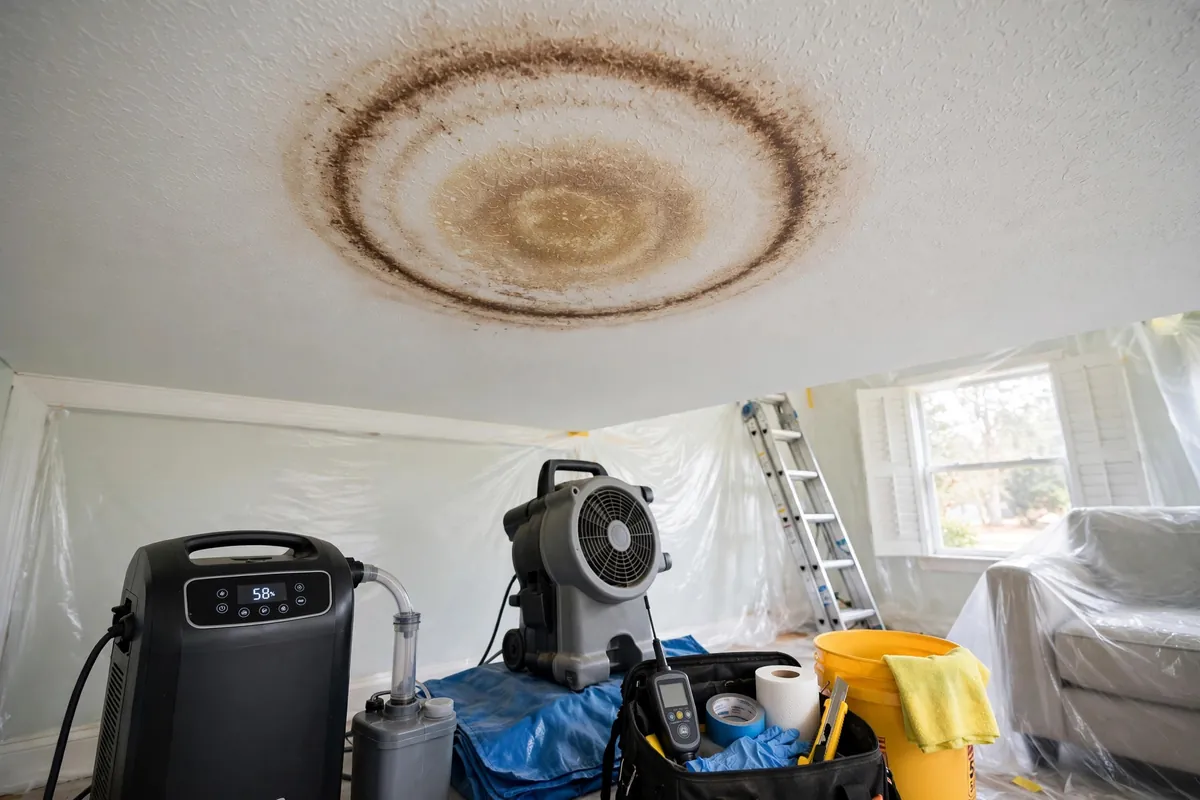
The moisture behind the smell does not dry on its own inside an enclosed wall or cabinet — there is no airflow to carry it away. Materials that stay damp deteriorate: drywall softens, wood swells and discolors, and the musty odor deepens as microbial growth spreads through the damp area. What began as a smell in one cabinet can become soft subflooring, stained drywall, or warped flooring that needs replacing rather than drying.
The leak itself continues meanwhile. Supply-side leaks flow constantly; drain-side leaks add water with every use. A fitting that seeps today can fail more seriously tomorrow — not as a scare tactic, just as the ordinary behavior of worn plumbing parts under daily pressure and vibration.
There is a practical cost to waiting as well: the longer water sits inside a structure, the larger the affected area becomes, and the larger the repair. Early detection usually means a small, targeted fix. Late discovery means replacing materials. Your nose gave you the early version — it is worth acting on.
Safe DIY Checks Vs When To Call A Professional
Homeowners can safely do a lot of detective work on a musty smell — as long as the work stays on the surface. Here is the line:
| Situation | What You Can Safely Do | When To Call A Professional |
|---|---|---|
| Musty smell in one cabinet or closet | Empty it, look and feel for dampness, check supply valves and traps | If everything looks dry but the smell persists |
| Smell strongest near AC vents | Check the condensate drain line and pan for standing water | If the pan is cracked or the smell continues after clearing the line |
| Baseboard or drywall feels damp | Photograph it, note the location, keep the area ventilated | To map the full wet zone and trace it to its source |
| Smell throughout the whole house | Check humidity levels and AC filters; improve ventilation | If humidity is normal and the smell persists — hidden moisture needs instruments |
| You suspect mold inside a wall | Do not open the wall yourself | Call — disturbing it without locating the moisture source makes things worse |
One caution about the moisture meter row: inexpensive pin meters from hardware stores are fine for confirming a damp baseboard, but interpreting readings inside walls takes experience. A pro-grade survey maps the whole wet zone and traces it to a source rather than just confirming one damp spot.
If your checks reveal an obvious source — a visibly dripping trap, a soaked cabinet floor — you can shut off the fixture valve and call for repair. But if the smell persists with no visible source, that is precisely when detection equipment earns its keep. Our guide to finding wall leaks without removing drywall shows how the search works once the surface clues run out.
How The Service Fixes It
A musty smell with no visible water is one of the most common reasons homeowners call us — and one of the most satisfying to resolve, because the answer is usually hiding in a specific, findable place.
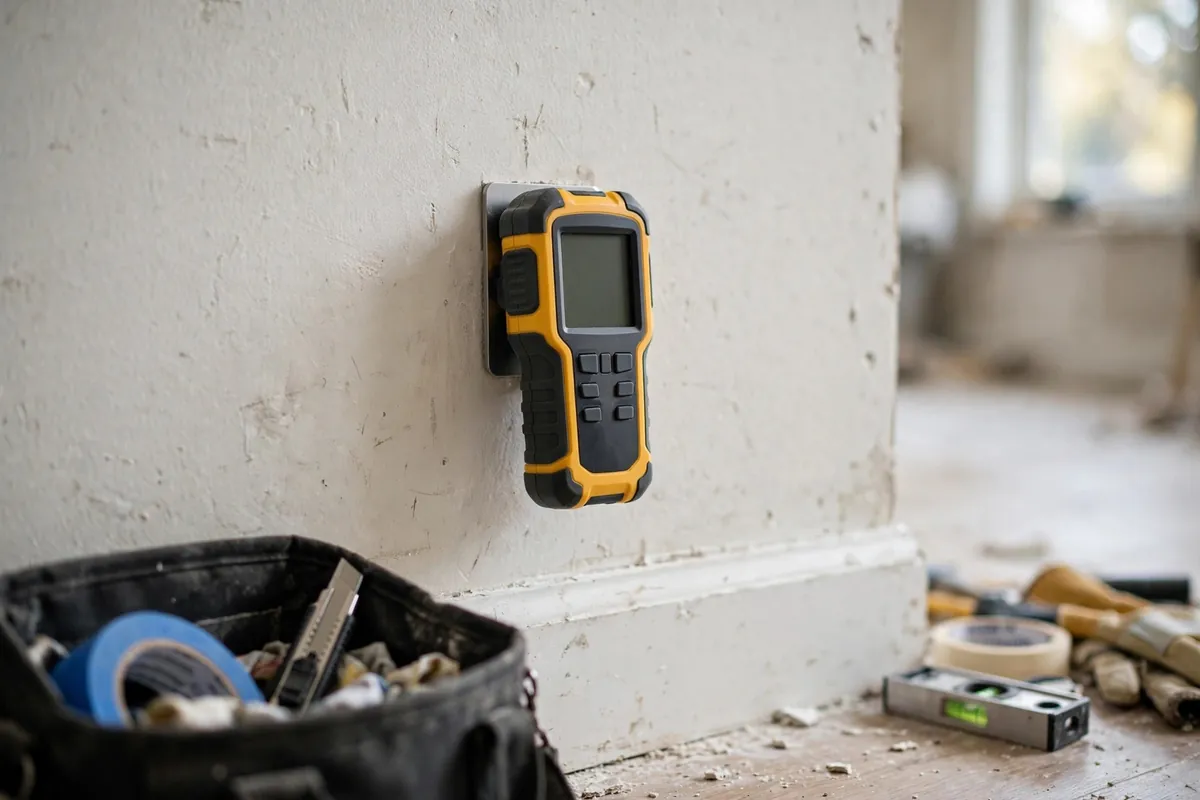
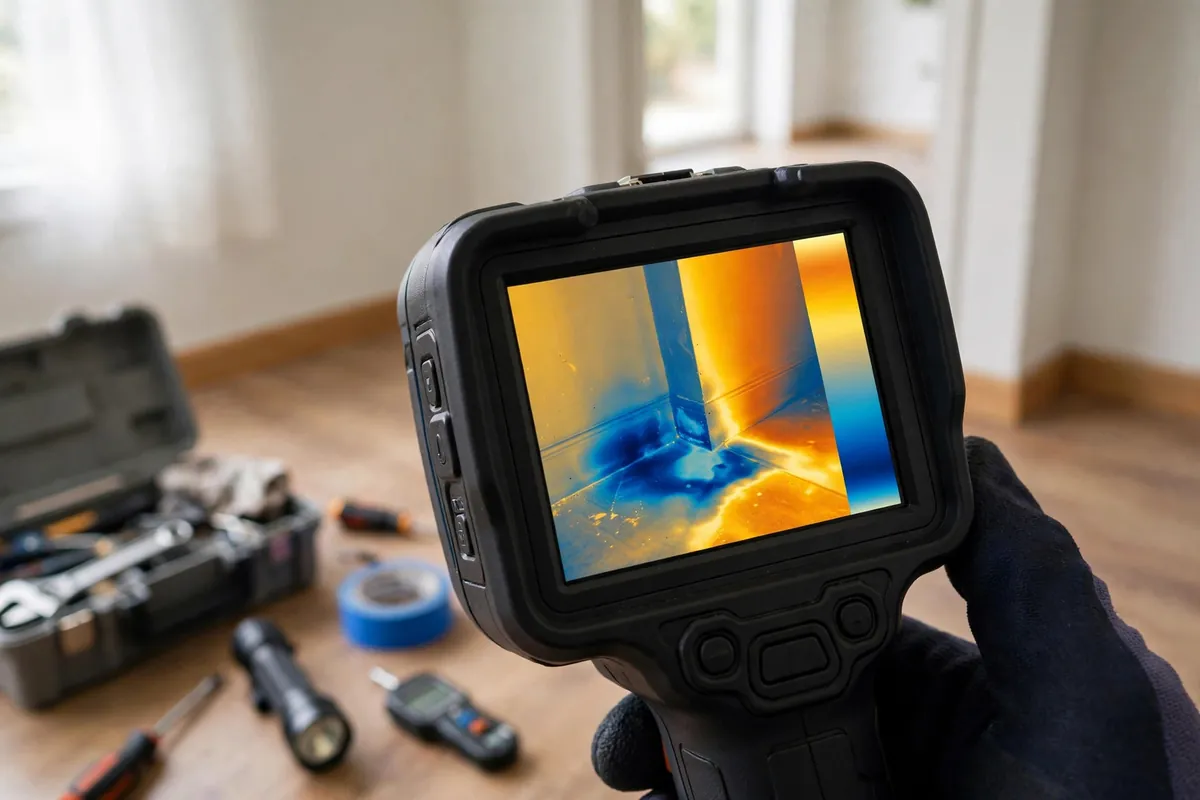
We start with your smell map: where it is strongest and most consistent. Moisture meters then check baseboards, lower drywall, and cabinet floors in that zone to find where dampness actually lives. Thermal imaging scans the walls and floors for the cool signature of hidden moisture, which often reveals a wet area much larger — or much more precisely located — than the smell suggested. If the evidence points to a pressurized line, acoustic listening confirms it; if it points to a drain, we test by running fixtures and watching the response.
Once located, the fix targets the source: a resealed trap, a replaced supply valve, a new wax ring, a cleared condensate line — whatever the instruments found. The damp area then needs drying before any cosmetic repair, because sealing wet material inside a wall just restarts the cycle.
If the smell is strong, spreading, or joined by visible staining or soft materials, do not wait for it to explain itself further. Our emergency leak detection page covers urgent cases, or call (352) 703-8206 anytime — we answer 24/7 and arrive in 30–45 minutes. For steady, non-urgent cases, our standard water leak detection service will track it down.