Here is the single most useful fact about overnight pool water loss: evaporation nearly stops at night. Without sun and with cooler air, a pool loses very little water between bedtime and morning — so if the level is visibly lower when you wake up, evaporation is not the explanation.
That makes overnight loss one of the clearest early warnings of a real leak. The good news is that a few safe checks tonight can tell you a lot about where the water is going and how urgent it is. This guide covers those checks in order, then what each result means.
Pools barely evaporate at night, so a visible overnight drop almost always means a leak rather than evaporation. Check the water level against a tape mark, walk the equipment pad for wet spots, and look at whether the waste line is trickling. If the level keeps falling or the pump is sucking air, call for leak detection promptly — overnight loss does not fix itself.
In This Article
What To Do Right Now
Do these checks in order tonight or first thing in the morning. They are all safe and need no tools:
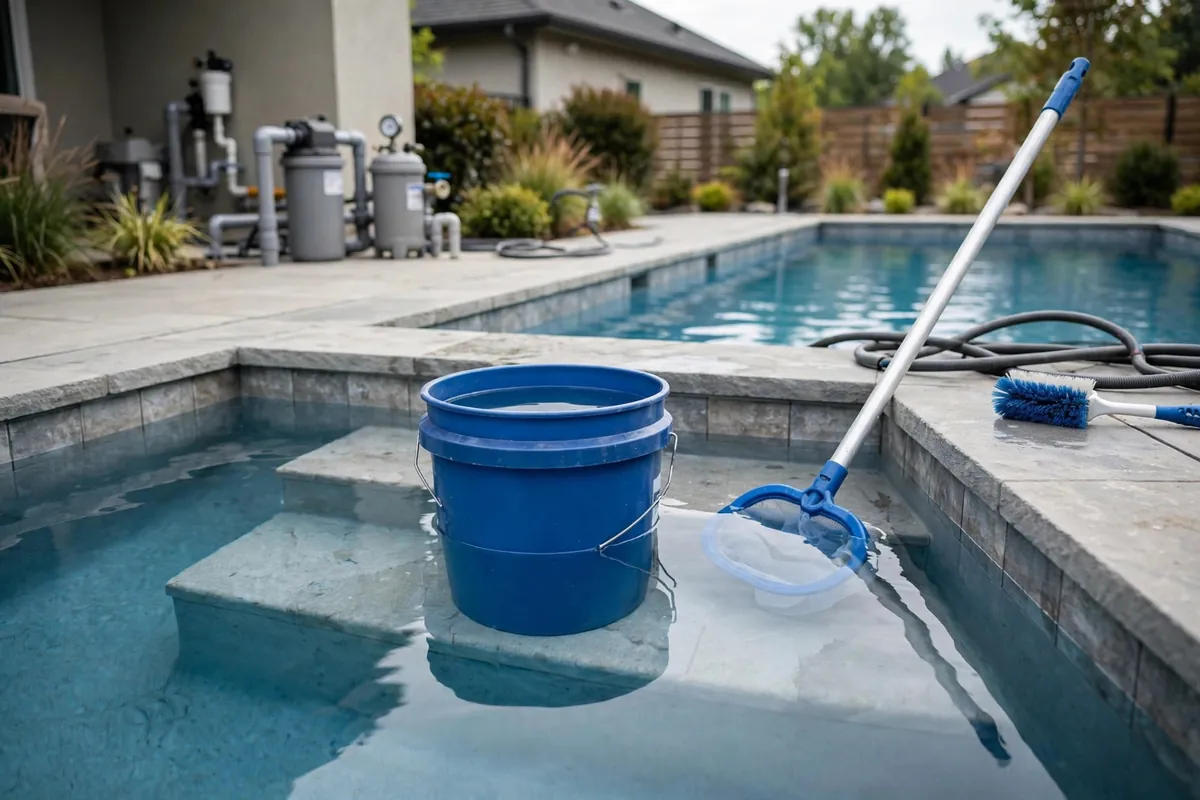
- Mark and measure. Put tape at the current waterline, write the time on it, and check it again in the morning. A measurement beats a memory.
- Look at the skimmer. If the waterline is at or below the skimmer mouth, add water with a hose until it reaches the middle of the skimmer. A pump sucking air through an exposed skimmer can be damaged quickly.
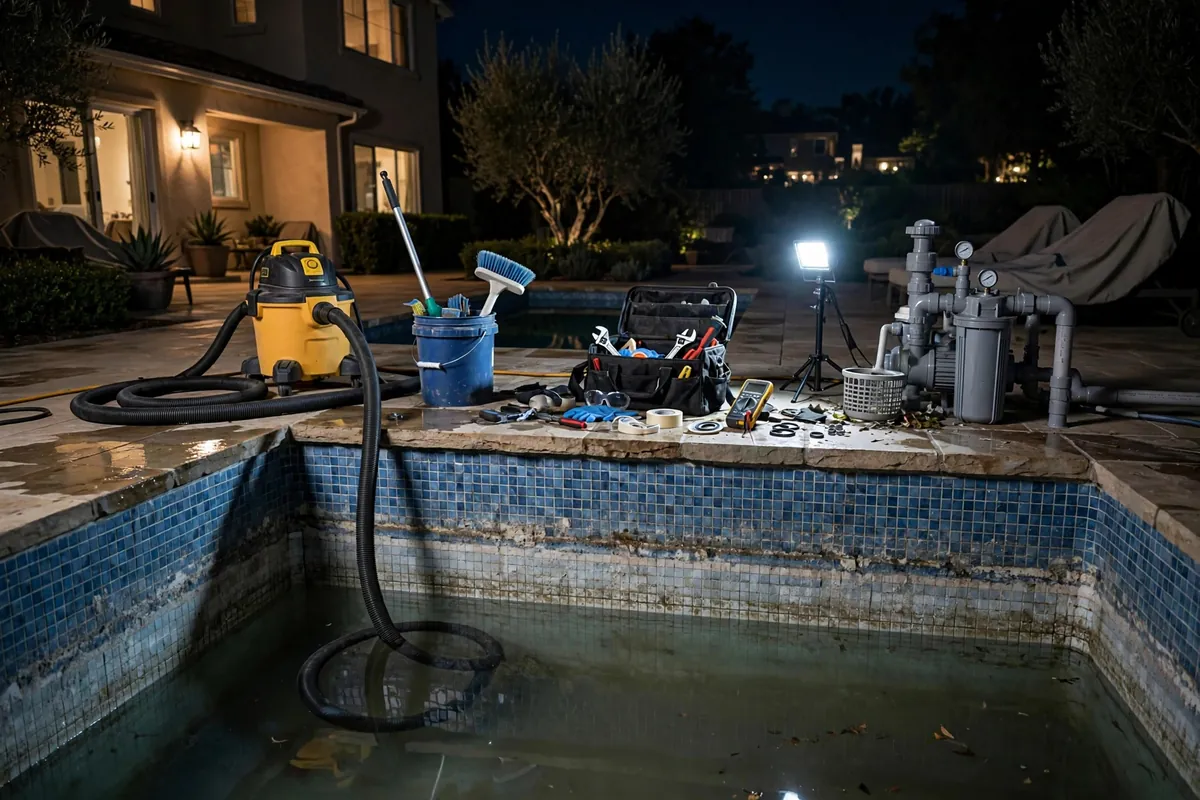
- Walk the equipment pad with a flashlight. Look under the pump, filter, and heater for fresh drips, puddles, or damp concrete. Night is actually a good time for this — fresh wetness stands out.
- Check the waste or backwash line. Put your hand near the waste line outlet. If water is trickling out while the filter is in normal mode, the valve is leaking pool water to waste around the clock.
- Look at the ground around the pool. Soft, soggy, or sunken soil beside the pool shell suggests water escaping underground.
- Note whether the pump ran overnight. If the loss only happens when the pump runs, the leak is likely in the pressurized plumbing. If it loses water with everything off, the structure is suspect. Our bucket test guide explains how to confirm this.
If the level is still falling fast in the morning, skip further DIY and call for pool leak detection — every day of fast loss is water, chemicals, and money going into the ground.
Call now if the pool lost enough overnight that the skimmer is sucking air or the pump sounds strained — running a pump dry can destroy it, and fast overnight loss means a significant break.
Signs To Look For
Overnight loss rarely travels alone. Look for these accompanying clues:
- A consistent nightly drop. Measure two nights in a row. A leak repeats; a one-time splash-out from an evening swim does not.
- Bubbles in the pump basket. Air entering through a suction-side leak shows up as churning bubbles under the pump lid.
- Weak return flow. Returns that feel weaker than usual suggest the system is losing water or pulling air somewhere.
- Wet equipment pad in the morning. Drips that appear overnight point to equipment or valve leaks rather than the pool shell.
- The autofill running constantly. If you hear the autofill refilling often, it is masking the true loss — turn it off for one night to see the real rate.
- Soggy spots that were dry yesterday. New wet areas around the pool or equipment are fresh evidence.
Write down what you find. A technician will ask exactly these questions, and good notes shorten the visit.
Common Causes
When water disappears overnight, these are the usual explanations, roughly in order of likelihood:
- A leaking multiport or backwash valve. A worn valve gasket lets water flow to the waste line 24 hours a day. This is one of the most common causes of steady overnight loss and one of the easiest to check.
- Equipment drips. Pump seals, filter o-rings, and union fittings drip steadily whether anyone is watching or not.
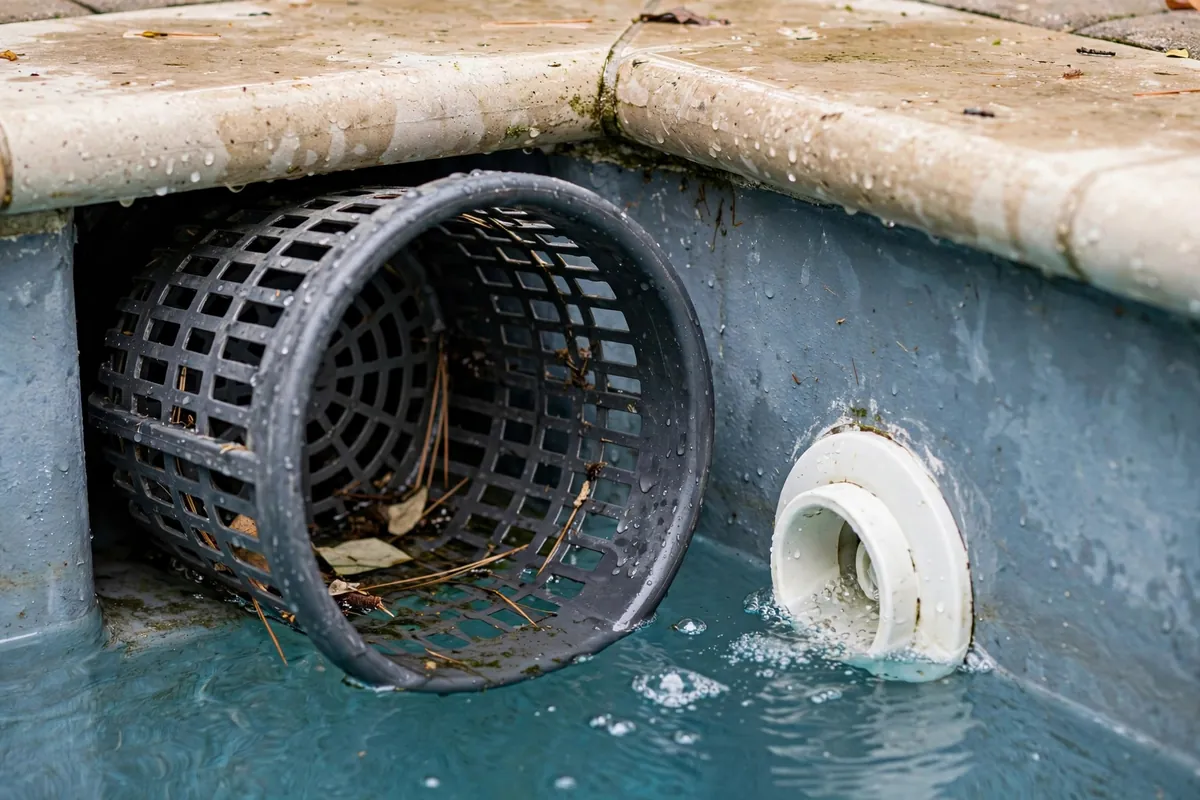
- Skimmer throat cracks. The joint between the skimmer and the pool wall is the single most common structural leak — see the common pool leak spots for what to look for.
- Suction-side plumbing leaks. A break in the lines feeding the pump leaks whenever the pump runs and can pull air into the system.
- Light niche conduit leaks. An unsealed conduit behind a pool light drains water continuously, day and night.
- An overactive autofill or a stuck valve. Sometimes the "loss" is the autofill misbehaving — either failing to keep up or, less often, a fill valve stuck open and overflowing to waste.
Notice what is not on the list: evaporation. At night, in Florida's humid air, it is negligible.
What Happens If You Wait
Overnight loss that goes unaddressed has a few predictable consequences:
- The water bill climbs. A pool refilling itself night after night shows up fast. If your bill has jumped, see how to check for a leak when the water bill is suddenly high.
- The pump runs dry. This is the big one. If the level falls far enough overnight, the morning pump cycle sucks air, overheats, and can fail — turning a leak repair into a leak repair plus a pump replacement.
- Chemicals go sideways. Constantly added makeup water dilutes sanitizer, so the pool gets harder to keep clear and safe.
- Soil erosion continues. Water escaping underground night after night washes soil from around the shell and can settle the deck.
- Small breaks become big ones. A cracked fitting or separated joint under constant water pressure does not heal; it works looser.
A leak that is found this week is almost always a smaller job than the same leak found next month.
Safe DIY Checks Vs When To Call A Professional
Tonight's checks are about observation, not repair. Here is where the line sits:
| Safe Tonight | Call A Professional |
|---|---|
| Mark the waterline and measure the overnight drop | Pressure-test buried suction and return lines |
| Walk the equipment pad and check for fresh drips | Dye-test the skimmer, fittings, and light niches |
| Feel the waste line for trickling water | Repair or replace a faulty multiport valve |
| Look for new soggy ground around the pool | Fix structural cracks or separated joints |
| Add hose water to keep the level at the skimmer | Open or service any electrical pool equipment |
One more safety note: if the water level has fallen below the skimmer, add water before running the pump again, and never open electrical equipment — call a professional for anything involving the light niches, the heater, or the control panel.
How The Service Fixes It
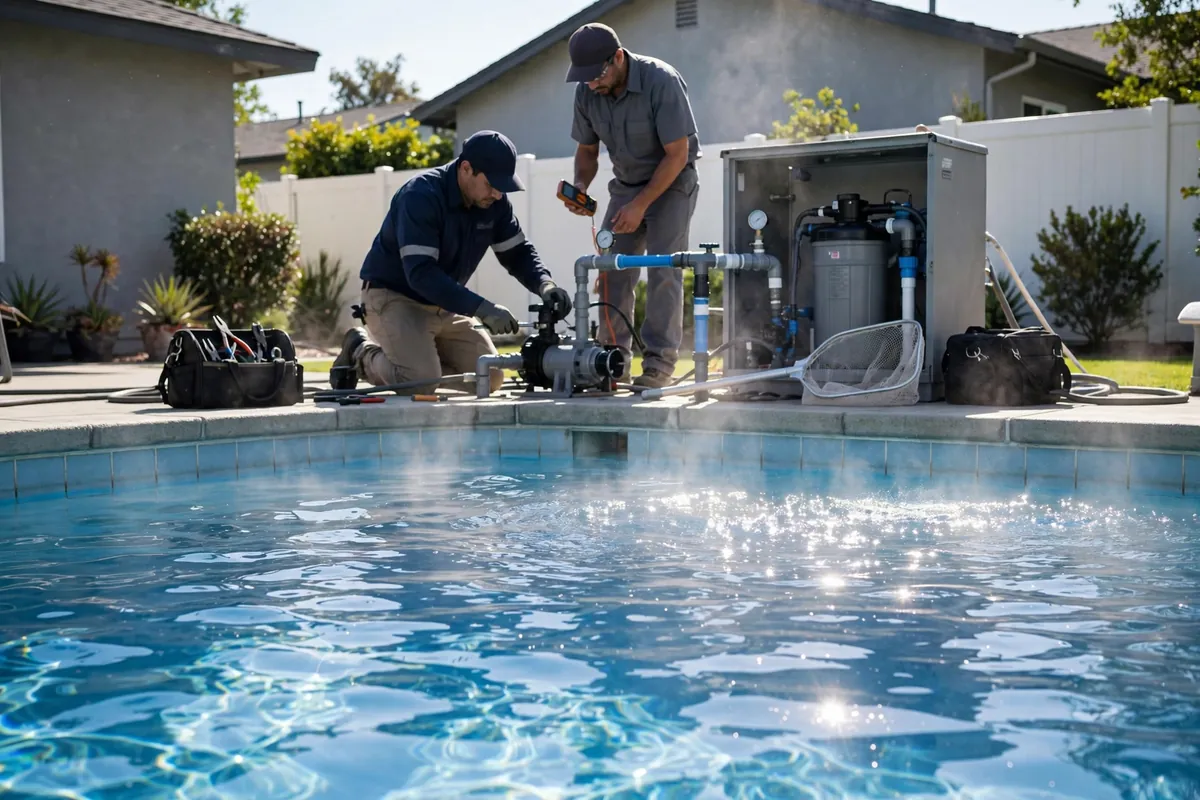
Overnight loss gives a technician a head start, because your notes about pump-on versus pump-off loss already narrow the search. A pool leak detection visit in Leesburg starts with your observations, then moves through dye testing of the suspect fittings and pressure testing of each plumbing line until the exact break is found — usually without any digging.
Because we operate 24/7 with 30–45 minute arrival, you can call in the morning when you see the drop, not next week. And if the pump is already sucking air or the loss is severe, our emergency pool leak service covers it day or night. Call (352) 703-8206.