A brown patch in an otherwise green Florida lawn is frustrating — and it is often your irrigation system telling you something is wrong underground. A cracked lateral line, a broken head, or a stuck valve can starve part of a zone while the rest waters normally, leaving a brown island in the green. The pattern of the patch usually points at the cause: its shape, its location within the zone, and whether the soil nearby is soggy or bone dry. This article shows how to read those clues, what you can safely check yourself, and how professional irrigation leak detection finds the break without tearing up the whole lawn.
A brown patch shaped like a sprinkler's coverage area usually means a broken, clogged, or misaligned head. A patch paired with soggy ground nearby suggests a cracked lateral line — water escaping underground before it reaches the dry area. Run each zone and watch every head; if the heads look fine but the patch persists, the break is underground and needs locating before anyone digs.
In This Article
What To Do Right Now
Before you assume the lawn needs more water — which often makes an irrigation leak worse — work through these steps:
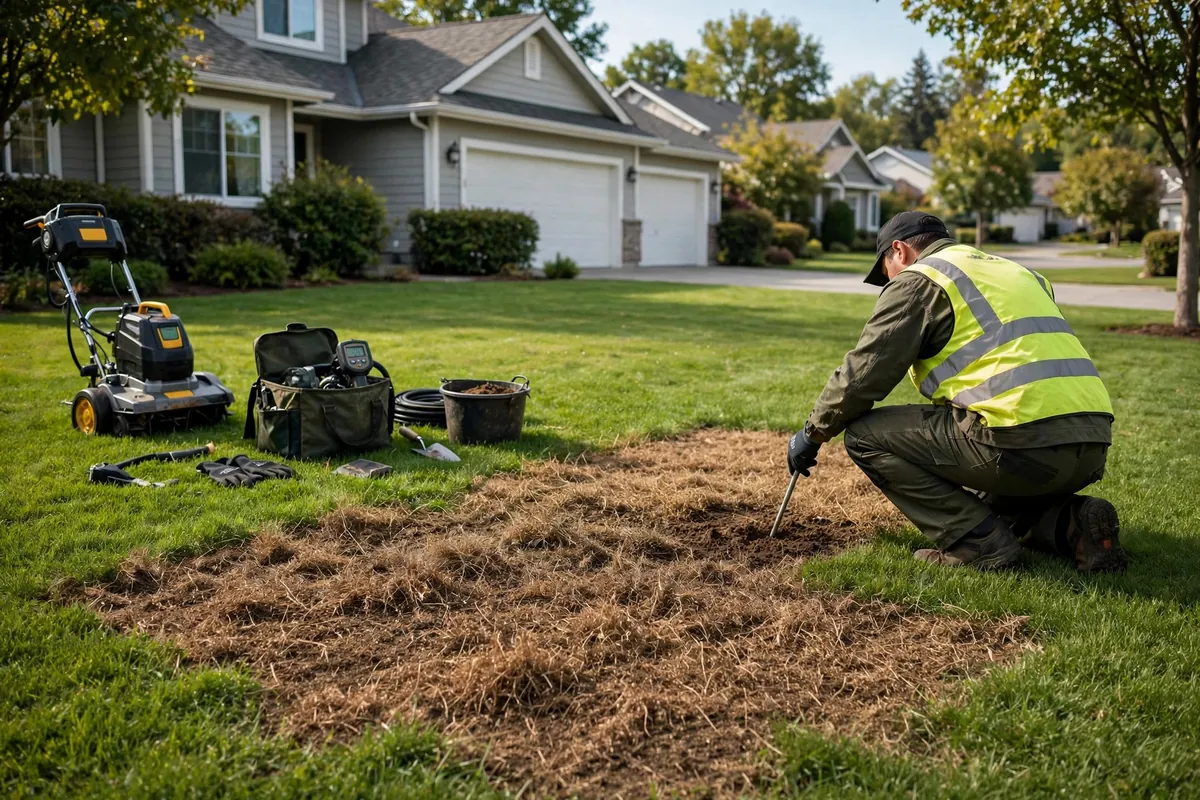
- Look at the pattern, not just the color. Note the patch's shape and where it sits. A wedge, arc, or circle matching a head's spray pattern points at that head. A patch along a straight line suggests a lateral issue.
- Feel the soil. Push a screwdriver or your finger into the soil in the brown patch and in the green grass nearby. Soggy soil near the patch means water is escaping underground; bone-dry soil means water is not arriving.
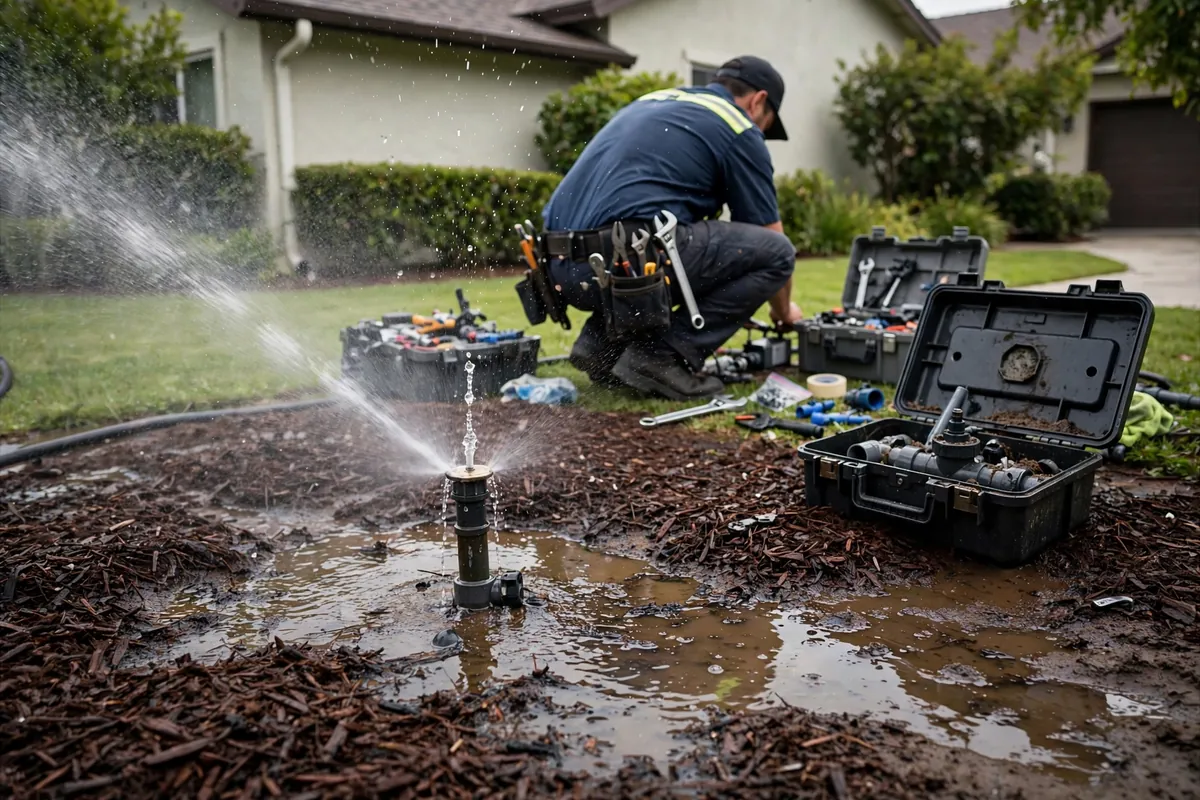
- Run each zone and watch. Walk the zone while it runs. Note every head: does it pop up fully, spray evenly, point the right direction? Watch for water bubbling from the soil between heads.
- Check the obvious damage. Look for heads broken by mowers or trimmers, heads buried under overgrown grass, and nozzles clogged with debris.
- Do not just add water. Running the zone longer or hand-watering on top of a leak wastes water and can flood the already-soggy areas further.
- Note what you find. Write down which zone, which heads look wrong, and where the soil is wet versus dry. This is exactly what a technician will ask.
If a zone will not shut off, water is bubbling from the soil, or your meter is spinning with the system off, call (352) 703-8206 now — we answer 24/7 and arrive in 30–45 minutes.
Signs To Look For
Brown patches from irrigation problems have a distinctive look once you know the language:
- Geometric patches. Irrigation failures follow the system's geometry — wedges, arcs, and straight-edged patches that match head coverage or zone boundaries. Pest or disease damage looks irregular by comparison.
- The soggy-brown pairing. A brown patch with a soggy or sunken area nearby is the classic cracked-lateral signature: water escapes at the break, flooding one spot while starving everything downstream.
- Heads that misbehave. Heads that do not pop up, spray weakly, geyser from the base, or mist excessively (a fine fog instead of droplets) are all telling you something specific — see our guide to diagnosing a flooding zone for what misting means.
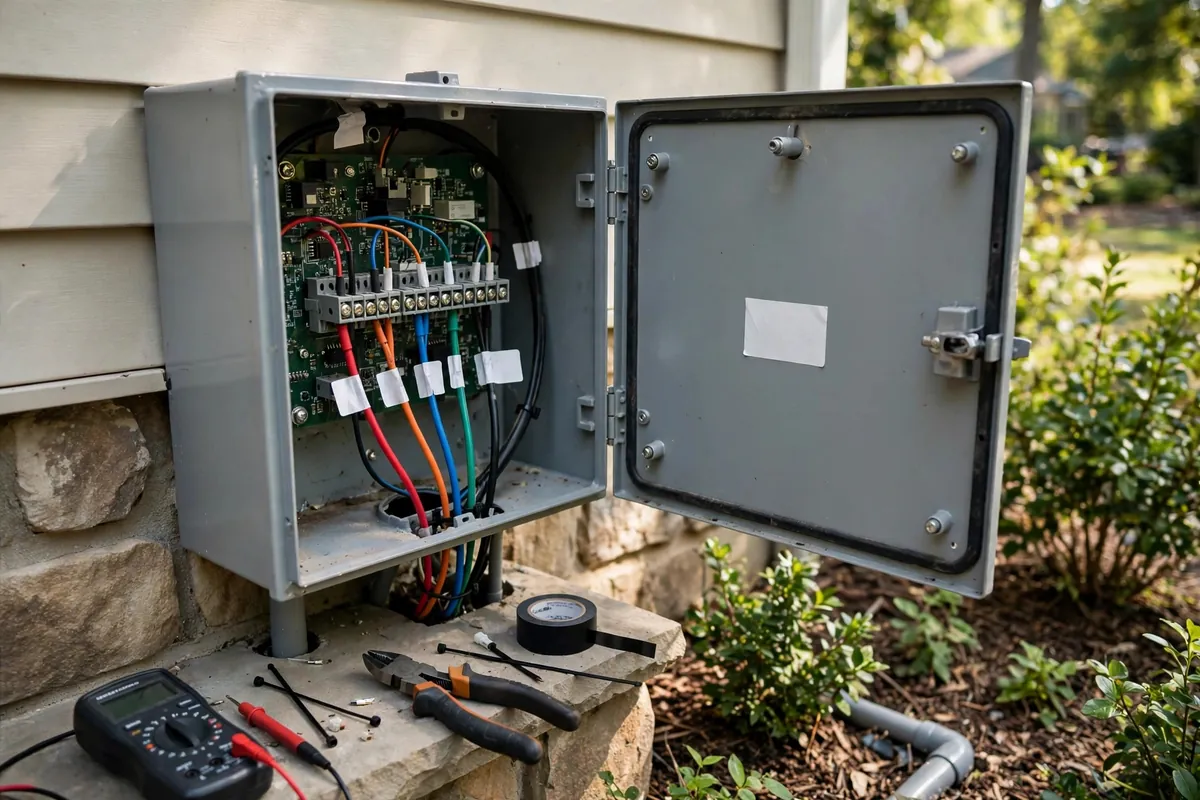
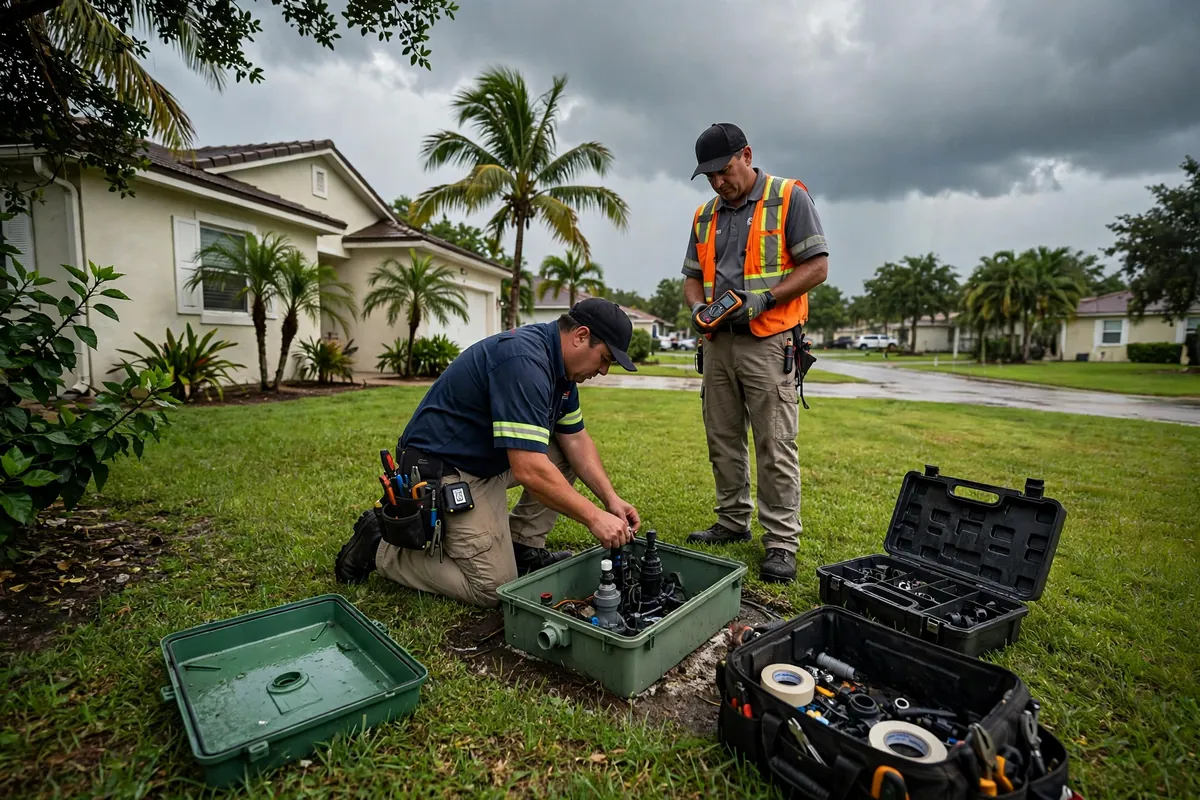
- Water where it should not be. Bubbling from the soil during a zone run, water pooling at the valve box, or a zone that seems wet long after its cycle ended.
- A zone that will not shut off. If one zone runs far beyond its scheduled time — or seems to run on its own — a stuck valve is overwatering some areas while the schedule chaos stresses the whole system.
- A climbing water bill. An underground leak can waste significant water without ever surfacing visibly. If the bill jumps alongside the brown patch, the two are probably related — our article on checking for leaks after a high water bill walks through the meter test.
A long screwdriver pushed into the soil tells you more than looking does. It slides easily into soggy ground, meets resistance in dry ground, and may hit the lateral line itself — giving you a rough map of wet versus dry before anyone digs.
Common Causes
When a brown patch traces back to irrigation, one of these is usually responsible:
- Broken or misaligned heads. Mowers, trimmers, and foot traffic crack heads or knock them out of alignment. The head sprays the fence instead of the lawn, and a brown wedge appears where its coverage used to be.
- Clogged nozzles. Debris, sand, and mineral buildup narrow or block the nozzle. The head pops up and appears to run, but delivers a fraction of its intended water — a sneaky cause because everything looks normal at a glance.
- Cracked lateral lines. The pipes feeding each zone's heads can crack from soil shifting, root pressure, or age. Water escapes underground at the break; downstream heads go weak or dry while the break area floods.
- Stuck or failing valves. A zone valve stuck open overwater continuously; one stuck closed starves its zone. Valve diaphragms wear out, and debris in the valve body prevents full closure.
- Pressure problems. Too little pressure and heads cannot throw their full radius, leaving brown rings at the edges of coverage. Too much pressure and heads mist — the fine droplets drift away instead of landing on the lawn.
- Root intrusion. Tree and shrub roots seek the moisture around lateral lines and can squeeze or penetrate joints over time, restricting flow to downstream heads.
Florida's sandy soils add a wrinkle: water drains through sand quickly, so a leak's surface evidence can appear well away from the actual break. The soggy spot marks where water surfaced, not necessarily where the pipe cracked — one more reason detection comes before digging.
What Happens If You Wait
A brown patch seems cosmetic, which is why irrigation leaks get ignored longer than indoor ones. But the underground problem does not stay the same size.
A cracked lateral keeps washing soil away from around the break with every cycle. That erosion widens the void, stresses more of the pipe, and can eventually undermine nearby hardscaping — walkways, edging, and patio bases all depend on compacted soil that a leak quietly removes. What starts as a small crack becomes a longer broken section, and the repair grows with it.
Meanwhile the water waste continues invisibly. An underground leak does not announce itself the way a geyser head does; it just adds to the bill month after month. And the lawn itself suffers in both directions: the brown patch spreads as downstream heads weaken further, while the flooded area near the break develops its own problems — fungal issues, thinning turf, and soil compaction from constant saturation.
The fix for all of this is the same: locate the break precisely, repair that section, and let the lawn recover. Waiting only enlarges each part of the job.
Safe DIY Checks Vs When To Call A Professional
Homeowners can diagnose a surprising amount of irrigation trouble without digging. Here is where the safe line sits:
| Situation | What You Can Safely Do | When To Call A Professional |
|---|---|---|
| Brown patch with a visibly broken head | Replace or realign the head; clear grass grown over it | If the patch persists after the head is fixed |
| Patch persists but heads look fine | Run each zone and note weak or bubbling areas; check the meter | To locate the underground break before digging |
| Water bubbling from the soil | Mark the spot; avoid digging there yourself | To pinpoint the break and repair it surgically |
| Zone will not shut off | Turn off the irrigation system's main valve | To diagnose and repair the stuck valve |
| Soggy ground near hardscaping | Keep traffic off the soft area; photograph it | Soon — erosion under walkways and edging worsens with every cycle |
The guiding principle: observation is always safe, adjustment of heads is fine, but excavation should follow locating — not precede it. Random digging to find a lateral break usually produces a bigger hole, a longer repair, and occasionally a second broken line.
If your zone check points to heads, our companion article on diagnosing a flooding zone goes deeper on head-level problems. If the evidence points underground, read how irrigation leaks are found zone by zone before anyone picks up a shovel.
How The Service Fixes It
When you call us about brown patches and suspected irrigation leaks, the job is to find the break without excavating the lawn to do it.
We run each zone individually, watching every head and listening for the telltale signs — weak throw downstream of a break, bubbling at the soil surface, pressure that drops when a particular zone runs. The water meter becomes a diagnostic tool: with all zones off, a spinning meter proves water is escaping somewhere in the system. Acoustic listening equipment then traces the lateral lines, homing in on the hiss of water escaping underground. Valve boxes get opened and each valve gets tested for proper opening and full closure.
Once located, the repair is surgical: a small, careful excavation at the marked spot, the cracked section or failed component replaced, and the soil restored. No trench across the lawn, no guessing. The zone gets retested head by head to confirm even coverage before we leave.
If a zone will not shut off, water is surfacing, or the meter is spinning with everything off, our emergency irrigation leak page covers urgent response — or call (352) 703-8206 now. We answer 24/7 and arrive in 30–45 minutes. For steady, non-urgent cases, our standard irrigation leak detection service will find it.