An irrigation system is really several small plumbing systems sharing one water supply — each zone its own circuit of valve, pipes, and heads. That is why professionals find irrigation leaks zone by zone: testing each circuit individually is the only way to know which one is losing water. The process moves from the controller outward — checking programming, running each zone, reading pressure and flow, and finally homing in on the break with listening equipment. This guide walks through each step so you know what a thorough irrigation leak detection visit looks like.
In This Article
How A Zoned Irrigation System Works
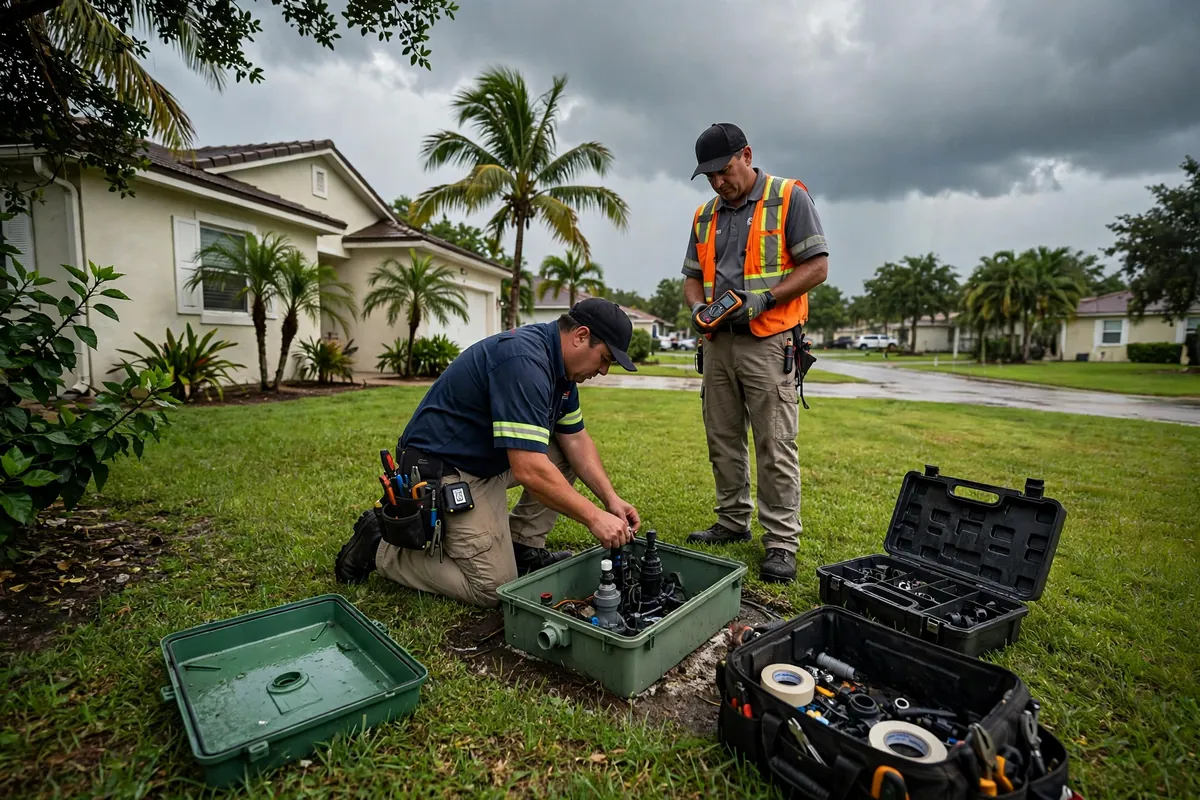
To follow the detection process, it helps to picture what the technician is working with. A typical residential irrigation system starts at a main supply line feeding a manifold — a cluster of zone valves, usually in a green valve box somewhere in the yard. Each valve controls one zone: when the controller sends the signal, the valve opens and pressurizes that zone's lateral lines, and every head on the zone pops up and sprays.
The key insight is hydraulic independence. When zone three runs, zones one, two, and four sit idle with their valves closed. A leak in zone three's lateral affects only zone three's performance — but because the zones share a water supply and a controller, the symptoms can be confusing from the surface. A weak zone three might look like a pressure problem affecting everything, when it is really a break in one circuit.
That independence is also what makes zone-by-zone testing so effective. By running each circuit alone and comparing, the technician turns a whole-yard mystery into a single-zone investigation — and then into a single-pipe repair.
Starting At The Controller
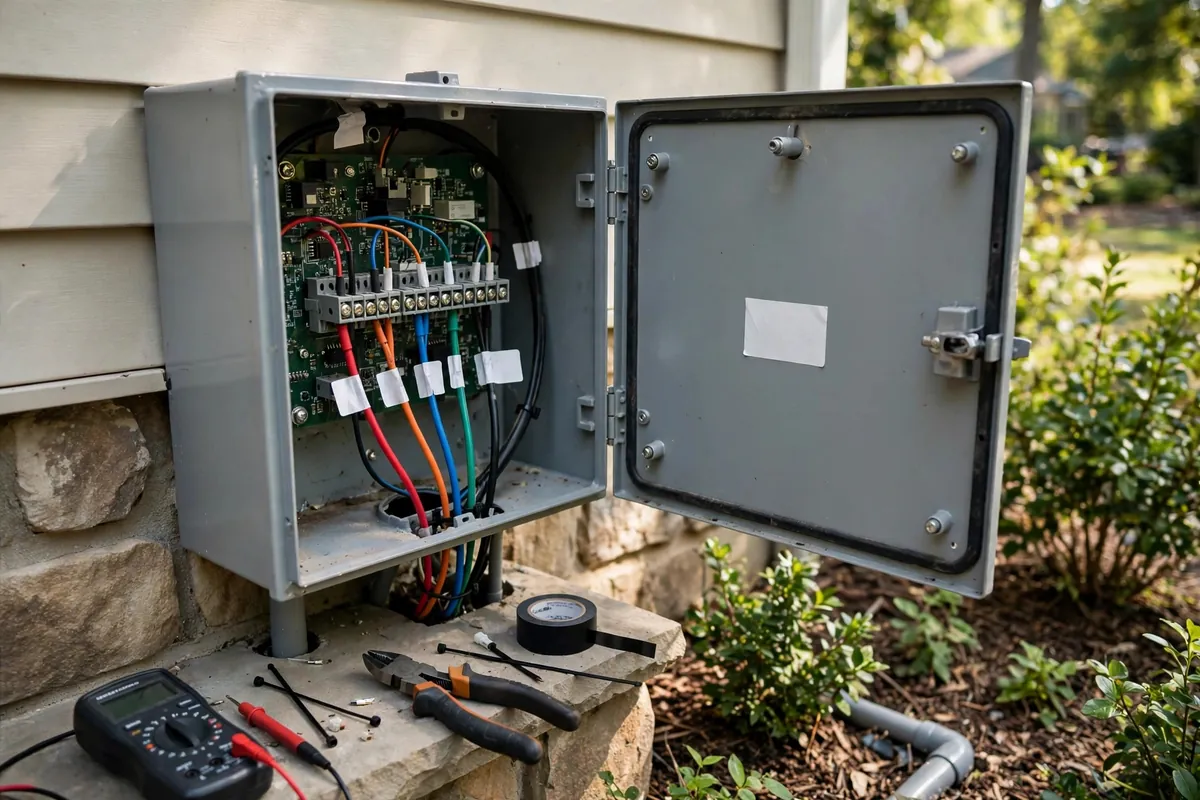
Every detection visit starts at the controller, and for good reason: a surprising number of irrigation problems are programming problems, not plumbing problems.
The technician checks the schedule first — which zones run, for how long, on which days. Zones running far longer than the landscape needs, start times stacked so oddly that zones overlap, or a rain sensor that was never wired in all create symptoms that mimic leaks: soggy areas, stressed turf, high water bills. Fixing the program costs nothing and resolves the issue immediately when programming is the culprit.
The controller also gets a functional test. Each zone is triggered manually to confirm the valve actually opens and — just as important — fully closes when the signal stops. A valve that sticks open keeps its zone seeping between cycles, which looks exactly like a leak in the lateral until you test the valve itself. The controller interview also covers history: recent repairs, heads that were replaced, areas that were re-sodded. Homeowners often know more than they realize — a zone that started acting up right after a fence was installed is telling you where to look.
Florida afternoons bring frequent rain, and a working rain sensor pauses the schedule automatically. A sensor that was bypassed, broken, or never installed lets the system water through every storm — wasting water and waterlogging the lawn. It is a two-minute check that solves real problems.
Running Zones One By One
With the controller verified, the technician runs each zone individually and walks it — watching every head, listening, and reading the ground.
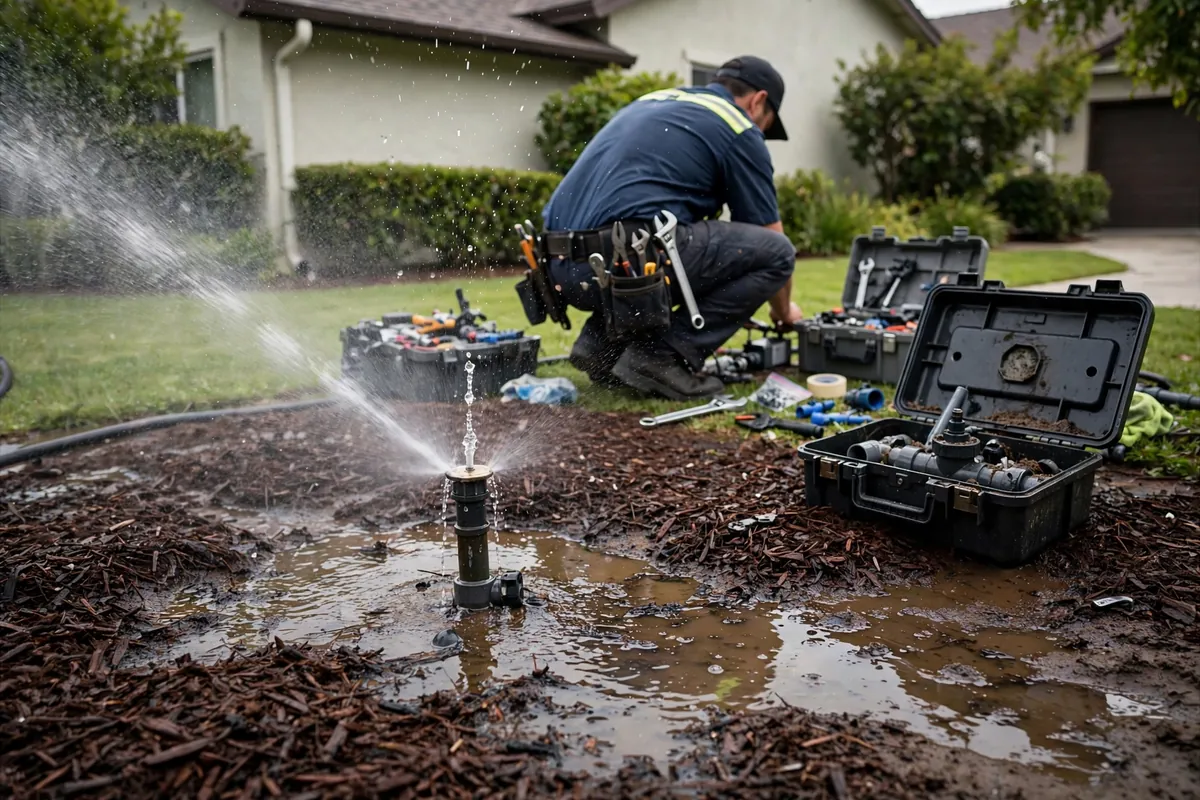
This is the observational heart of the process. On a healthy zone, every head pops up fully, throws its designed radius, and shuts down crisply when the zone ends. On a leaking zone, the story is different: heads downstream of a break throw weakly or not at all, water bubbles from the soil at the break point, the valve box area stays wet, or the zone drains slowly after shutoff instead of stopping clean. The technician notes pressure behavior too — a zone that starts strong and fades as it runs is losing water somewhere along the way.
Walking every zone also builds the comparison that makes diagnosis possible. If five zones behave identically and one does not, the investigation has a clear target. Our companion article on diagnosing a flooding zone covers what specific head behaviors mean when you are watching a zone run yourself.
During these runs the technician also maps the system physically — noting head locations, valve box positions, and where laterals likely run. That map becomes essential in the next steps, because you cannot pinpoint a break in a pipe you have not located.
Reading Pressure, Flow, And The Meter
Once observation identifies the suspect zone, instruments quantify what the eyes suspected.
The water meter becomes a leak detector. With the irrigation system completely off, the meter should sit still. If it moves, water is escaping somewhere — and the technician can then shut the irrigation main valve to separate a house-side leak from an irrigation-side one. With the suspect zone running, the meter's flow rate gets compared against what that zone should use; excessive flow confirms the zone is losing water beyond its heads' normal output. Our guide to reading your water meter for leaks explains the dial and leak indicator for homeowners who want to try this first.
Pressure readings at the zone tell their own story. A pressure gauge on the suspect zone that reads markedly lower than healthy zones indicates water escaping before it reaches the heads. Pressure that drops the longer the zone runs suggests a break that worsens under sustained flow — the pipe equivalent of a wound that opens wider.
Flow comparison between zones is the simplest powerful test. Every zone has a normal flow signature based on its head count and nozzle sizes. The zone whose flow does not match its design is the zone with the problem — no guesswork, just arithmetic.
Tracking Down Broken Heads, Laterals, And Valves
With the leaking zone identified and quantified, the search narrows to the specific component — and this is where acoustic equipment earns its place.
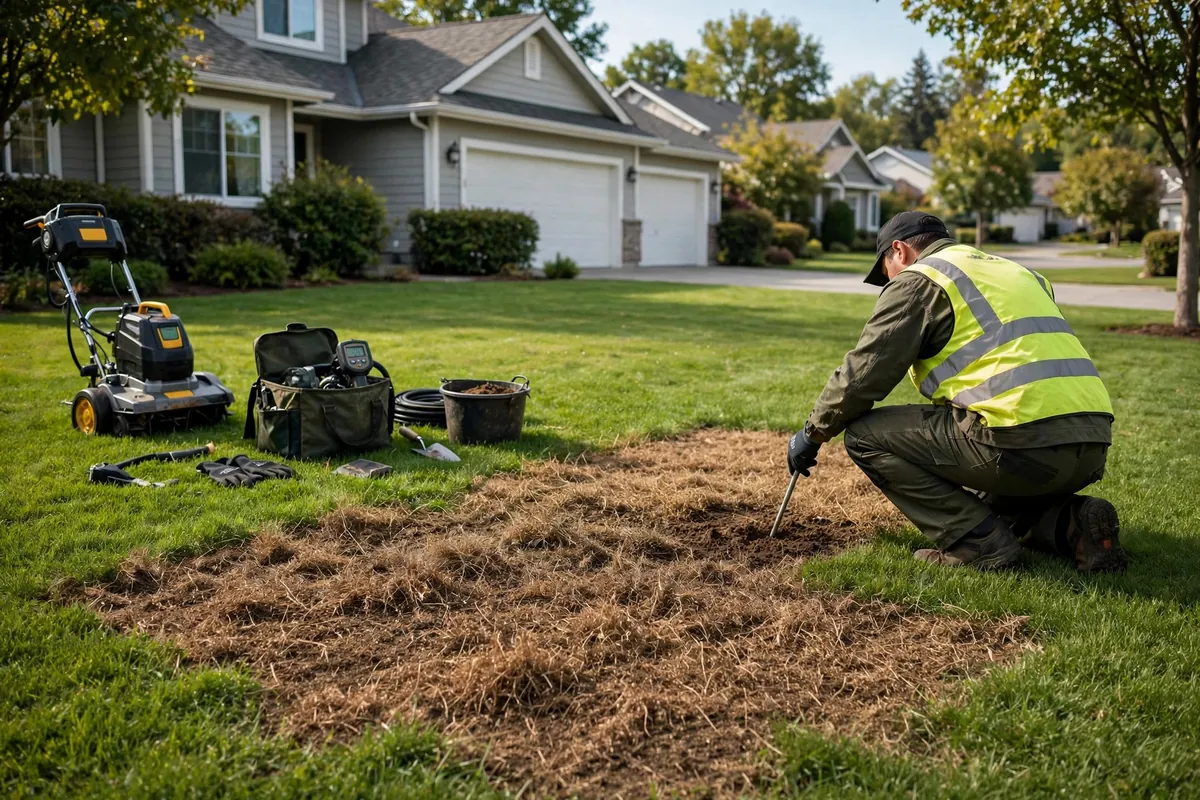
Water escaping from a cracked lateral under pressure makes noise: a hiss or rushing sound transmitted through the soil. An acoustic ground microphone moved along the lateral's path grows louder as it approaches the break, letting the technician triangulate the exact spot — often within inches. In Florida's sandy soil, where surface wetness may appear far from the break or not at all, listening for the leak itself beats looking for its effects.
Valves get their own focused testing. Each valve in the manifold is operated manually while the technician watches for complete closure — a valve that weeps after shutoff has a worn diaphragm or debris in the seat. Valve boxes are checked for standing water, which indicates either a valve leaking or a lateral break nearby. Heads get individual inspection: cracked bodies, split seals at the base, and nozzles damaged by mowers are all found by looking closely rather than by instruments.
By the end of this stage, the technician can usually mark the ground with confidence: the break is here, the failed valve is this one, the cracked head is that one. No exploratory digging has happened — the lawn is still intact.
What Happens After The Leak Is Found
Location is the hard part; repair is the straightforward part. With the break marked, excavation is surgical — a small, careful hole at the marked spot, just large enough to expose the damaged section. The cracked pipe gets cut out and replaced, the failed valve gets rebuilt or swapped, the broken head gets a new body. The hole is backfilled and tamped, and the turf — if it was cut cleanly — goes back on top.
Then comes the verification that separates professional work from a quick fix: the zone runs again, head by head, while the technician watches. Every head should pop up fully, throw its proper radius, and shut down cleanly. The meter should sit still with the system off. Only when the zone behaves like a healthy zone is the job done.
The technician will also flag what they noticed along the way — aging valves, heads nearing the end of their life, pressure that runs high enough to stress the system — so you can address tomorrow's problems on your schedule instead of discovering them as emergencies. And if your system has never had a rain sensor, that is worth discussing: in Florida's climate, it is one of the highest-value additions an irrigation system can get. For seasonal preparation, see our guide to preparing irrigation for the rainy season.
When you are ready, our irrigation leak detection service runs this full zone-by-zone process, and our emergency irrigation page covers situations that cannot wait — a zone that will not shut off, or water surfacing where it should not. Call (352) 703-8206 — lines are answered 24/7, and we generally reach Leesburg homes in 30–45 minutes.