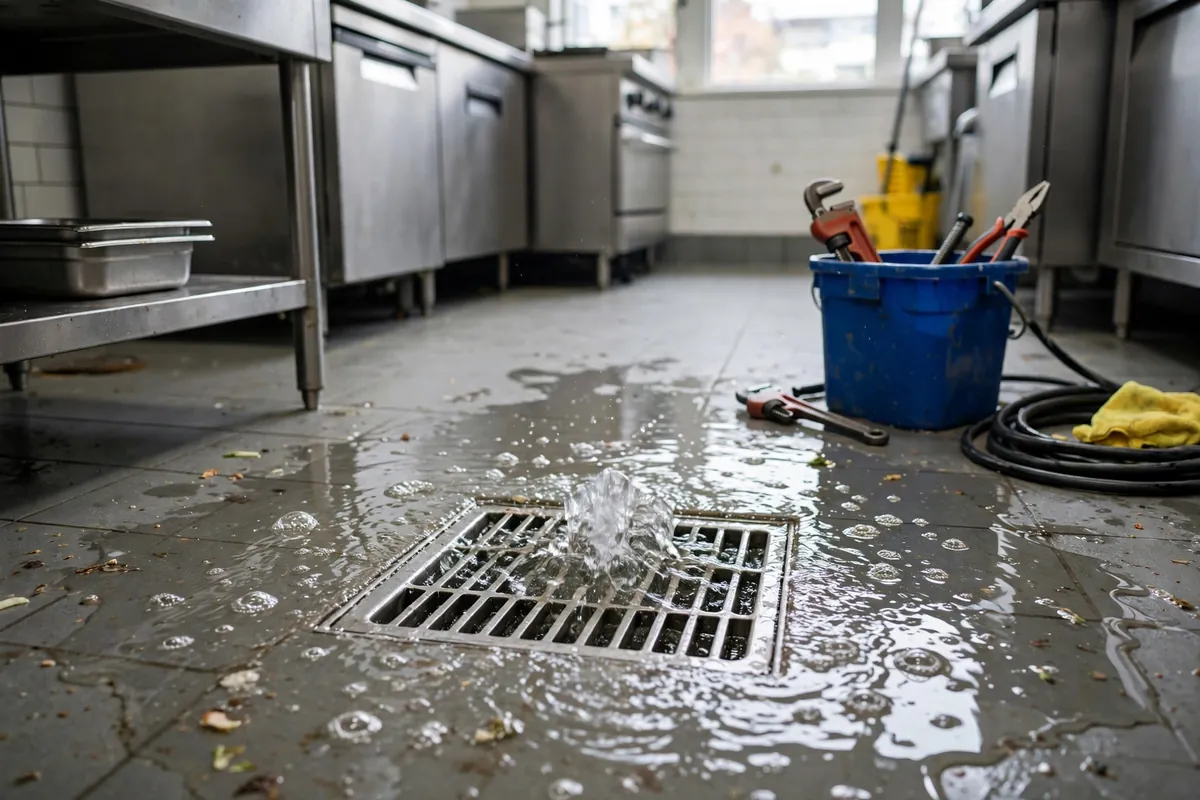
Commercial floor drains overflow when water arrives faster than the drain line can carry it away — usually because of a partial blockage, grease buildup, or a lift pump that is not keeping up. In kitchens, mop sinks, and mechanical rooms, the fix is rarely a plunger; it takes finding what is restricting the line and addressing the habits that put it there.
A regular maintenance routine prevents most overflows before they disrupt your business. This guide covers the real causes, the prevention habits that work, and what a professional clearing visit actually includes.
In This Article
Why Commercial Floor Drains Overflow
A floor drain is the lowest plumbing opening in the area it serves, which makes it both a safety feature and an early warning system. It is designed to catch mop water, spills, and washdown flow — and when the drain line downstream cannot pass that flow, the water has nowhere to go but up and out across the floor.
The mechanics are simple: flow in versus flow out. A healthy drain line carries away everything the drain receives. A line narrowed by grease, debris, or a failing pump carries less, and the moment inflow exceeds that reduced capacity, water backs up through the drain grate. The overflow itself is not the problem — it is the symptom of the restriction downstream.
That is why plunging or bailing the water never fixes it for long. The water will keep coming back until the restriction is found and cleared. Understanding this — symptom versus cause — is the foundation of everything that follows.
Common Causes, From Simple To Serious
Start with the simplest: debris in the drain itself. Floor drains collect everything washed across the floor — food particles, dirt, mop strings, packaging bits. The strainer basket catches most of it, but baskets that are missing, damaged, or never emptied let debris straight into the trap, where it accumulates into a plug. Many overflows are fixed at this level.
Grease is the next layer and the most common serious cause in food service. Mop water from a kitchen floor carries grease that cools and hardens inside the pipe, coating the walls a little more with every bucket. Over months the opening narrows until a normal washdown overwhelms it. The drain looks fine from above; the restriction is feet downstream where nobody can see it.
Further downstream, the branch or main line itself may be blocked — by roots, scale, collapsed sections, or accumulated solids. When several low fixtures back up together, the blockage is in a shared line rather than one drain. A sewer camera inspection finds it without guesswork.
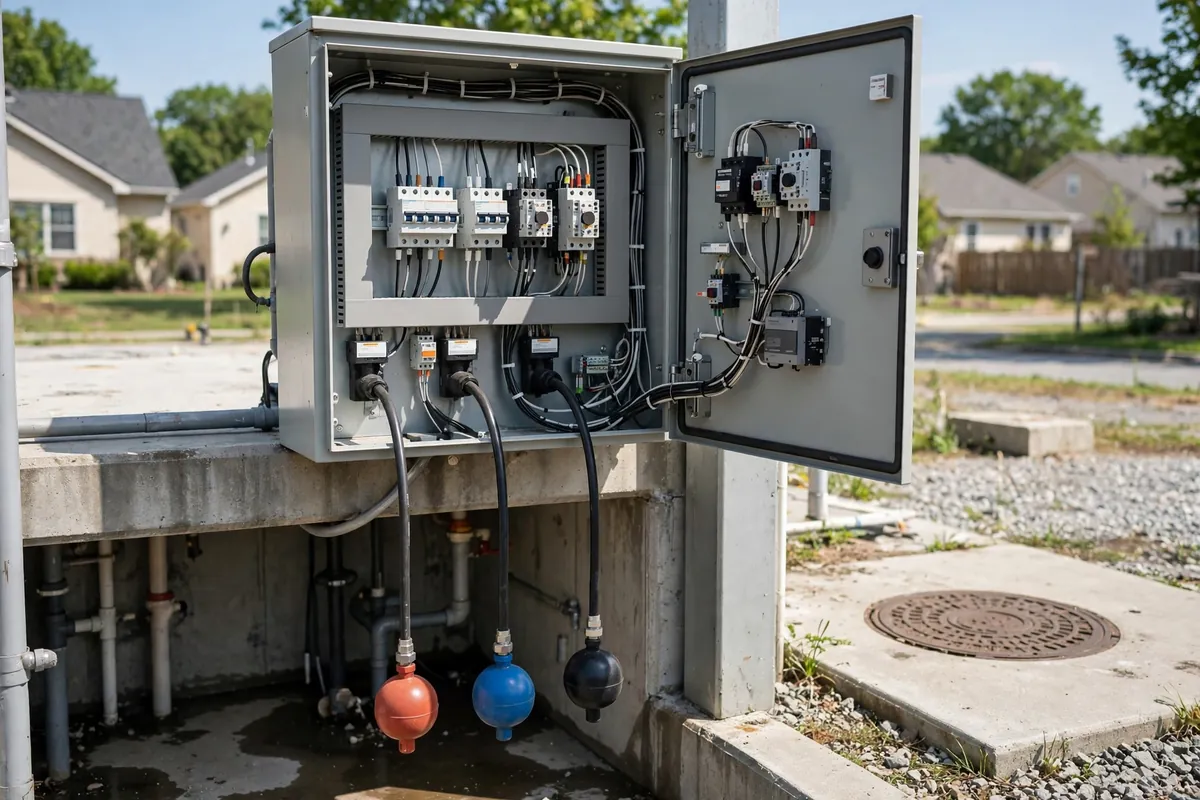
In buildings served by a lift station, a struggling or failed pump station produces the same symptom from a different cause. If the pumps cannot move water out as fast as the building sends it in, the lowest drains overflow first. Our guide to lift station basics explains how to recognize when the station — not the drain — is the problem.
Two more causes worth knowing: venting problems, where poor airflow slows drainage throughout a branch, and inflow during heavy rain, where stormwater enters the system through cracked pipes or shared connections and overwhelms capacity. Rain-related overflows that only happen in storms point to one of these.
A single overflowing floor drain usually means a local restriction in that drain or its branch. Several low fixtures backing up together means the problem is downstream in the main line or lift station. The fix — and the urgency — depends on which one you have.
Prevention Habits That Actually Work
Keep strainers in place and empty them. Every floor drain should have an intact strainer basket, and someone should own the job of emptying it on a schedule that matches the area's load. A kitchen drain basket may need daily attention; a mechanical room drain might need only a weekly glance. Missing strainers are an open invitation for debris.
Manage grease at the source. Scrape plates and cookware before washing, wipe greasy pans with a disposable towel before they hit the sink, and never pour cooking oil or grease down any drain. Mop water is the sneaky one — it looks like just dirty water, but in a kitchen it carries a full shift's worth of grease straight to the floor drain. Where volumes are high, a properly maintained grease interceptor on the kitchen line keeps most of it out of the pipes.
Train staff on what never goes down a drain: wipes, paper towels, food scraps, coffee grounds, and mop strings. Post the list where the people doing the pouring can see it. Most drain abuse is not malicious — nobody told the new hire that the mop sink is not a trash can.
Schedule professional cleaning before trouble starts. A periodic hydro jetting of kitchen and high-load lines removes the grease and scale buildup that daily habits cannot. The right interval depends on the building's volume — a busy restaurant needs more frequent service than a small office — and a service provider can recommend a schedule after seeing your lines.
Do not forget the traps. Floor drains in low-use areas dry out as the water in the trap evaporates, letting sewer gases in. A regular pour of water into seldom-used drains keeps the trap seal intact and the odors out.
What A Professional Clearing Visit Includes
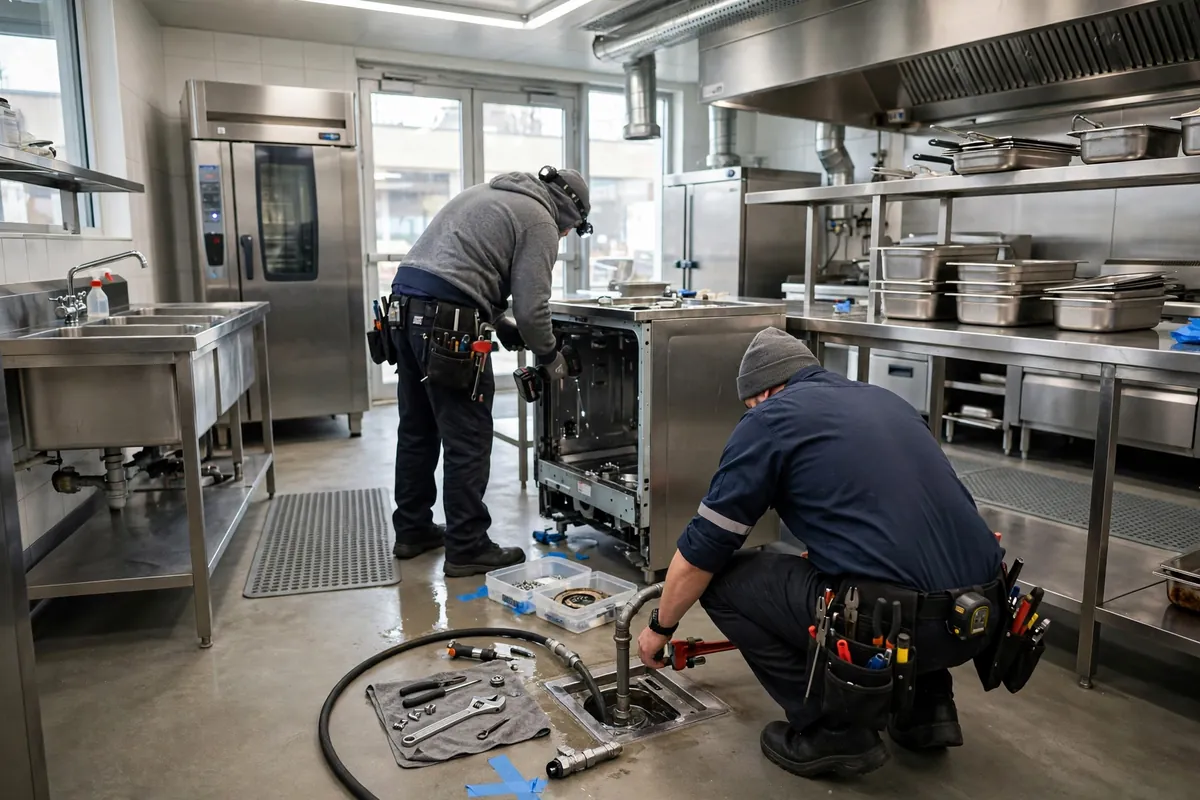
A professional visit starts with diagnosis, not just clearing. The technician confirms whether the restriction is local to the drain, in the branch line, or further downstream — because each one gets a different fix. For recurring or multi-fixture problems, that usually means a camera inspection to see the actual condition of the line.
Clearing itself uses professional equipment matched to the cause. Mechanical augers cut through solid obstructions and root masses; hydro jetting scours grease, scale, and sludge from the pipe walls with high-pressure water. Grease-heavy commercial lines often need jetting rather than just augering, since an auger can punch a hole through grease without removing the coating that will close back up.
After clearing, the technician verifies flow — running water through the drain and watching it carry away at full rate — and ideally runs the camera once more to confirm the line is genuinely clean, not just temporarily open. You should receive a clear explanation of what was found, what was done, and what would prevent a repeat.
If the camera reveals structural damage — cracked pipe, collapsed sections, severe root intrusion at joints — the visit shifts from clearing to repair planning. That is a separate conversation with its own options, and the footage gives you the evidence to evaluate them. Our commercial floor drain service covers the full path from diagnosis through repair.
Building A Drain Maintenance Plan
A maintenance plan does not need to be complicated. Start with an inventory: walk the building and list every floor drain, mop sink, and trench drain, noting its location and what flows into it. Kitchen and food-prep drains get flagged as high-load; mechanical room and storage area drains as low-load.
Assign each drain a cleaning interval based on its load. High-load kitchen drains might be on a frequent professional cycle with daily strainer emptying by staff; low-load drains might need only periodic checks and trap refills. Write the intervals down — a plan that lives only in someone's head stops working when that person leaves.
Keep a simple log: date, drain, what was done, what was found. Over time the log reveals patterns — the drain that needs clearing twice as often as the others has an underlying problem worth investigating, not just a cleaning schedule worth shortening.
Finally, name your escalation path. Staff should know exactly who to call and when: slow drainage gets logged and reported; an active overflow or a lift station alarm gets an immediate call to your service provider. We have served Leesburg commercial properties for 19 years — our floor drain and lift pump service handles both scheduled maintenance and 24/7 emergency response, typically arriving within 30–45 minutes. For buildings also concerned about hidden water loss, commercial leak detection pairs naturally with drain maintenance.