A lift station is a small underground pumping system that collects wastewater from a building and pumps it uphill to the city sewer when gravity alone cannot do the job. Most commercial lift stations use one or two pumps controlled by float switches, with an alarm that warns you when water rises too high.
If you manage a building with a lift station, knowing how these parts work together helps you spot problems before wastewater backs up into the building. This guide explains each component in plain language — no engineering background needed.
In This Article
What A Lift Station Does
Normally, wastewater flows downhill by gravity from a building to the city sewer main. But many commercial buildings cannot rely on gravity: basement restrooms and kitchens sit below the sewer main's elevation, the site is too flat for a gravity line to work, or the building sits far from the main. In these cases a lift station collects the wastewater in an underground basin and pumps it uphill to where gravity can take over.
Think of it as a relay point. Everything below a certain elevation drains into the basin instead of directly to the sewer. When the water in the basin reaches a set level, a pump switches on and pushes it up through a pressurized discharge pipe — called a force main — to the gravity sewer. Then the pump switches off and the cycle repeats, dozens of times a day, without anyone noticing.
Lift stations serve offices with basement restrooms, restaurants with below-grade kitchens, shopping centers on flat lots, and any commercial building whose lowest plumbing sits beneath the sewer main. If your building has one, it is quiet infrastructure you never think about — until it stops working. Our commercial lift pump repair service covers these systems across Leesburg.
The Main Parts: Pumps, Floats, And Alarms
The basin — also called the wet well — is the underground tank that collects incoming wastewater. It is sized to hold enough volume that the pumps cycle a reasonable number of times per day rather than starting every few minutes, which would wear them out. Everything else in the station exists to manage the water level in this basin.
The pumps do the actual lifting. Most commercial stations use sewage or effluent pumps built to pass solids, and many use two — a duplex setup. The control panel alternates them so each pump takes turns as the lead, which evens out wear. Each pump connects to the discharge pipe through a check valve, a one-way valve that stops pumped water from flowing back into the basin when the pump shuts off.
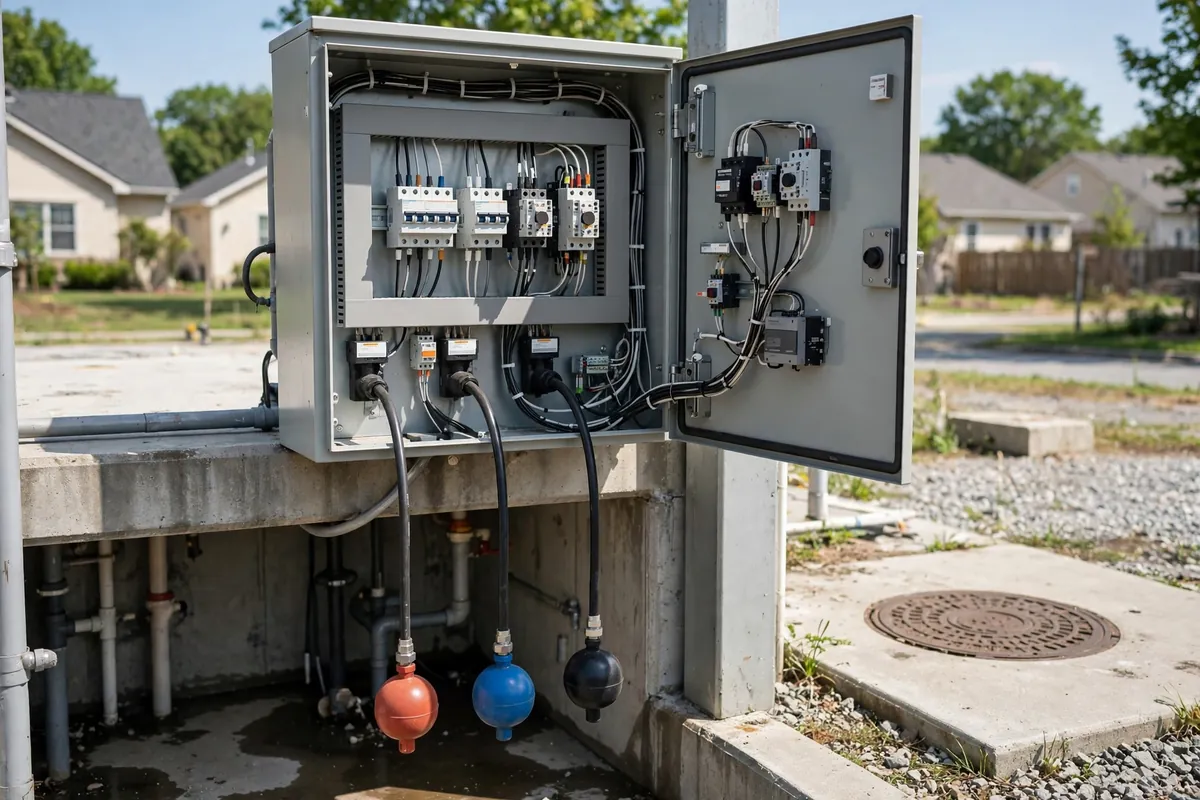
The float switches are the brains of the operation. These are buoyant switches hanging in the basin at staggered heights. As wastewater rises, the floats tip upward in sequence: the lowest float starts the lead pump, the next float starts the lag pump if water keeps rising, and the highest float triggers the alarm. When the water drops, the floats fall and the pumps switch off. The whole system is mechanical and straightforward — which also means a tangled or grease-coated float is a common failure point.
The control panel houses the electrical controls, pump alternator, and alarm circuitry. It is usually mounted on a nearby wall or pedestal. The alarm itself may be a flashing light, a horn, or both — and in well set-up buildings it also sends an alert to a phone or monitoring service, because a lift station alarm that nobody hears is just decoration.
Walk out to your lift station panel this week — not during an emergency. Learn which lights mean normal operation, where the alarm silence button is, and who to call. Five minutes now saves frantic minutes later.
How A Normal Pump Cycle Works
A normal cycle is beautifully boring. Wastewater flows into the basin from the building's drains. The level rises until it lifts the first float, which signals the control panel to start the lead pump. The pump pushes water up the force main to the sewer. The basin level drops, the float falls, and the pump switches off. Total runtime: a few minutes.
On the next cycle, the panel alternates and the lag pump becomes the lead. This alternation is deliberate — it keeps run hours even between the two pumps and means each one gets regular rest. If you notice only one pump ever running, the alternator may not be working, and one pump is doing all the work while the other sits idle.
During heavy flow — a busy restaurant lunch rush, for example — the water may rise faster than one pump can handle. That is what the second float is for: it starts the lag pump so both run together until the level drops. Both pumps running during peak flow is normal. Both pumps running constantly, even during quiet hours, is not.
The alarm float sits above the pump floats. It should never tip in normal operation. If it does, it means the water has risen past the point where both pumps should have handled it — the pumps are failing, overwhelmed, or the discharge is blocked. That alarm deserves an immediate response, every time.
Warning Signs Your Lift Station Is Struggling
The alarm sounding is the obvious one — and the one most often ignored until the second or third time. Treat every alarm as real. Even if the water recedes on its own, an alarm event means the system was overwhelmed or a pump failed to start, and the underlying cause is still there.
Pumps running constantly or cycling rapidly are another warning. A pump that never shuts off may be fighting a blocked discharge, a stuck float, or a failed check valve letting water flow back into the basin. Rapid on-off cycling — short bursts every minute or two — wears out motors and usually points to a float problem or a check valve issue.
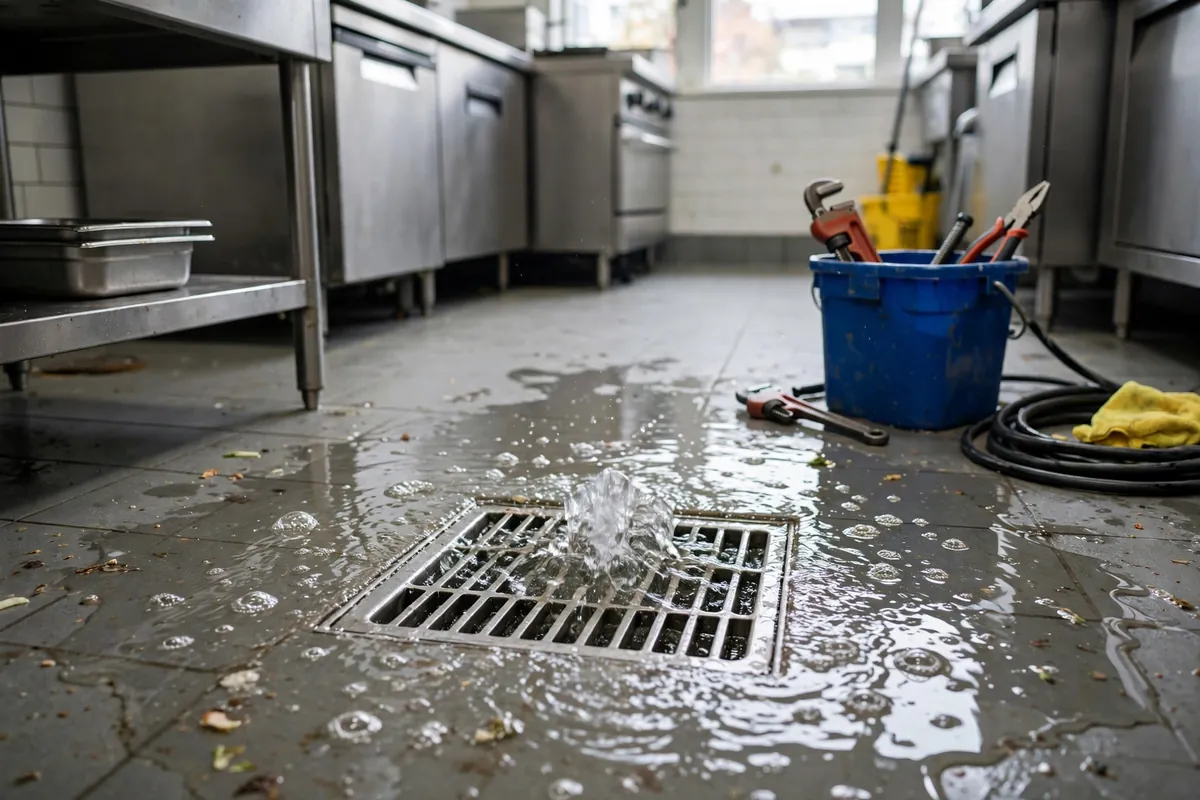
Building-wide symptoms tell the same story from the inside. If floor drains are overflowing, ground-floor fixtures are slow, or sewage odors appear near the lowest drains, the station may not be moving water out as fast as the building sends it in. These symptoms often show up before anyone checks the panel.
Listen and look when you visit the station. Unusual grinding or rattling from a pump, water visibly higher than normal in the basin, floats tangled or coated in grease, and tripped breakers on the panel all warrant a service call. Catching these early is the difference between a maintenance visit and an emergency backup.
Simple Upkeep That Prevents Most Failures
Most lift station failures trace back to three preventable causes: wrong things entering the system, neglected floats and alarms, and no service schedule. Addressing all three is straightforward.
Start with what goes down the drains. Brief everyone — cleaning crews, kitchen staff, tenants — that wipes, paper towels, hygiene products, and grease do not go into the plumbing. Wipes wrap around pump impellers, grease coats floats until they cannot move, and both lead to service calls that staff training would have prevented. Post the rules where the people who need them will see them.
Keep the station itself accessible and observable. Do not let stored items block the control panel. Make sure the alarm is audible where people actually are during operating hours — or better, connected to a phone alert. Glance at the panel during routine building walks: normal indicator lights, no alarm, no tripped breakers.
Finally, put the station on a professional service schedule. A technician inspects the pumps, cleans the floats, tests the alarm, checks the check valves, and reviews run hours for signs of trouble. Between visits, keep a simple log: alarm events, unusual pump behavior, and service dates. That log is invaluable when diagnosing a recurring problem. For buildings where the station discharges into a long gravity run, periodic main line clearing keeps the downstream side flowing freely too.
- Locate your lift station basin, control panel, and alarm before you need them
- Confirm the alarm is audible in an occupied area — or connected to a monitored alert
- Keep the control panel accessible, not blocked by stored items
- Brief cleaning and maintenance staff: no wipes, grease, or solids down any drain
- Keep a log of pump run times, alarms, and service visits
- Post the service provider's emergency number at the panel
When To Call For Professional Lift Pump Repair
Call immediately if the high-water alarm is active, if wastewater is backing up through any drain in the building, or if a pump will not start or will not stop. These are not wait-and-see situations — a lift station that cannot move water will send it back into the building, and the lowest drains go first.
Call soon — within days, not weeks — for the subtler signs: pumps running far longer than usual, rapid cycling, new sewage odors near low drains, floats visibly tangled or coated, or one pump doing all the work while the other never runs. Each of these is a small problem with a simple fix right now and an emergency later.
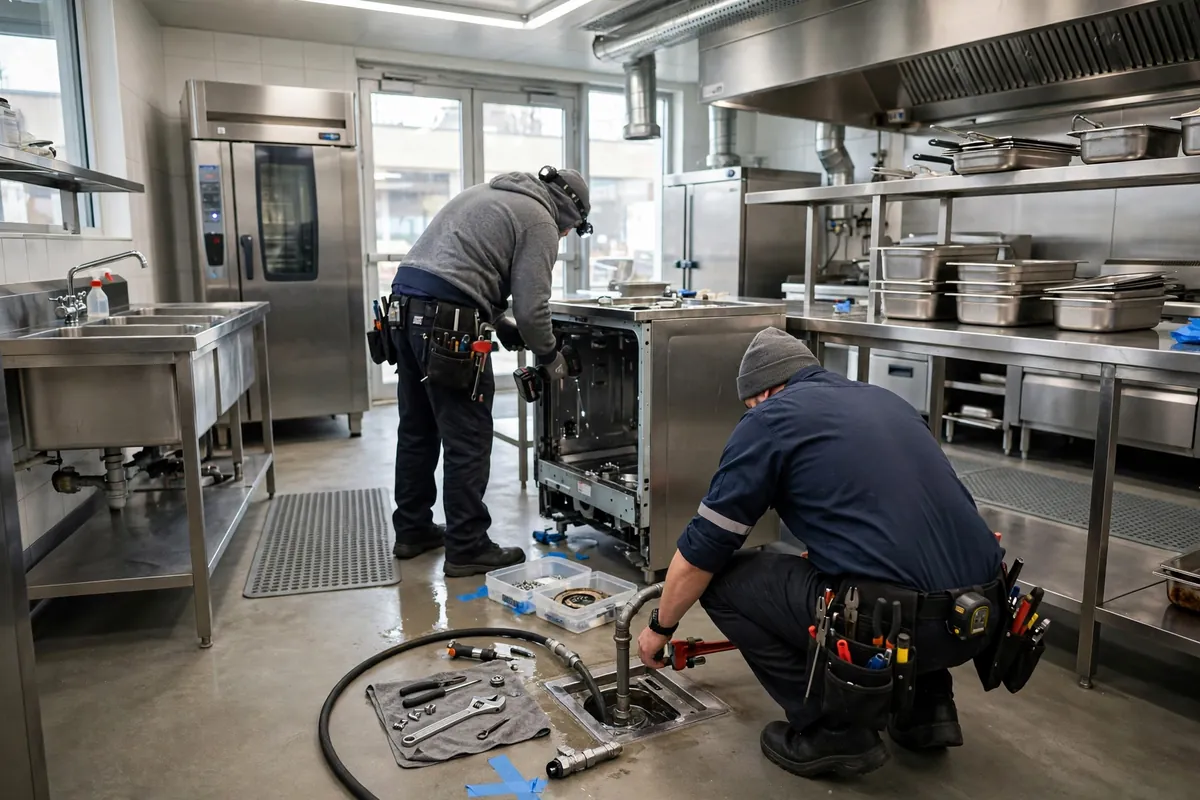
A professional visit covers the full system: pumps pulled and inspected, floats cleaned and tested, check valves checked, the control panel and alarm tested, and the basin cleaned of accumulated solids and grease. The technician should also review your alarm setup — an alarm nobody can hear is a gap worth closing.
We have served Leesburg commercial properties for 19 years, and our lift pump repair service covers diagnosis, repair, and ongoing maintenance for commercial stations. If the station has already failed and wastewater is backing up, our emergency lift pump service runs 24/7 with typical arrival in 30–45 minutes. For buildings also dealing with hidden water leaks, detection and pump service can be coordinated in a single plan.