Commercial leak detection follows the same principle as residential — find the leak without unnecessary demolition — but everything is scaled up: bigger buildings, more complex plumbing, and operations that cannot just stop for the day. A professional visit starts with a walkthrough and a plan, uses non-invasive tools like acoustic listening and thermal imaging, and ends with a written report showing what was found and where.
Here is what the process looks like from a business owner's side, so you know exactly what to expect before anyone arrives.
In This Article
How Commercial Leak Detection Differs From Residential
Scale is the obvious difference. A commercial building may have dozens of restrooms, long runs of supply piping, rooftop units with condensate lines, irrigation zones, and fire suppression systems — all potential leak sources spread across thousands of square feet. Finding one leak means systematically ruling out large areas, which takes methodical work and the right equipment.
Access is the second difference. In a home, the technician can walk every room freely. In a commercial building, leaks hide in tenant spaces, above drop ceilings in occupied offices, inside mechanical chases, and under slab floors in warehouses. Detection has to be coordinated around people, operations, and sometimes security requirements.
Documentation matters more. A homeowner needs to know where the leak is; a business needs a written record — what was found, where, how it was located, and what should happen next — that can go to ownership, insurers, or repair contractors. Commercial detection ends with a report, not just a conversation.
Finally, the stakes differ. A hidden leak in a commercial building can affect tenants, inventory, and operations, not just one household. That is why businesses call a dedicated commercial leak detection service rather than treating it as a routine plumbing call.
What Happens During A Commercial Detection Visit
The visit starts before we arrive, with an intake call. We ask about the symptoms — water bills, stains, odors, tenant complaints — the building's size and use, and any history of leaks or plumbing work. That conversation shapes the plan: which areas to check first, which tools to bring, and how much time to allow.
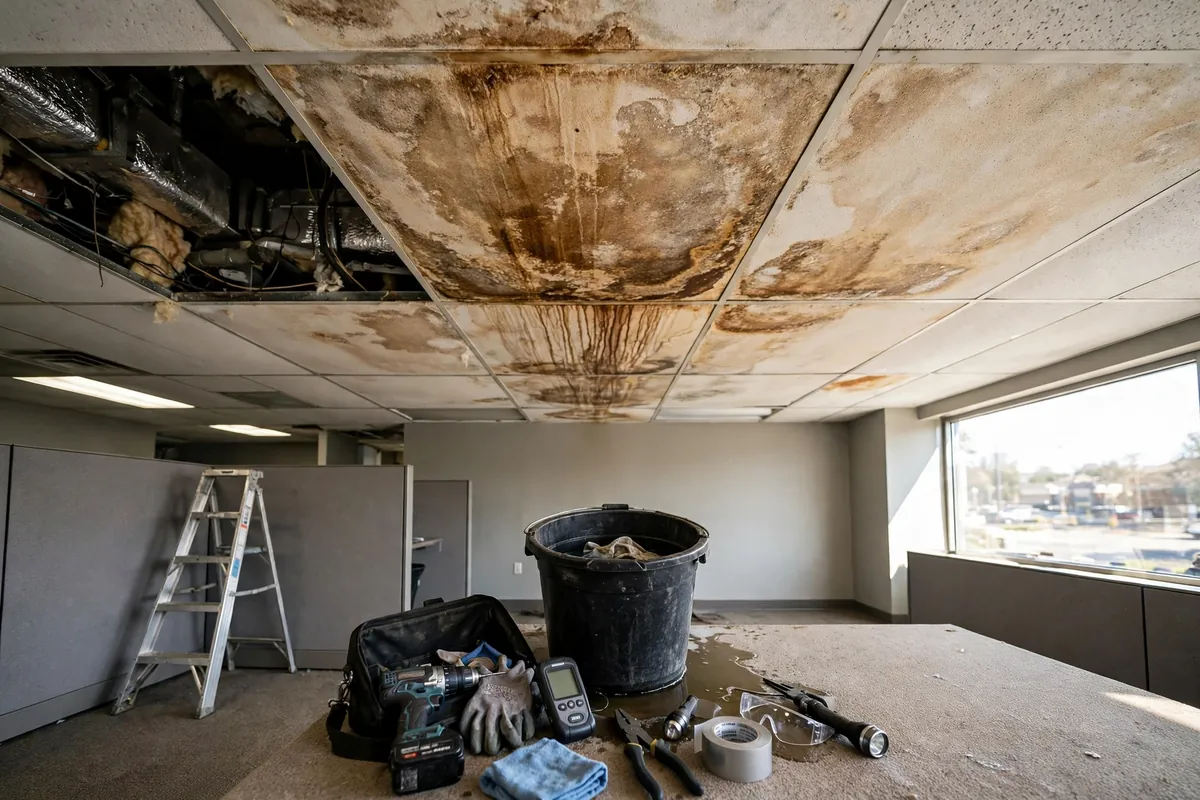
On site, the first step is a walkthrough. The technician tours the affected areas with your contact person, looking at every symptom firsthand: the stained ceiling tile, the warped baseboard, the meter that moves when nothing is running. Seeing the symptoms in person often narrows the search dramatically before any instrument comes out.
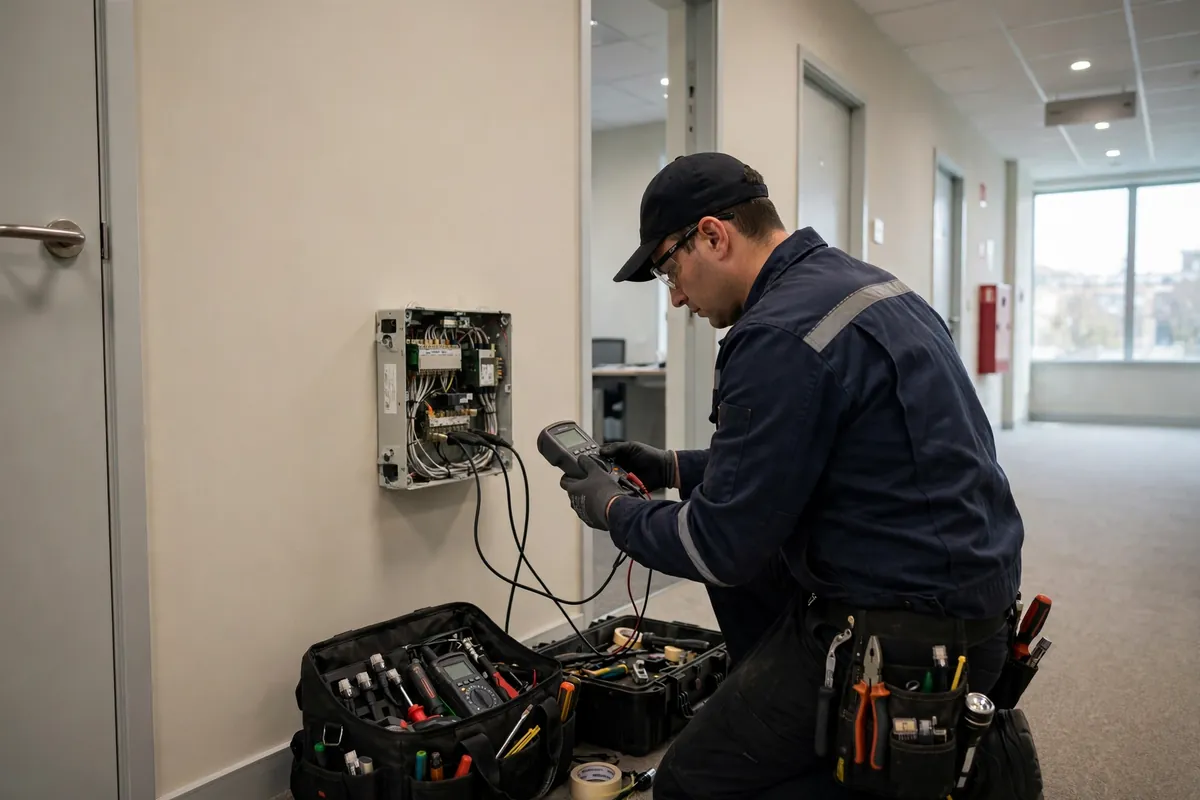
Then the detection work begins. Depending on what the walkthrough suggests, the technician may use acoustic listening to hear pressurized leaks inside walls or slabs, thermal imaging to spot temperature differences from hidden moisture, moisture meters to map how far dampness has spread, or pressure testing to confirm whether a supply line is losing water. Multiple methods cross-check each other — a thermal anomaly plus a moisture reading plus an acoustic signal at the same spot is a confident location.
The visit ends with findings, not a sales pitch. The technician shows you what was found, marks the location, explains what it means, and outlines the logical next steps. The written report follows with photos and documentation.
Tell the technician about past leaks, repairs, and renovations before the walkthrough. A pipe rerouted five years ago or a restroom remodeled last year changes where the technician looks first — and your history can save significant search time.
The Tools Used In Commercial Spaces
Acoustic listening gear is the workhorse for pressurized supply leaks. The technician places sensitive microphones on pipes, walls, or the slab and listens for the distinct hiss of water escaping under pressure. In a quiet building — early morning or after hours — even a small leak produces a locatable sound. This is how leaks inside concrete slabs and masonry walls get pinpointed without opening anything.
Thermal imaging cameras detect temperature differences on surfaces. A hidden leak often cools or warms the surrounding material just enough to show as an anomaly on the thermal image — a cold streak inside a wall, a warm patch on a slab from a hot water leak. It is fast, completely non-contact, and excellent for scanning large areas like warehouse floors or office ceilings.
Moisture meters measure dampness in building materials directly. Pin-type meters test inside drywall and wood; pinless meters scan across surfaces without marking them. They map how far moisture has spread from the source, which matters for both locating the leak and scoping the repair.
Pressure testing isolates sections of supply piping and watches for pressure drop, confirming whether a line is actually leaking before anyone opens a wall. Tracer gas — a safe, detectable gas introduced into a drained line — can locate leaks that other methods miss, as the gas escapes at the breach and is picked up by a sensitive detector above. For drain and sewer lines, a sewer camera inspection shows the interior directly.
Scheduling Around Your Business Hours
Detection does not require shutting down. The work is quiet, non-invasive, and contained to the areas being investigated — most businesses stay fully open while it happens. The main scheduling question is access to the affected areas and background noise: acoustic listening works best in a quiet building, so early morning, evening, or after-hours visits give the cleanest results for slab and wall leaks.
For buildings that cannot pause during the day — restaurants, medical offices, retail — we schedule around your operations. A restaurant's leak investigation might happen between lunch and dinner or after close; an office investigation might start before staff arrive. Tell us your constraints on the intake call and the visit gets planned around them.
Multi-tenant buildings take a little coordination. We work with the property manager to arrange access to tenant spaces, and we keep each visit brief and tidy — in and out with instruments, no demolition, no mess. Tenants are far more cooperative with detection than with repair, which is another reason to locate the leak accurately first.
If the investigation finds a leak that needs repair, the repair itself gets its own plan. Our guide to minimizing downtime during commercial repairs covers how to keep operating while the fix happens.
What You Receive When The Visit Is Done
You receive a written report — the deliverable that makes commercial detection different from a quick look. The report documents each leak location found, the methods used to locate it, and photos or thermal images showing the evidence. Locations are described precisely enough that a repair contractor can go straight to the spot.
The report also includes recommended next steps: what kind of repair each finding calls for, which findings are urgent versus watch-and-wait, and any related issues noticed during the visit — a corroded valve, a deteriorating supply line — that deserve attention before they become leaks themselves.
This documentation serves everyone downstream. Ownership gets a clear record of the building's condition. Insurers get evidence tied to specific locations and dates. Repair contractors get an exact target instead of an exploratory opening. And your maintenance team gets a baseline for watching the building going forward.
We have provided commercial leak detection in Leesburg for 19 years — offices, retail, restaurants, warehouses, and multi-tenant buildings. If you are seeing the warning signs of a hidden leak, the intake call is the first step, and the report is the last. Everything in between is methodical, non-invasive, and scheduled around your business. For urgent situations — active water spreading through the building — our emergency commercial service runs 24/7.