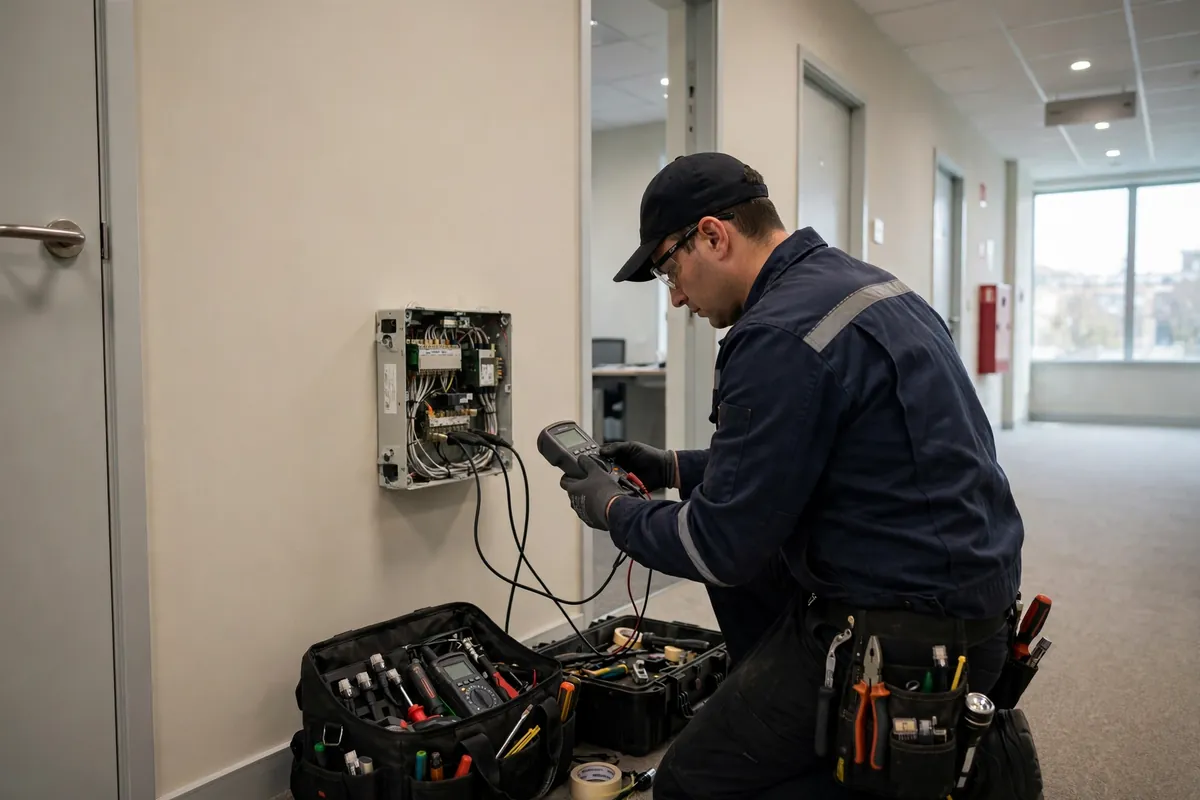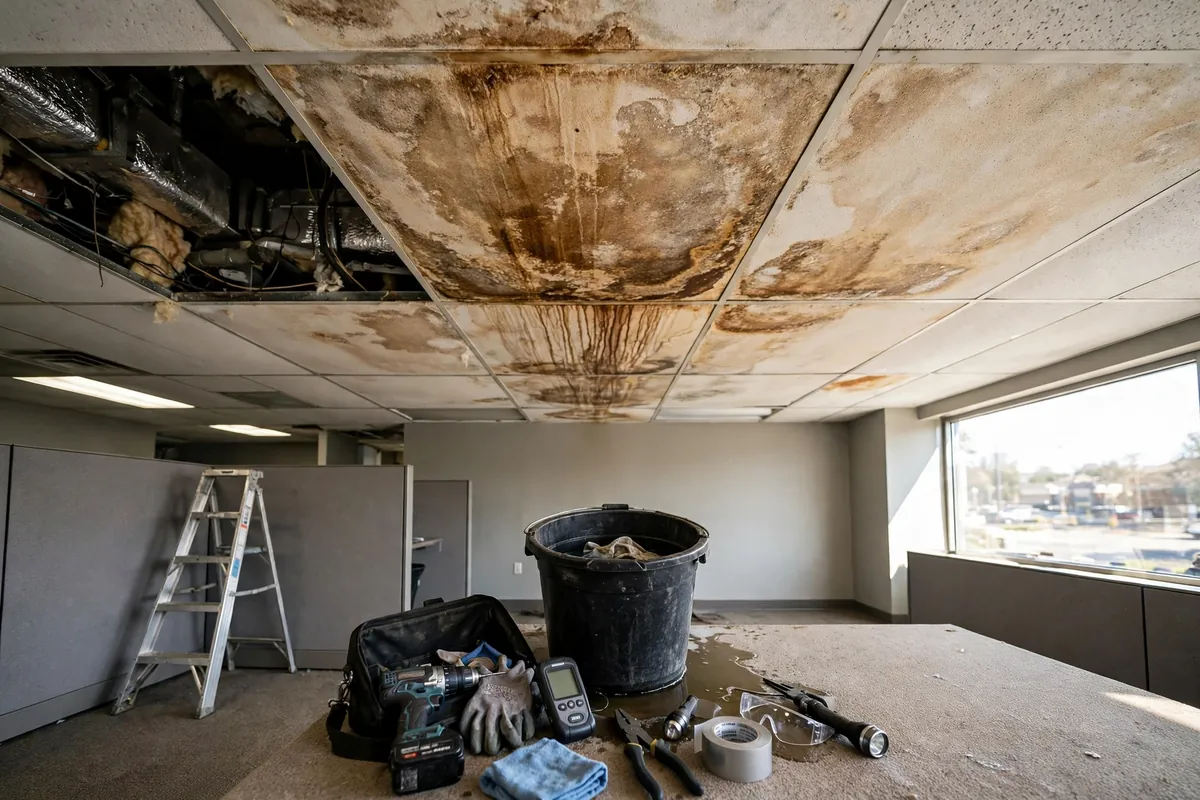
Every hour a business stays closed for a repair costs money, which is why minimizing downtime starts before the repair does — with a clear plan for scheduling, staging, and communication. Many commercial leak repairs can be phased, scheduled after hours, or completed in sections so your business keeps running.
Here is how to plan a repair around your operations instead of shutting down for it.
In This Article
Why Downtime Planning Matters
Downtime is the hidden cost of every commercial repair. The pipe fix itself is one line item; the lost revenue, idle staff, inconvenienced customers, and disrupted tenants are the larger ones — and they grow with every unplanned hour. A repair that takes two days with no plan can often be done in the same two days with no closure at all, if the work is sequenced around the business instead of through it.
Planning also protects the quality of the repair. Rushed emergency work, done under pressure with the business losing money by the hour, invites shortcuts and surprises. A planned repair — scoped from an accurate diagnosis, scheduled for the right window, staged properly — gets done once and done right.
The good news is that leak repairs are among the most plannable disruptions a building faces. Unlike a catastrophic failure, most leaks are found while they are still manageable, which means you choose the timing rather than the leak choosing it for you. That advantage disappears if detection is delayed — another reason to act on early warning signs promptly.
Before The Repair: What To Arrange
Start with an accurate diagnosis. Every downtime plan rests on knowing exactly what is being repaired and where — which means professional detection comes before scheduling, not after. A detection report gives you the leak's precise location, the recommended repair method, and the scope of work, which is what realistic timelines and quotes are built on.
Get the scope in writing: what will be repaired, what areas will be affected, how long each phase takes, and what the crew needs from you — access, water shutoff windows, staging space for tools and materials. Vague scopes produce vague timelines; insist on specifics.
Designate one point of contact on your side — someone who can make decisions, grant access, and communicate with staff and tenants. Repair crews work fastest when they are not waiting for answers. Brief that person fully: the scope, the schedule, the shutoff plan, and the escalation path if something unexpected appears.
Walk the work area with the crew lead before day one. Confirm where tools get staged, which entrances the crew uses, where debris leaves the building, and how the work zone gets separated from customers or tenants. Thirty minutes of walkthrough prevents days of friction. If the leak involves drain or sewer lines rather than supply piping, commercial drain and lift pump service can be scheduled under the same plan.
Never schedule a repair around a vague problem description. The detection report — exact location, repair method, affected areas — is what turns a guess into a plan you can actually schedule around.
Scheduling Strategies That Keep You Open
After-hours and weekend work is the simplest strategy. Detection is quiet enough for occupied hours, but the noisier phases of repair — cutting, concrete work, heavy cleanup — fit naturally into evenings or weekends. Many commercial repairs are structured exactly this way: diagnose during the week, repair over the weekend, reopen Monday with the work invisible.
Phased repairs divide the job into sections, each completed — including cleanup — before the next begins. A restroom with four fixtures gets repaired one fixture at a time; a long pipe run gets done in segments. Only the active section is ever disrupted, and the building functions around the work zone. This is the standard approach for occupied offices and multi-tenant buildings.
Planned water shutoff windows handle the trickiest constraint. If the repair requires the water off, the shutoff gets scheduled for the lowest-impact time — before opening, after closing, or during a known slow period — and communicated well in advance. Short, planned shutoffs that everyone expects beat long, surprising ones every time.
For restaurants and food service, timing revolves around service hours: work happens between lunch and dinner or after close. Our guide to leak detection for restaurants covers the kitchen-specific version of this planning. Whatever your business, the principle is the same — the schedule serves the operation, not the other way around.
Temporary Measures During The Work
Temporary measures are the bridge between what the repair needs and what the business needs. If restrooms are affected, portable facilities keep staff and customers comfortable during the work window. If a kitchen water line is being repaired, bottled water stations and a adjusted menu for the day keep service running.
Protect the surrounding area before work starts, not after the first accident. Floor protection, dust barriers, and clear separation between the work zone and the public area keep the rest of the building clean and safe. A tidy work zone is also a faster work zone — crews spend less time working around obstacles and cleaning up after themselves.
Keep critical systems running. If the repair affects HVAC condensate lines, fire suppression connections, or equipment cooling water, those get temporary bypasses or scheduled windows — never an unplanned interruption. Flag every connected system in the planning walkthrough so nothing is discovered mid-repair.
Set a communication rhythm for the work itself: a brief start-of-day confirmation that the schedule holds, and an end-of-day update on progress and tomorrow's plan. Small, predictable updates prevent the anxiety that fills information gaps — for you, your staff, and your tenants.
Communicating With Tenants And Customers
Tell people before the work starts, not when the noise does. A single clear notice — what is happening, when, which areas are affected, any water shutoff windows, and who to contact with concerns — prevents the rumor mill from writing its own version. Deliver it early enough that people can plan around it.
Be specific about impacts. Vague notices ("plumbing work this week") generate more questions than they answer. Specific notices ("water off in the east restrooms Tuesday 6–9 AM; portable facilities by the rear entrance") let people adjust once and move on. Include the reason in plain language — people cooperate far more readily when they understand why.
For customer-facing businesses, manage the visible side. Signage that explains briefly and points to alternatives ("restrooms temporarily around the corner — sorry for the inconvenience") turns a disruption into a minor detour. Staff should know the talking points: what is happening, how long, and where to direct people.
After the work, close the loop. A short follow-up — the repair is complete, everything is back to normal, thank you for your patience — ends the episode cleanly. Buildings that communicate well through one repair get easier cooperation on the next one, and there is always a next one eventually.
We have coordinated commercial leak work in Leesburg for 19 years, and after-hours scheduling is a normal part of how we operate — not a special request. If the situation is urgent, our emergency commercial service runs 24/7 with typical arrival in 30–45 minutes, and the downtime planning starts on that first call.