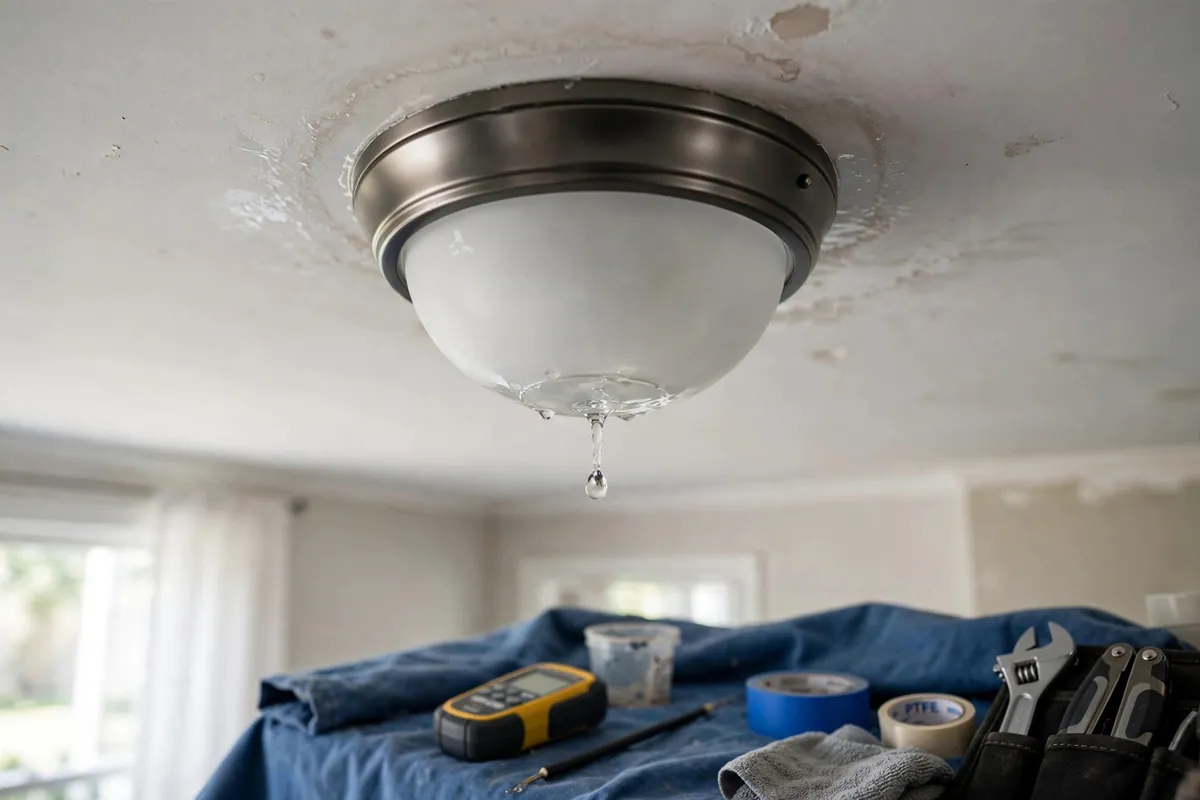
Water dripping through a light fixture is two emergencies at once: a water leak above your ceiling and an electrical hazard at the fixture. The safe response starts with electricity, not plumbing — turn off the breaker serving that fixture before you do anything else, and do not touch the fixture, its switch, or the wet area around it. Once the power is off, the situation becomes a standard leak detection job: find where the water is coming from and fix it. This article walks through each step in order.
Turn off the breaker for that fixture immediately, and do not touch the fixture, its switch, or the wet ceiling around it. A wall switch is not enough — only the breaker fully de-energizes the circuit. Once the power is off, call a professional the same day: the water source above needs leak detection, and the fixture needs inspection before power is restored.
In This Article
What To Do Right Now
Follow these steps in this exact order. The sequence matters — electricity first, water second:
- Turn off the breaker. Go to your breaker box and switch off the circuit serving that fixture. If you are not sure which breaker it is, turn off the main breaker. Do this before touching anything else.
- Do not touch the fixture. Do not touch the fixture itself, its wall switch, a pull chain, or the wet ceiling around it — even with dry hands. Water creates electrical paths you cannot see.
- Keep people and pets away. Keep everyone clear of the area directly below, especially children. Water may also be inside the wall or ceiling cavity beyond what you can see.
- Call a professional. Tell them water is coming through a light fixture so they understand it is both an electrical and a plumbing situation. If it is after hours, use an emergency line.
- Catch the water safely. Once the breaker is off and the call is made, you can place a bucket under the drip and move furniture — but stay clear of the fixture itself.
- Leave the breaker off. Do not turn the circuit back on, and do not keep resetting the breaker if it trips. A tripping breaker is protecting you.
Water and electricity together are dangerous — switch off the breaker, do not touch the fixture, and call (352) 703-8206 now. We answer 24/7 and arrive in 30–45 minutes.
Signs To Look For
Water does not always announce itself with a steady drip. Watch for these earlier warnings around ceiling fixtures:
- Drips or droplets forming on or falling from the fixture, its trim ring, or the ceiling immediately around it.
- Flickering or dimming from the fixture that was not happening before — moisture inside the electrical box interferes with connections.
- Sizzling, buzzing, or popping sounds from the fixture. Any unusual sound from an electrical fixture deserves immediate attention.
- A breaker that trips when the fixture is used, or that will not stay reset. This is the electrical system detecting a fault — let it do its job.
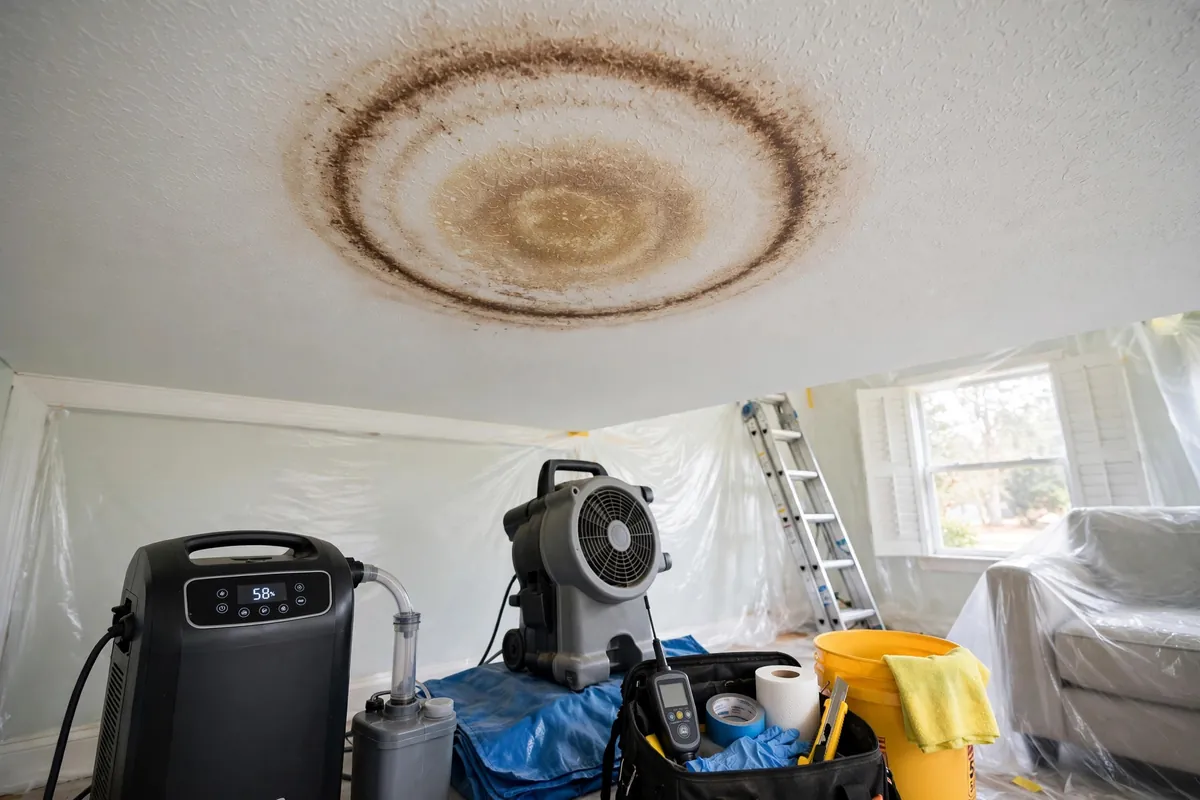
- Staining or bubbling in the ceiling paint around the fixture, which suggests water has been arriving for a while before the drip started.
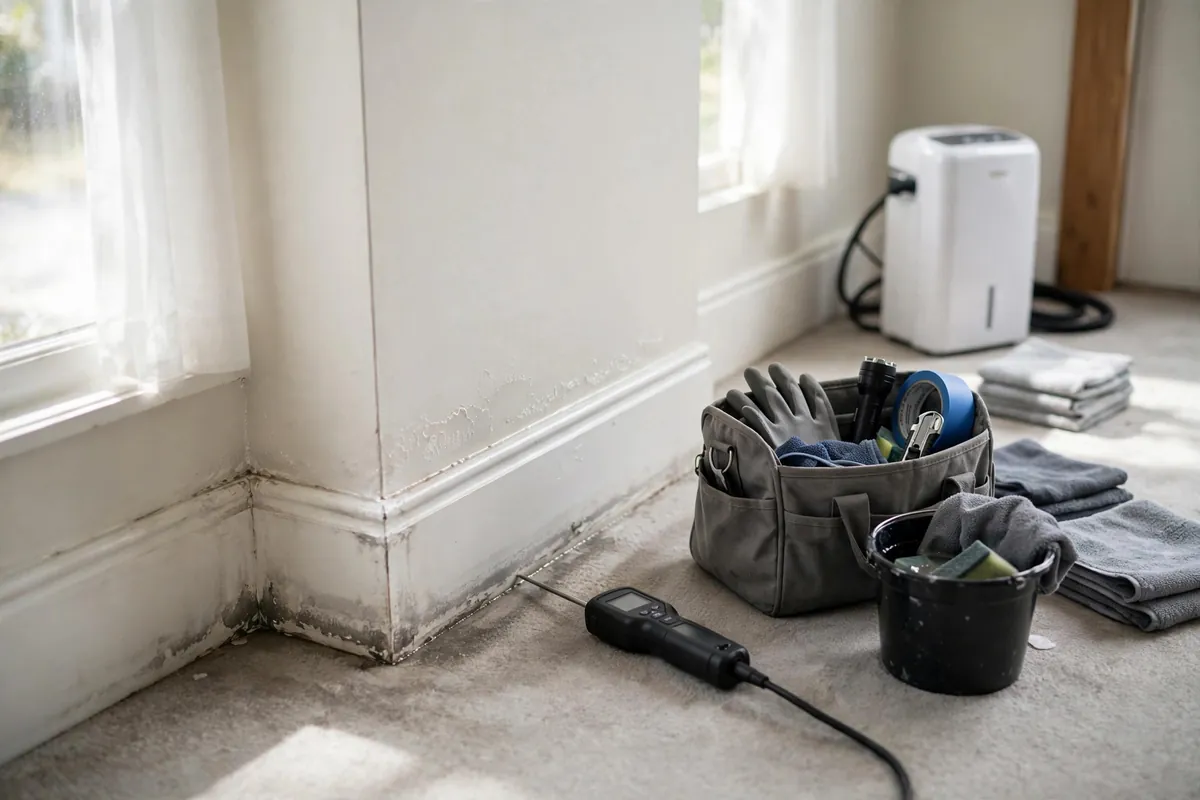
- A musty or hot smell near the fixture. Mustiness means chronic moisture; a hot or burning smell means an electrical problem that needs the breaker off immediately.
Any one of these signs near a ceiling fixture justifies switching the breaker off and investigating. Our guide to ceiling stains covers what discoloration patterns mean when the fixture is not yet involved.
A breaker that trips when a fixture gets wet is detecting a ground fault or short. Forcing it back on overrides that protection. Leave it off and call a professional.
Common Causes
The fixture is almost never the source of the water — it is the lowest exit point. The water is coming from above, and these are the usual origins:
- Plumbing leaks in the ceiling cavity. A supply line pinhole or a drain joint above the fixture drips into the ceiling, and the electrical box — with its openings — becomes the path of least resistance downward.
- Bathroom leaks from above. A failing toilet wax ring, worn shower grout, or a tub overflow on the floor above sends water into the cavity, where it finds the fixture box.
- Air conditioning condensate. A clogged condensate drain line near the air handler can overflow into the ceiling, and the water travels along framing until it reaches an opening — often a fixture.
- Water heater leaks. In homes with the water heater in the attic, a failing tank or connection drips straight down through the ceiling, and fixtures below become drip points.
- Condensation in the fixture box. Less common, but in humid conditions, condensation can form inside an electrical box in an unconditioned ceiling space and drip from the fixture.
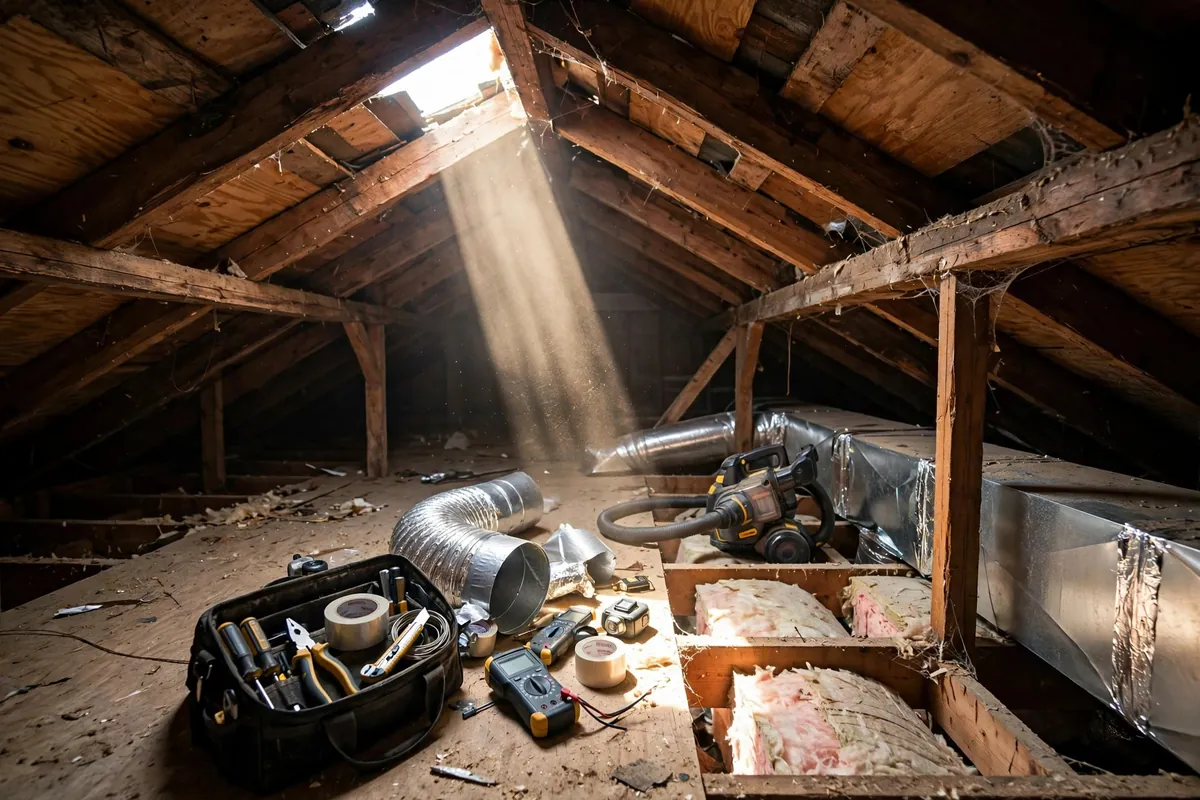
Because the fixture is just the exit, fixing the fixture alone never solves the problem. The water's origin has to be found and repaired — which is why this situation needs professional leak detection in addition to electrical attention. Our attic leak guide explains how water travels overhead before it appears.
What Happens If You Wait
This is the one leak scenario where waiting carries an immediate physical danger, so we will be direct about it.
Water and household electricity together can cause electric shock through the fixture, the switch, or wet surrounding surfaces. Water inside the electrical box corrodes wire connections and degrades insulation, which can lead to arcing — and arcing is a fire risk. A fixture that keeps getting wet will eventually fail, sometimes suddenly, and a saturated section of ceiling can give way without much warning.
The plumbing side does not pause either. Whatever is feeding water into that ceiling cavity — a supply seep, a drain leak, a condensate overflow — continues with every hour, widening the wet area and the eventual repair. But the electrical hazard is the reason this situation jumps the queue: a wet fixture is not a tomorrow problem.
The reassuring part is that the immediate danger is fully controllable. Breaker off, hands off, professional called — those three actions convert an emergency into a manageable repair job.
Safe DIY Checks Vs When To Call A Professional
In this scenario the line between homeowner-safe and professional-only is brighter than usual. Electricity sets the boundary:
| Situation | What You Can Safely Do | When To Call A Professional |
|---|---|---|
| Water dripping through a fixture | Turn off the breaker; keep everyone away; place a bucket at a safe distance | Immediately — describe the electrical involvement when you call |
| Breaker trips when fixture is used | Leave the breaker off; do not reset it repeatedly | Immediately — the breaker is detecting a fault |
| Stain around a fixture but no drip | Turn the breaker off as a precaution; photograph the stain | Have both the water source and the fixture wiring checked |
| Fixture looks dry again | Keep the breaker off until inspected | Before restoring power — water-damaged wiring needs professional inspection |
| You need to find the water source | Observe from a safe distance; note timing and location | Leak detection locates the source above without guesswork |
The pattern is simple: anything involving the breaker box (operated with dry hands, standing dry) and observation from a safe distance is yours. Anything involving the fixture, the wiring, or the wet ceiling cavity belongs to a professional. There is no middle ground where you partially handle a wet electrical fixture yourself.
Once the electrical side is made safe, the plumbing investigation can begin. That is where our ceiling leak detection service takes over — moisture mapping and thermal imaging find the water's origin without guesswork.
How The Service Fixes It
When you call us about water through a fixture, we treat it as the two-part job it is: make it safe, then find the water.
First we confirm the circuit is de-energized and the area is safe to work around. Then the detection begins: moisture meters map how far the wet area extends through the ceiling, thermal imaging reveals the full cool signature of the hidden water, and the trail is followed back to its highest point — the pipe, fitting, pan, or seal where the water originates. Acoustic listening confirms it if a pressurized supply line is suspect.
With the source located, the plumbing repair happens at that spot: the fitting gets fixed, the wax ring gets replaced, the condensate line gets cleared — whatever the instruments found. Separately, the fixture and its wiring need inspection by a qualified electrician before the breaker goes back on, because water-damaged connections are not safe just because they look dry.
If water is coming through a fixture right now, do not wait for business hours. Our emergency ceiling leak page is built for exactly this call, or reach us directly at (352) 703-8206, answered 24/7 with arrival in 30–45 minutes across Leesburg. For non-urgent ceiling concerns, start with our standard ceiling leak detection service.