The toilet is the most common source of a mysteriously high water bill, and the reason is simple: a toilet can leak continuously without a single visible or audible sign. A worn flapper lets tank water seep into the bowl silently, the fill valve quietly replaces it, and the cycle repeats all day and night — with the water meter recording every gallon.
The good news is that silent toilet leaks are also among the easiest to find and fix. This guide explains how they happen, gives you the exact dye-test procedure professionals use, and shows which fixes are safe DIY and which deserve a plumber.
In This Article
Why Toilet Leaks Go Unnoticed
Most leaks announce themselves with a puddle or a sound. Toilet leaks do neither, for a few reasons:
- The water goes into the bowl. A flapper leak drains tank water into the bowl and down the drain — there is never a puddle, a stain, or a wet floor.
- The refill is quiet. Modern fill valves refill the tank with little noise, especially the slow trickle that replaces a slow flapper seep.
- It happens between uses. Nobody stands watching the toilet for the hours between flushes, which is exactly when the slow leak does its work.
- One bad toilet hides among good ones. In a house with three toilets, the one that runs silently never draws attention until the bill arrives.
This is why a suddenly high water bill should always trigger a toilet check first — it is the most likely cause and the cheapest to rule out. If the dye tests come back negative but the meter still moves with everything off, the water is going somewhere else.
The Dye Test: Step By Step
This is the same test professionals use. It takes about 30 minutes, most of it waiting:
- Remove the tank lid and set it somewhere safe — porcelain lids crack easily and are expensive to replace.
- Do not flush. The test needs the toilet undisturbed, so make sure nobody uses it during the wait.
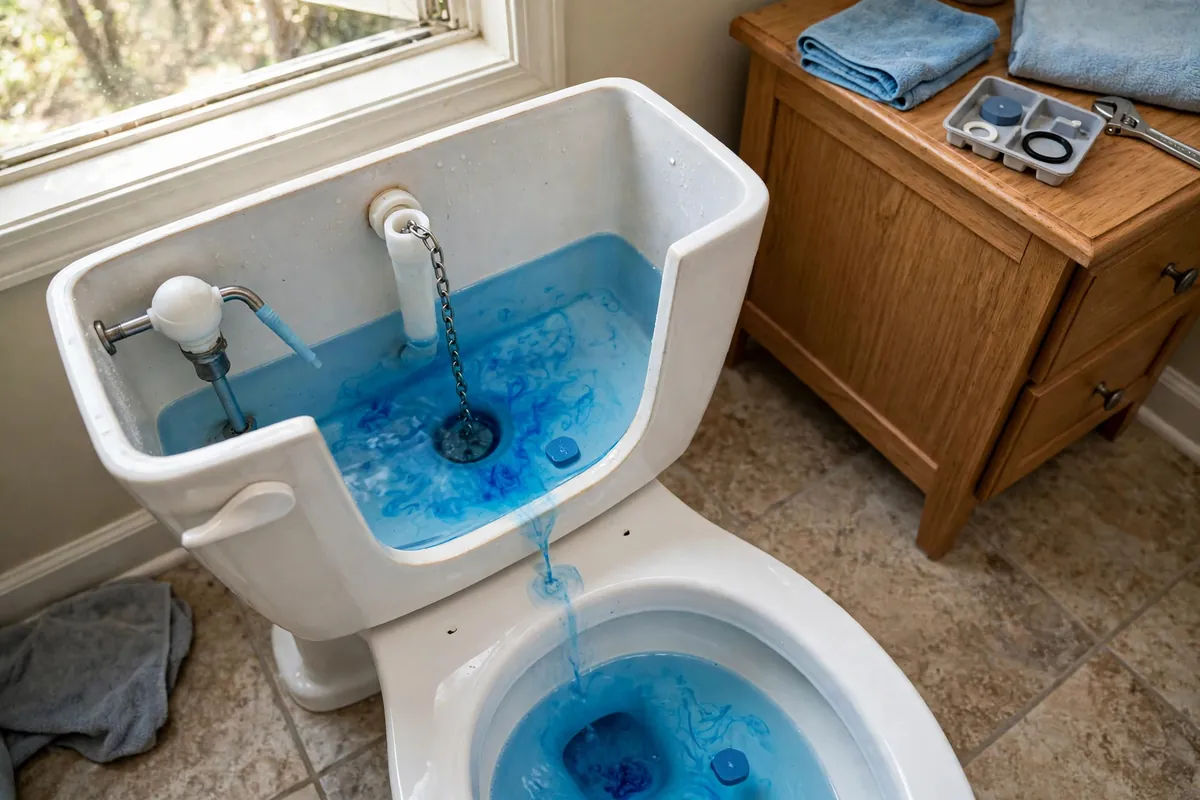
- Add dye to the tank. Squeeze several drops of food coloring into the tank water — enough to color it distinctly. Dark colors like blue or green show up best.
- Wait 20–30 minutes without flushing or using the toilet.
- Check the bowl. Look at the water in the bowl (not the tank). If color has appeared in the bowl, the flapper is leaking tank water through — confirmed.
- Repeat for every toilet in the house, even ones that seem fine. Silent means silent.
Standard food coloring is fine for a dye test — it will not stain the porcelain or harm the septic or sewer system. Avoid anything with bleach or harsh chemicals; plain food coloring is all you need.
A positive test on any toilet means that toilet has been leaking since the flapper started failing — which may be months.
Other Toilet Checks Worth Doing
The dye test catches flapper leaks. These checks catch the rest:
- The water level. With the tank lid off, the water should sit below the top of the overflow tube — usually marked by a fill line inside the tank. Water flowing into the overflow tube means the fill valve is set too high or failing.
- The phantom flush. If a toilet occasionally refills on its own with a brief rush of water, the flapper is leaking fast enough to drop the tank level periodically.
- The jiggle test. If jiggling the handle stops a running toilet, the flapper or chain is the problem — the handle is just a symptom.
- Listen at night. In a quiet house, stand near each toilet and listen for hissing or trickling from the tank. Night is the best time because the house is silent. If you hear a faint hiss that stops when you lift the tank lid and gently press down on the flapper, you have found your leak — the pressure of your finger is doing what the worn flapper cannot.
- Check the supply line and base. Feel the supply hose and look around the toilet base for dampness — external leaks are rarer but worth ruling out while you are there.
Fixes A Homeowner Can Handle
Toilet tank components are inexpensive, widely available, and designed to be homeowner-serviceable. These are safe DIY territory:
- Replacing the flapper. Turn off the toilet's supply valve, flush to empty the tank, unhook the old flapper, and clip on a matching new one. Match the size and type to your toilet — take the old flapper to the store.
- Adjusting the fill valve. If water runs into the overflow tube, lower the fill valve's float so the tank stops filling below the overflow top. Most valves adjust with a simple clip or screw.
- Replacing the fill valve. Slightly more involved but still a standard homeowner repair: shut off the supply, drain the tank, unscrew the old valve, and install the new one per its instructions.
- Adjusting the chain. A chain with no slack holds the flapper slightly open; a chain that is too long tangles under it. Aim for about half an inch of slack.
If the tank has a crack, the shutoff valve will not turn or it leaks when you touch it, or the toilet rocks on its base — stop and call a plumber. Cracked porcelain, failed shutoffs, and loose closet bolts are not DIY fixes.
When To Call A Professional
Most toilet leaks end at the flapper or fill valve. Call a plumber when:
| Symptom | Likely Cause And Who Fixes It |
|---|---|
| Dye appears in the bowl | Worn flapper — safe DIY replacement |
| Water flowing into the overflow tube | Fill valve set too high or failing — DIY adjustment or replacement |
| Toilet refills by itself periodically | Flapper leak — DIY flapper replacement |
| Handle must be jiggled to stop running | Chain or flapper issue — DIY |
| Supply valve will not turn or drips | Failed shutoff valve — call a plumber |
| Water around the toilet base | Wax ring or base seal — call a plumber |
| Tank itself is cracked | Cracked porcelain — call a plumber; do not use the toilet |
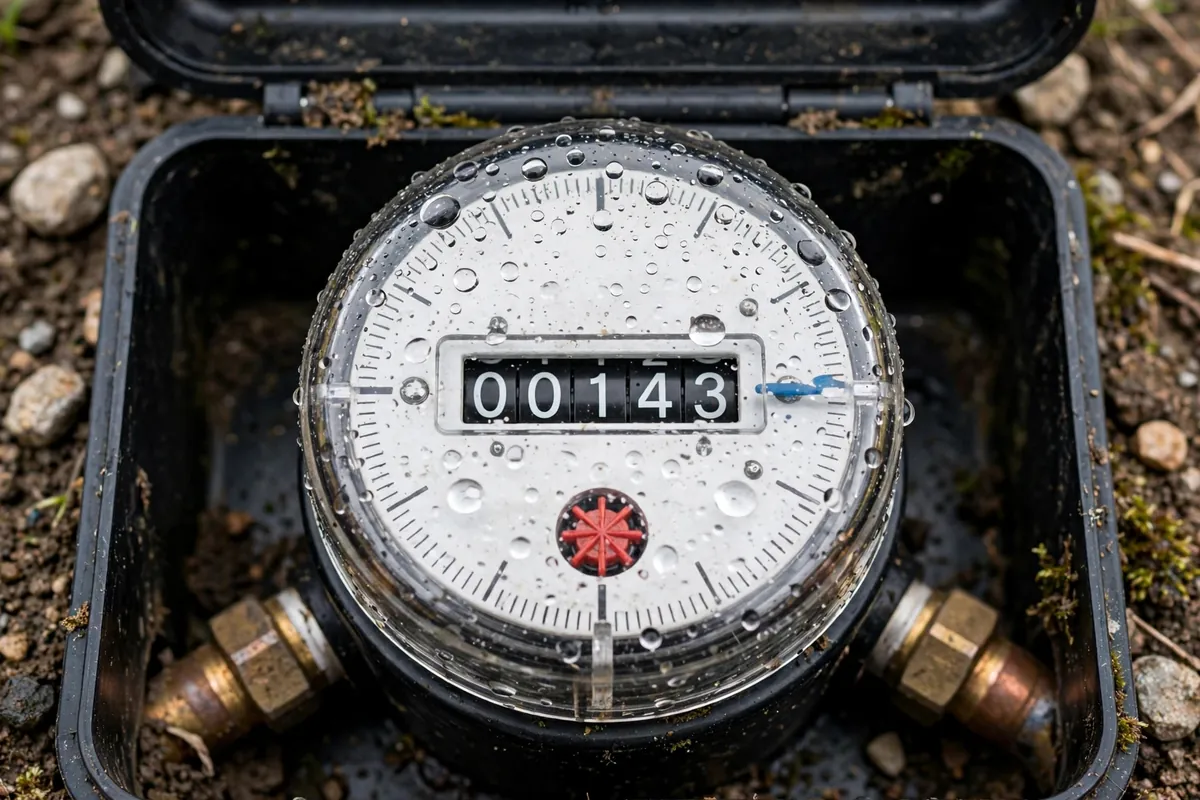
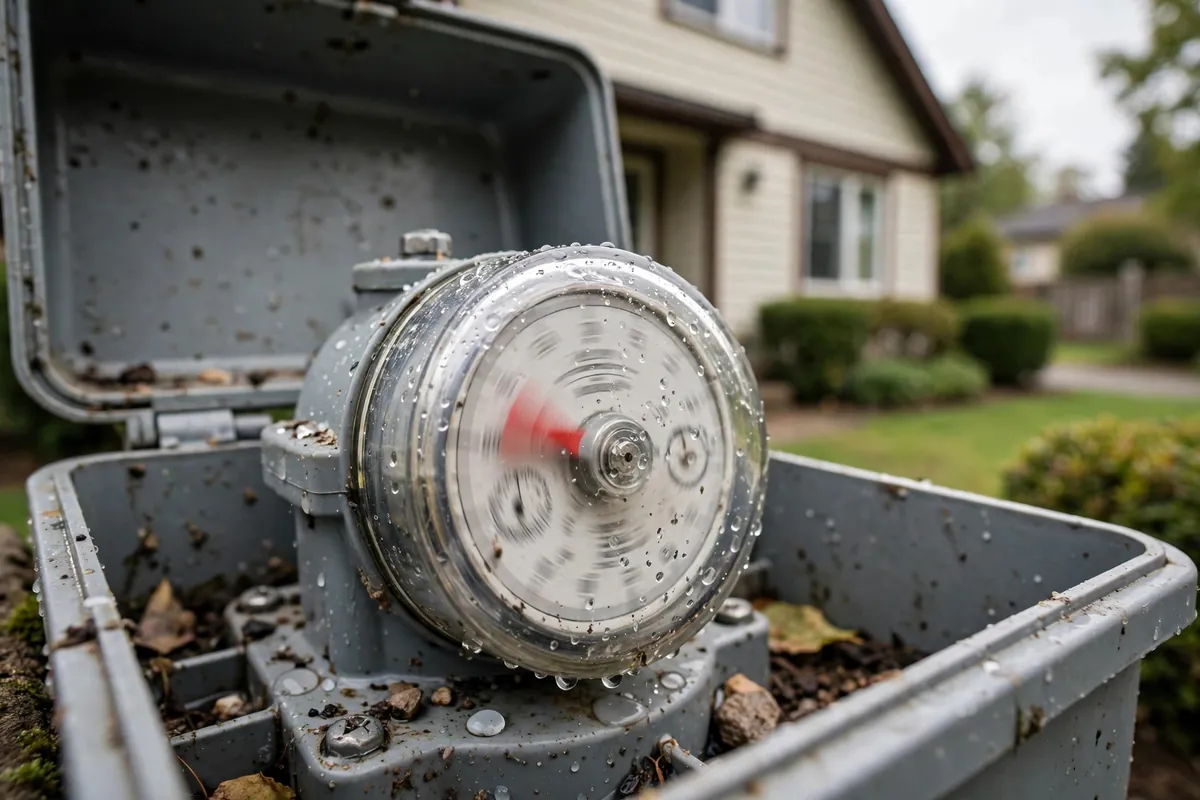
If you have dye-tested every toilet, fixed or ruled out each one, and the water meter still moves with everything off, the leak is elsewhere in the system — and that is when to call for professional leak detection or a dedicated water meter leak investigation. For urgent situations — water on the floor, a meter spinning fast — our emergency leak service answers 24/7. We find hidden leaks in walls, slabs, and underground lines across Leesburg, 24/7 at (352) 703-8206.