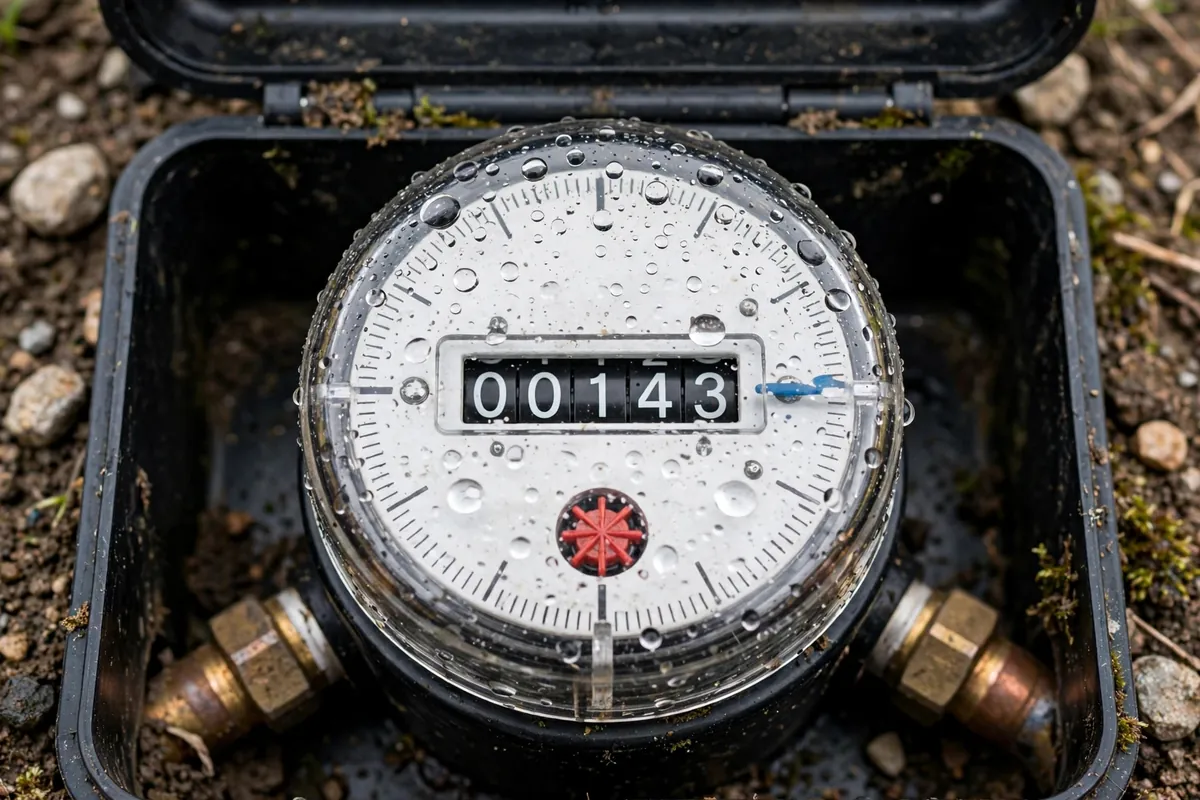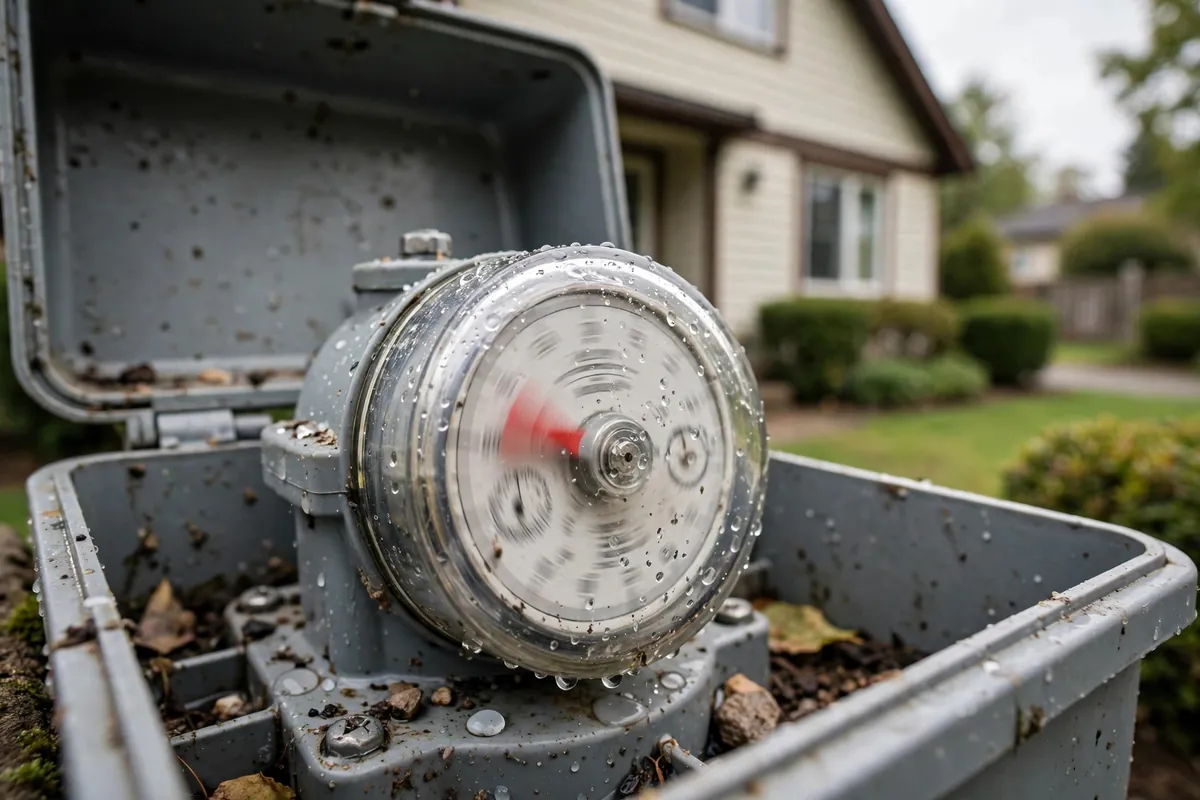
A water meter only moves when water passes through it. So when every tap is off, the dishwasher is quiet, the irrigation is idle — and the meter is still turning — the conclusion is unavoidable: water is leaving your plumbing somewhere you cannot see.
This is actually one of the most useful diagnostic situations a homeowner can encounter, because a spinning meter converts a vague worry ("is something leaking?") into a confirmed fact. What follows is how to verify the reading, rule out the innocent explanations, and figure out roughly where the water is going.
A meter that spins with everything off means water is flowing through your plumbing to somewhere unseen — a leak, a running toilet, or an appliance cycling. First double-check that truly everything is off, including ice makers, softeners, irrigation, and pool autofills. If the meter still moves, shut off the house main valve: if the meter stops, the leak is inside; if it keeps spinning, it is in the service line between the meter and the house.
In This Article
What To Do Right Now
Before concluding you have a leak, rule out the things that legitimately use water on their own:
- Confirm "everything off" really means everything. Walk the house: taps, dishwasher, washing machine, showers, hose bibs. Then check the sneaky ones — ice maker, water softener (it may be in a regeneration cycle), whole-house humidifier, and any reverse-osmosis system.
- Check the irrigation controller. Make sure no zone is running and no manual override is active. Irrigation is the most common "everything was off except..." discovery.
- Check the pool autofill. If the pool level is low, the autofill may be running to catch up — which is water legitimately flowing, not a leak.
- Re-check the meter. Watch the leak indicator or sweep hand for a full minute. Note whether it spins steadily, creeps slowly, or moves in bursts.
- Run the house-valve isolation test. Shut off the main valve where water enters the house, then watch the meter again. If it stops, the flow is inside your plumbing. If it continues, the flow is in the buried service line between the meter and the house — the pipe our water service line leak service specializes in locating.
- Write down what you found. Steady vs. intermittent, fast vs. slow, inside vs. outside — a technician will ask exactly this.
If the meter spins fast, or the isolation test points to the service line, do not spend days investigating further — that water is going into the ground right now.
Call now if the meter is spinning fast enough to watch, or shutting off the house valve does not stop it — a fast or service-line leak is losing significant water and needs professional locating right away.
Signs To Look For
A spinning meter is the headline sign, but the supporting clues point to the source:
- How the meter moves. A steady spin suggests a constant leak like a running toilet or broken pipe. Bursts of movement suggest something cycling — a softener, an autofill, or a toilet that runs periodically.
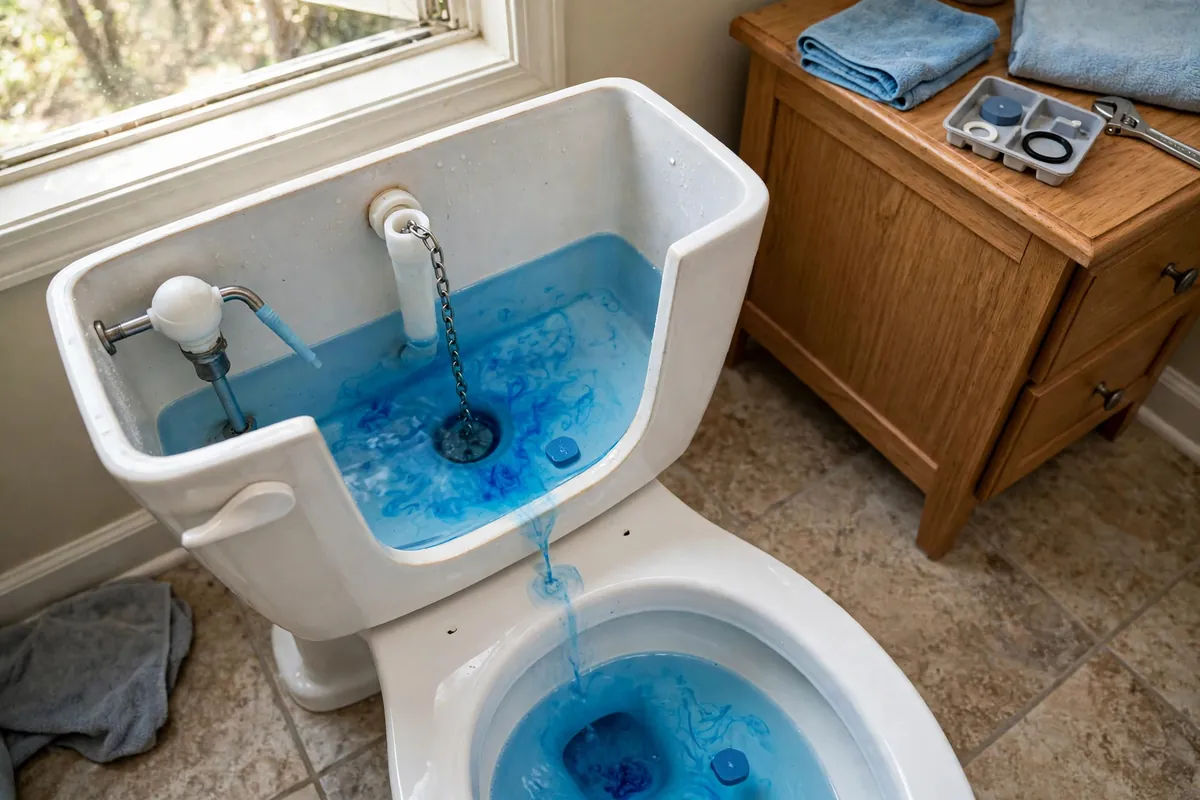
- Toilets making noise unprompted. Phantom refills are a classic cause; run the toilet dye test on every toilet.
- Soggy ground between the meter and the house. Points to a service line leak — the buried pipe that the isolation test implicates.
- The sound of running water. Hissing behind walls or under floors when nothing is on.
- Warm spots on the floor. A hot-water slab leak announces itself through the flooring.
- A water bill that confirms it. If the bill also jumped, see how to check for a leak behind a high bill — the two findings corroborate each other.
Common Causes
When the meter moves with everything off, the short list of explanations is:
- A running toilet. The most common cause, and the easiest to check. A failed flapper lets tank water drain into the bowl continuously, and the fill valve keeps replacing it — a perfect loop the meter faithfully records.
- Irrigation running unnoticed. A stuck zone valve or a controller glitch can run a zone for hours, especially overnight when nobody sees it.
- An appliance cycling. Water softeners regenerating, ice makers filling, RO systems flushing — all legitimate, all worth ruling out before assuming a leak.
- A pool autofill catching up. After splash-out or evaporation, the autofill runs until the level is restored.
- A service line break. The buried line from the meter to the house can crack and drain water into the soil invisibly. This is the cause when the house-valve isolation test does not stop the meter.
- A slab or wall leak. Pressurized plumbing inside the structure leaking continuously — often with secondary signs like warm floors or damp drywall.
- A water heater relief valve discharging. A faulty temperature-and-pressure valve can send water down a drain line where it is never seen.
What Happens If You Wait
A spinning meter is water — and money — flowing out in real time:
- The bill keeps growing. Unlike a one-time spike, a continuous flow charges you every single day until it stops. Our high-bill leak detection routinely traces these costs back to their source.
- Underground leaks erode soil. A service line break washes soil away around the pipe, which can undermine walkways, driveways, and the pipe itself.
- Indoor leaks damage the structure. Water inside walls or under the slab causes rot, mold, and flooring damage that dwarfs the cost of the water.
- Small breaks widen. A cracked pipe under constant pressure does not stabilize — vibration and water hammer work it looser over time.
- Running toilets burn out fill valves. A valve cycling endlessly wears out faster, turning a flapper job into a valve job too.
The meter gave you an early warning most leaks never provide. Use it.
Safe DIY Checks Vs When To Call A Professional
The spinning-meter investigation is one of the most DIY-friendly diagnostics in plumbing — right up to the point where the leak is confirmed but hidden:
| Safe DIY Steps | Call A Professional |
|---|---|
| Verify every tap, appliance, and irrigation zone is truly off | Pinpoint a leak inside a wall or under the slab |
| Run the house-valve isolation test to locate the leak inside vs. outside | Pressure-test the buried service line |
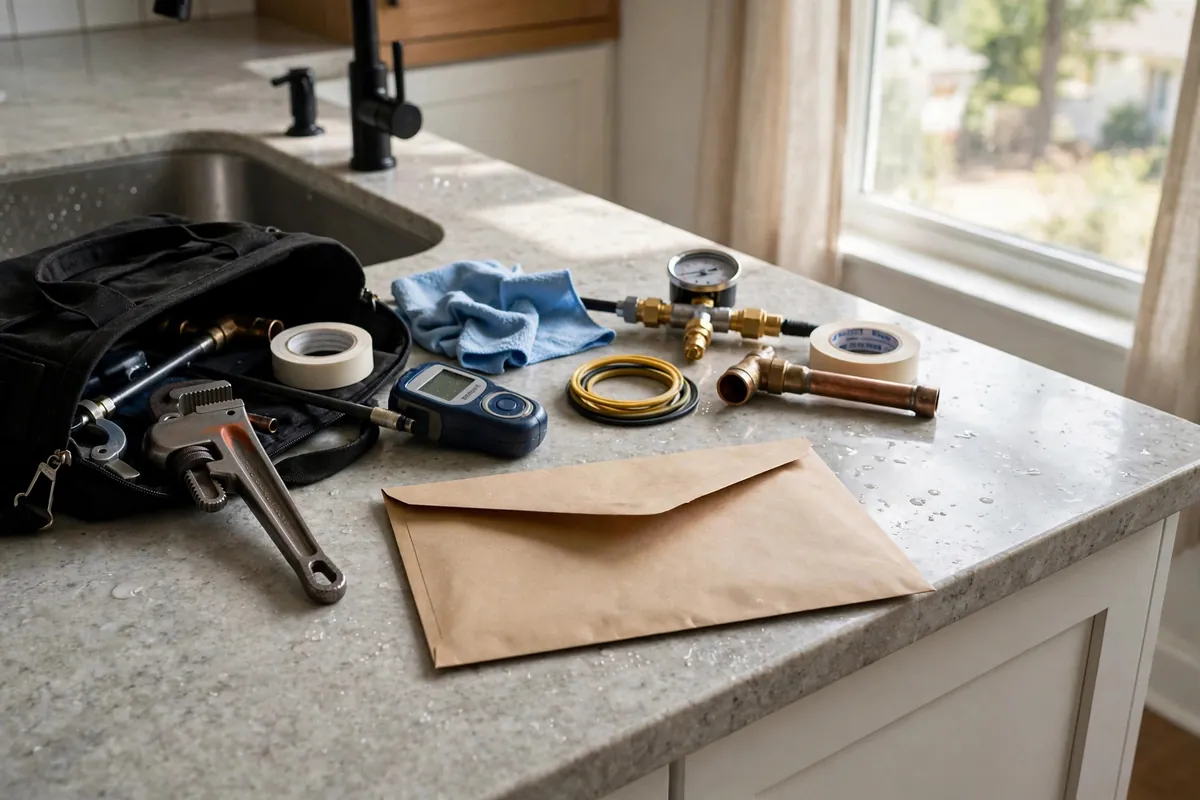
| Dye-test all toilets | Excavate or repair a broken service line |
| Walk the meter-to-house path looking for soggy ground | Use acoustic equipment to find a pressurized leak's exact point |
| Record the meter's behavior (steady, bursting, fast, slow) | Diagnose the cause when the meter spins but nothing is visible |
Shutting off the house main valve is a safe, standard homeowner action and the single most informative test you can run. Beyond that, locating a confirmed hidden leak takes acoustic equipment and pressure testing — which is exactly what a detection visit provides.
How The Service Fixes It
A spinning meter with no visible source is precisely the case our water meter leak investigation service is built for. We verify your meter readings, complete the isolation testing, then locate the flow: acoustic listening for pressurized leaks in walls and slabs, pressure testing for the service line, and systematic checks of toilets, irrigation, and appliances until the water's destination is found.
With 19 years of leak work and 30–45 minute arrival, 24/7, you will not wait days while the meter keeps turning. If the flow is fast or the isolation test points underground, our emergency meter leak service responds any time. Call (352) 703-8206.