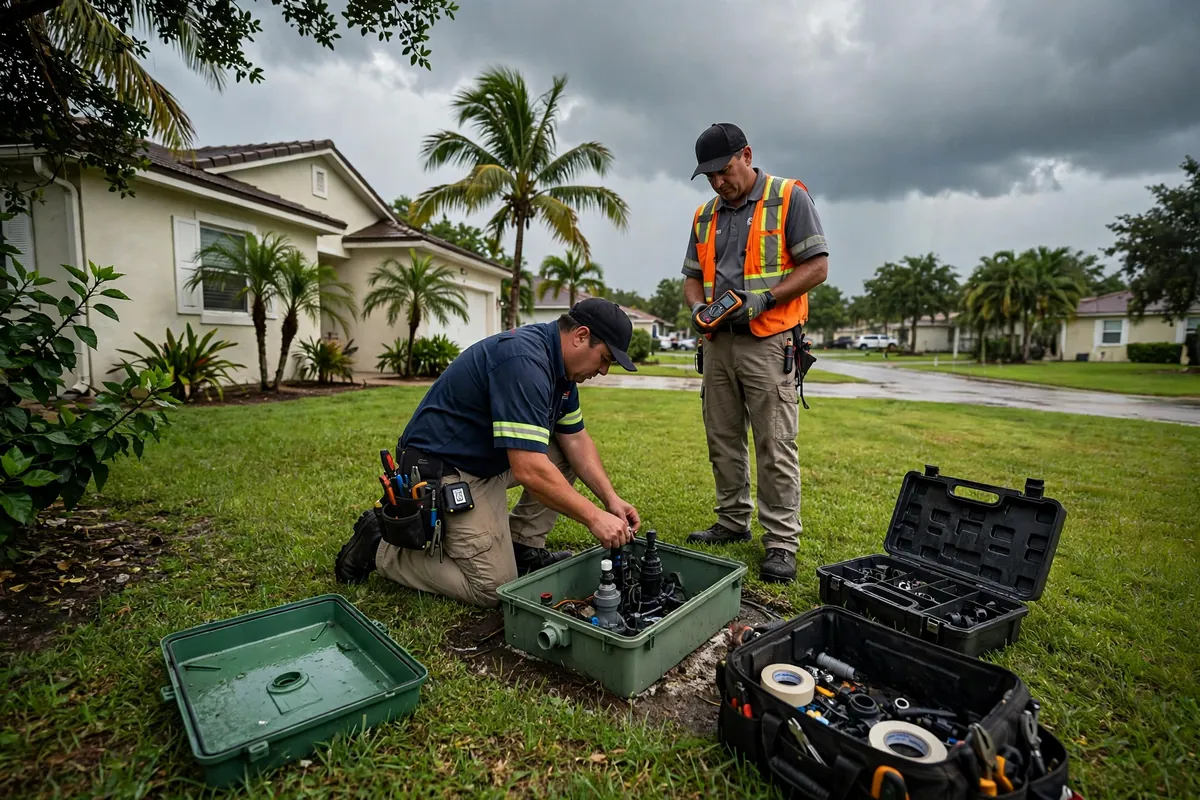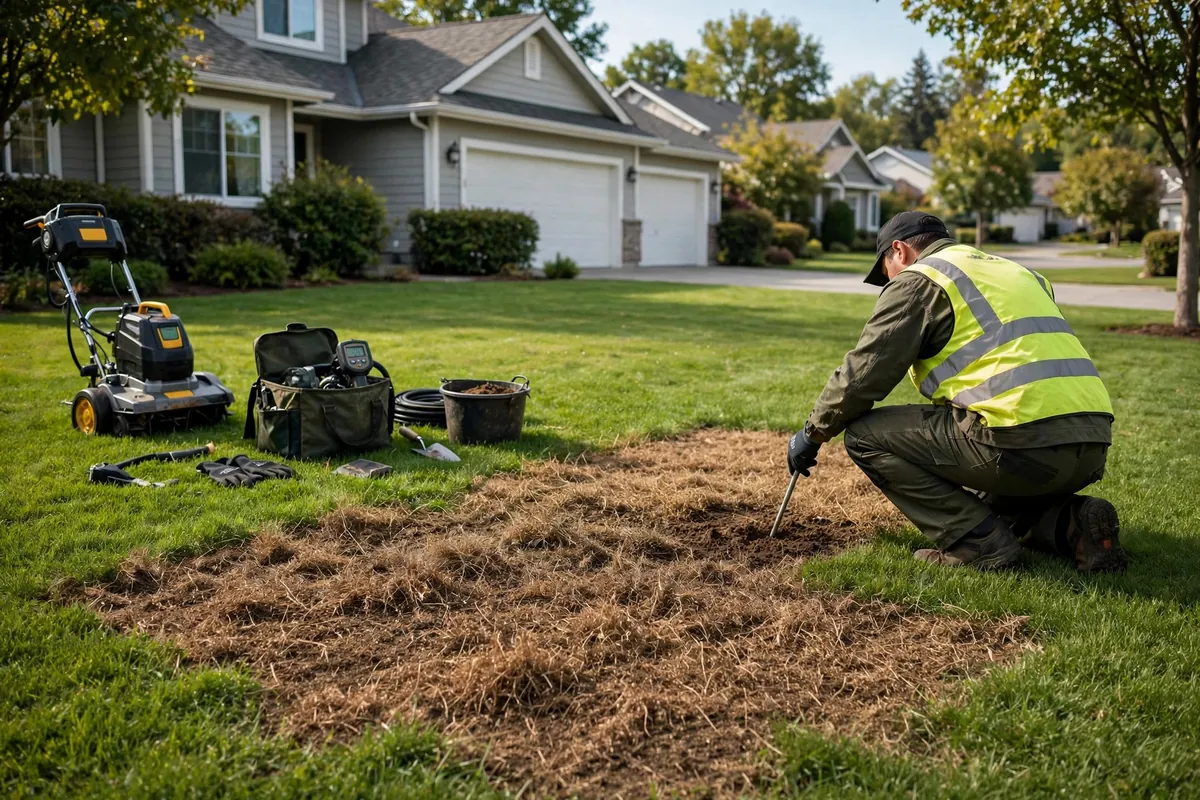
Standing water in your yard after rain is normal for a few hours — but water that lingers for days, pools against your foundation, or appears during light rain is telling you a drain is not doing its job. Yard drains are simple systems: grates and pipes that carry stormwater away from your home. They clog the way any drain clogs — with leaves, sediment, mulch, and roots — and when they do, water goes where it wants instead of where it should. This guide covers the types of yard drains around Leesburg homes, how clogs form, how professional yard drain cleaning clears them, and how to tell a clog from a bigger problem.
In This Article
What Yard Drains Actually Do
Every yard is a watershed in miniature. Rain hits the roof, the driveway, and the lawn, and all of it has to go somewhere. Without drains, that somewhere is wherever gravity takes it — often against your foundation, into low spots in the lawn, or across walkways.
Yard drains give water a planned path. Grates and inlets collect surface water, underground pipes carry it across the property, and the line discharges at a planned exit — the street gutter, a drainage swale, or a dry well. Downspout drains do the same job for roof water, carrying it from the gutter outlets away from the foundation instead of dumping it at the base of the wall.
The system only works if water can move freely through every part of it. A single clogged grate, a single sediment-choked pipe section, and the water backs up behind the blockage — surfacing as the standing puddle you are looking at. Yard drain problems are almost never mysterious; they are hydraulic. Water cannot get through, so it goes around.
The Main Types Of Yard Drains
Leesburg yards typically use a combination of these drain types, each handling a different water situation:
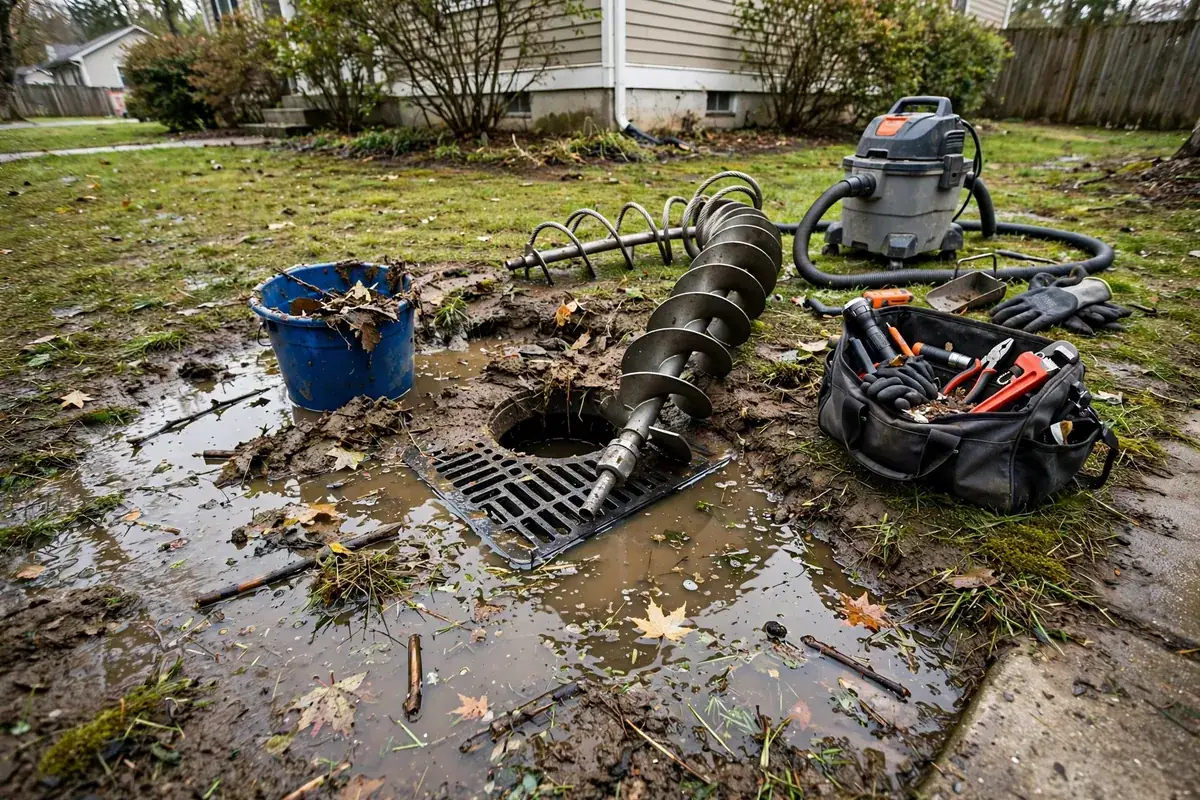
- Catch basins. The square or round grates you see set into lawns and near driveways. Surface water flows in through the grate, and a sump at the bottom traps sediment before water exits through the outlet pipe. They are the workhorses of yard drainage — and the first place to check when water stands.
- Channel drains. Long, narrow grates set across driveways, patios, and walkways. They intercept sheet flow — the thin layer of water running across hard surfaces — before it reaches the garage or the house.
- French drains. Perforated pipe buried in a gravel-filled trench, usually wrapped in filter fabric. Groundwater seeps in along the pipe's length rather than entering at a single grate. They handle subsurface water — the kind that keeps a low area soggy for days.
- Area drains. Small grates in planting beds and low spots, piped to the main drainage line. They catch the water that collects where the yard dips.
- Downspout drains. Underground pipes connected to gutter downspouts, carrying roof water away from the foundation. Invisible from the surface, which means their clogs go unnoticed the longest.
Most properties combine several types into one network — catch basins and area drains feeding a main line that also carries the downspouts to the street. A clog anywhere in that network backs water up through every inlet upstream of it. Our article on French drains and yard drain basics goes deeper on how these systems fit together.
How Yard Drain Clogs Form
Yard drain clogs build the way river deltas build — gradually, from everything the water carries.
Leaves and organic debris are the most common ingredient. They wash into grates during every rain, mat together when wet, and form a layer that water struggles to pass. A single heavy leaf-drop season can choke a catch basin that was flowing fine in summer.
Sediment and silt do the quieter damage. Every rain carries fine soil particles into the system, and they settle in the pipes wherever flow slows — at bends, at joints, in any low spot in the line. Over years, sediment builds a layer along the pipe bottom that narrows the channel. The drain still works in light rain but cannot handle volume, which is why the problem appears during heavy storms first.
Mulch and grass clippings wash off beds and lawns into nearby grates, adding bulk to the debris mat. Landscaping that looks tidy on the surface can be feeding the drain steadily.
Roots find the moisture inside drain lines and enter through joints and the perforations in French drain pipe. Once inside, they grow into a fibrous mass that traps everything else flowing past — the clog that keeps coming back is often a root clog.
Florida's climate accelerates all of this. Frequent heavy rains wash more debris into the system, year-round growing seasons mean year-round leaf and root activity, and sandy soil contributes fine sediment with every storm. A yard drain in Leesburg simply collects debris faster than the same drain would in a drier, colder climate.
Catch basins have a sump — a deep section below the outlet pipe — specifically to trap sediment before it enters the line. When the sump fills to the outlet level, sediment starts passing into the pipe. Scooping the sump clean is basic maintenance, not a repair.
How Professionals Clean Yard Drains
Professional yard drain cleaning is a progression: start gentle, escalate only as needed, and verify the result. Here is the sequence:
Debris removal comes first. Grates get lifted, and the catch basin sump gets scooped or vacuumed clean. This alone restores flow in a large share of slow drains — the clog was at the inlet, not in the pipe. Any competent cleaning starts here rather than with machinery.
Flushing follows for lines with sediment buildup. A high-volume water flush pushes loose silt and debris through to the discharge point. This handles maintenance-level accumulation — the kind that slows a drain without fully blocking it.
Hydro jetting is the workhorse for real clogs. A high-pressure water jet, fed through the line on a hose, scours the pipe walls and breaks apart compacted debris mats, root masses, and sediment layers. The jet head is designed to pull itself through the line while blasting backward, so it cleans the full circumference of the pipe as it goes. This is what clears the clogs a garden hose cannot touch.
Cabling (snaking) handles specific obstructions — a root mass at one joint, a collapsed section's debris, a foreign object in the line. The rotating cable breaks through the blockage mechanically, and is often followed by jetting to flush the remnants clear.
Camera inspection closes the loop. After cleaning, a camera run through the line confirms the pipe is clear and — critically — shows whether the problem was only debris or something structural: a separated joint, a crushed section, root intrusion that will return. Cleaning a broken pipe restores flow temporarily; the camera tells you whether a repair is the real answer.
Our yard drain cleaning service follows this full sequence, so you get a verified result rather than a hopeful one.
When Standing Water Points To Something Else
Not every puddle is a clogged drain. Before assuming the worst — or the simplest — check these alternatives:
- Grading problems. If the yard slopes toward the house or has a low spot with no drain inlet at all, water pools because it has nowhere to go — not because a drain is blocked. No amount of cleaning fixes missing drainage.
- Overwhelmed systems. During truly heavy rain, even clean drains can lag behind the volume. Water that appears during the downpour but clears within a day is usually a capacity story, not a clog story.
- Broken or separated pipes. A crushed or separated drain line causes the same standing water as a clog, in the same locations. The difference only shows on camera — which is why cleaning that does not restore flow always leads to an inspection.
- High water table. In low-lying areas after extended wet periods, groundwater itself rises to the surface. French drains can only lower it so far; the water is not coming from your pipes at all.
- Irrigation overwatering. A stuck irrigation valve or a broken head can keep an area soggy that looks exactly like a drainage failure. If the wet spot never dries even in dry weather, check the irrigation before the drains — our guide to irrigation leak signs covers the symptoms.
The practical rule: if the grates are clear, the lines have been cleaned, and water still stands — stop cleaning and start diagnosing. The camera, the grading, and the irrigation schedule will identify which of these alternatives you are dealing with.
Keeping Your Yard Drains Flowing
Yard drains reward a little routine attention far more than they punish neglect — until they punish it all at once. A simple maintenance rhythm keeps them working:
Check grates after heavy leaf drop and after major storms; a minute of scooping prevents the mat from forming. Keep mulch and soil from washing into beds' area drains — a small edging lip around the grate helps. Watch your downspout outlets during rain: water should flow freely from the discharge point, and a downspout that gurgles or backs up is telling you its underground line needs attention.
Note how your yard behaves in heavy rain once a year. The puddles that appear and clear within a day are normal. New puddles, or familiar ones that linger longer than they used to, are the early warning — the drain is slowing down, and a cleaning now is simpler than a backup later. Florida's rainy season is the annual stress test; our guide to preparing for the rainy season covers the full pre-season checklist.
When cleaning is needed beyond the grate, our yard drain cleaning service handles the full job — debris removal, jetting, and camera verification — and our emergency yard drain page covers flooding situations that cannot wait. Call (352) 703-8206 — we pick up 24/7 and usually get to Leesburg addresses within 30–45 minutes.