Your water service line is the pipe that carries water from the street meter to your house, and when it leaks, the evidence appears between those two points: a soggy strip in the yard, grass that grows greener along the pipe's path, water pressure that drops for no reason, a bill that climbs while your habits stay the same, or the sound of hissing near the meter box. The meter test confirms it — shut everything off, and a spinning meter means water is escaping on your side.
Service line leaks are easy to misread because the symptoms overlap with other yard leaks and irrigation problems. This guide sorts out which signs point specifically to the service line, what to do right now, and how professionals find buried leaks without digging up the yard.
The main signs of a leaking water service line are a soggy or sunken strip in the yard between the meter and the house, unusually green grass along the pipe path, unexplained low water pressure, a rising water bill, hissing at the meter box, and water pooling in the meter box itself. A meter that spins with everything off confirms a leak on your side.
In This Article
What To Do Right Now
A suspected service line leak is a yard problem, not an indoor emergency — but prompt action still limits the damage:
- Run the meter test. Turn off every tap, appliance, and irrigation zone, then watch the water meter. If it moves, water is leaving your system. Note how fast — a slow creep versus a rapid spin tells the professional how large the leak likely is.
- Walk the line path. Go from the meter box toward your house in a straight line, feeling for soft or sunken soil, looking for greener grass, and listening for hissing. Mark anything you find — flags, sticks, or photos all help the technician.
- Check the meter box itself. Lift the lid (carefully — insects and spiders like meter boxes in Florida). Standing water inside, a hissing sound, or mud around the fittings points to a leak at or near the meter.
- Rule out irrigation. Turn your sprinkler system off entirely for a day or two. If the soggy area dries, the irrigation was the culprit; if it persists, suspect the service line. This simple test saves many misdiagnoses.
- Shut the main valve if the leak is large. A racing meter or visibly pooling water justifies shutting off the main when water is not actively needed, until a professional arrives.
- Do not dig. The service line shares the ground with electrical, gas, and communications lines. Locating and exposing a buried water line is professional work — call 811-style utility locating before anyone puts a shovel in the ground.
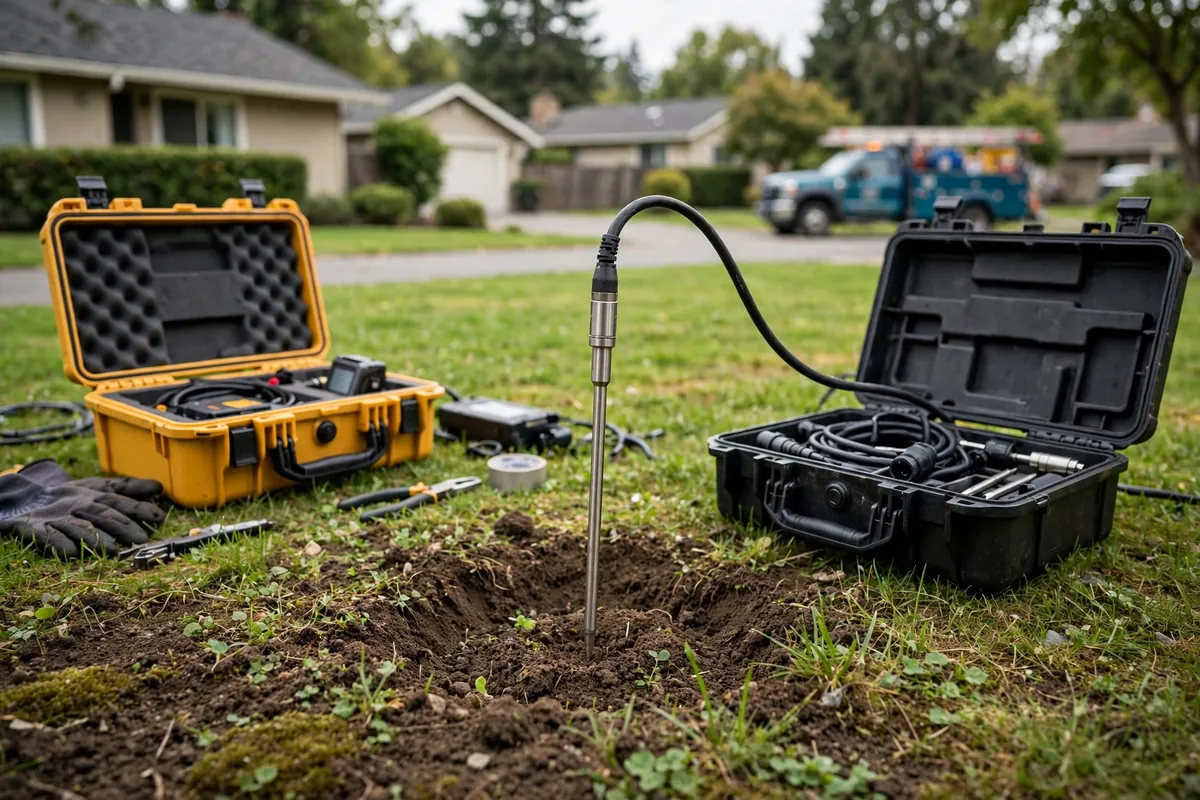
- Call a leak detection professional. A service line leak specialist traces the line, pinpoints the break with acoustic equipment, and marks it for a targeted repair.
If water is pooling in the yard, the meter is spinning rapidly, or a walkway is visibly sinking along the line path, call now — a large service line break erodes soil fast and the damage spreads while it runs.
Signs To Look For
Service line symptoms cluster along the pipe's underground path from the meter to the house:
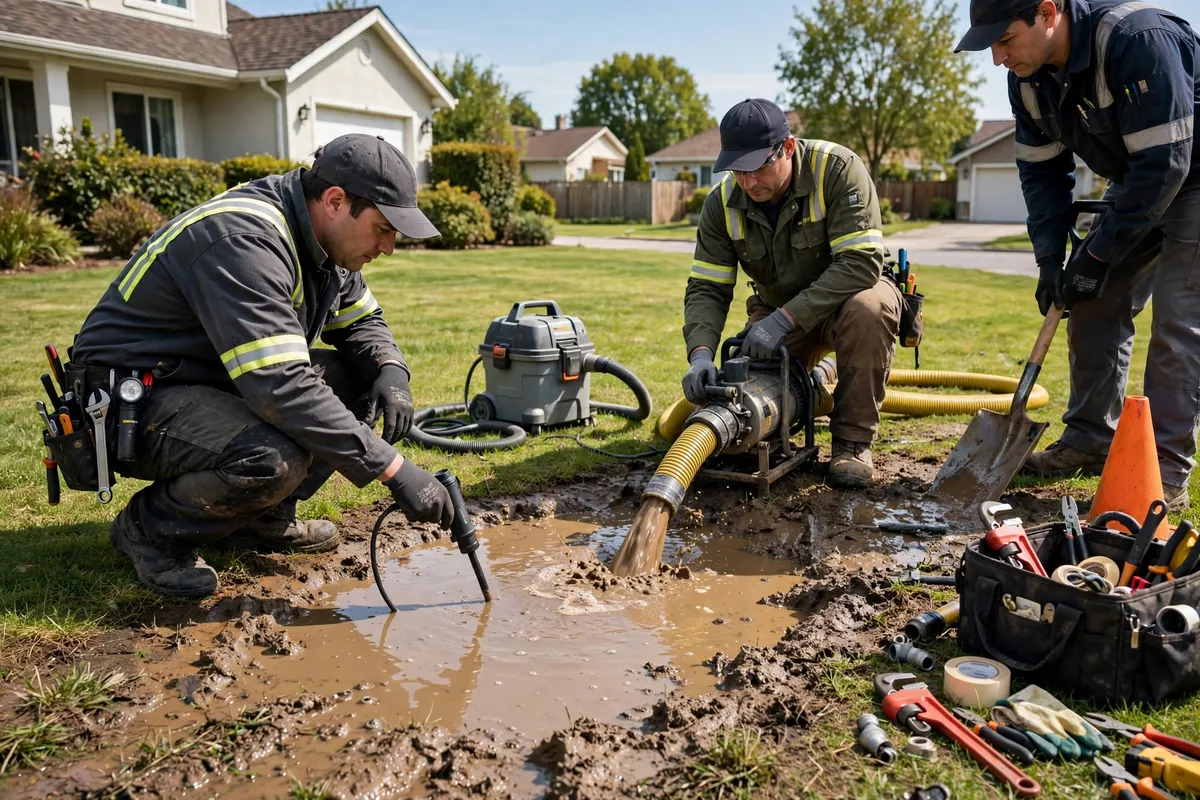
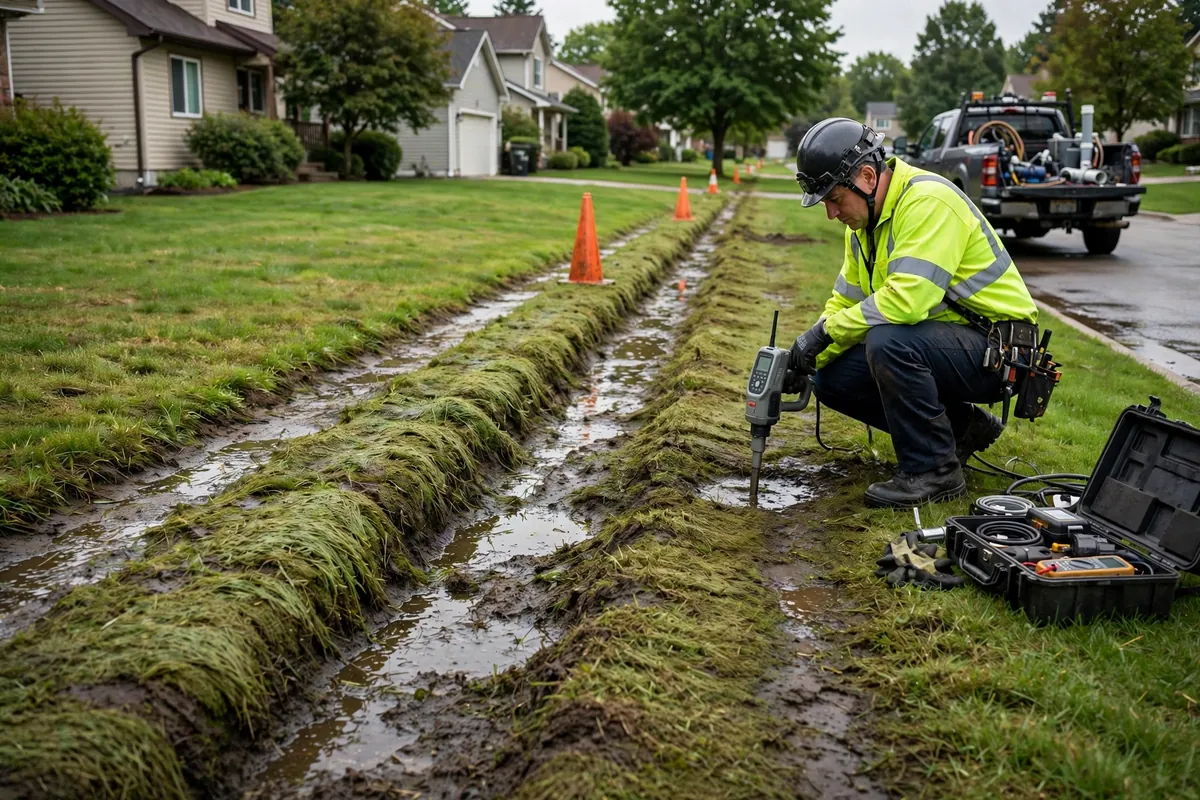
- A soggy or sunken strip in the yard. The classic sign — a band of soft, saturated soil following the line's route, sometimes with the ground visibly settling as soil washes away.
- Grass that grows greener along one line. A leaking pipe fertilizes its own path. One stripe of lush growth crossing an otherwise ordinary lawn is a leak map drawn in grass.
- Low water pressure throughout the house. The leak bleeds pressure before water reaches your fixtures. If pressure drops and the cause is not municipal work or a single clogged fixture, the service line is a prime suspect.
- A water bill that climbs without explanation. Like any hidden leak, a service line break runs around the clock and the charges accumulate every cycle.
- Hissing at the meter or along the path. Pressurized water escaping through a break vibrates the pipe. In a quiet yard you can sometimes hear it at the meter box or through the soil.
- Water in the meter box. The box should be dry or only slightly damp. Standing water, mud, or a hissing meter suggests a leak at the connection or in the adjacent line.
- Puddles against the foundation. If the leak sits near the house, water follows the trench to the foundation and pools there — worth distinguishing from roof runoff or AC condensate.
Any one of these deserves the meter test. Two or more deserve a professional visit.
Common Causes
Service lines fail for familiar buried-pipe reasons — corrosion, soil movement, roots, and age — with a few yard-specific twists:
- Corrosion of metal lines. Older galvanized or copper service lines corrode in soil, especially where soil chemistry is aggressive. Pinholes grow into splits under constant pressure.
- Ground movement. Florida's sandy soil shifts with wet and dry seasons, and tree roots, vehicle traffic over the line path, or nearby construction all flex buried pipe until joints separate or walls crack.
- Root intrusion at joints. Roots seek moisture and exploit any tiny opening at a joint or crack, wedging it wider over time. Our guide to tree roots and underground pipes covers this in depth.
- Freezing — rarely, but it happens. Florida's occasional hard cold snaps can freeze shallow-buried sections of service line, and the expansion splits the pipe. The leak then appears when things thaw.
- Age and material fatigue. Every pipe material has a service life, and decades of pressure cycles eventually find the weakest point — usually a fitting.
What Happens If You Wait
A service line leak is outdoors, which tempts homeowners to tolerate it. The costs of waiting are real all the same:
- The water bill keeps climbing. An outdoor leak runs twenty-four hours a day, and unlike an indoor leak you cannot see the waste — only the bill.
- Soil erodes along the trench. Escaping water washes fine soil away, leaving voids that collapse into sunken strips across the lawn.
- Hardscaping settles and cracks. Driveways, walkways, and patios over the leak path lose support and settle unevenly. Concrete repairs cost far more than the pipe repair would have.
- The leak grows. Pressurized water enlarges the break over time. A pinhole becomes a split; a split becomes a geyser when the weakened wall finally gives.
- Foundation exposure. Water pooling against the foundation from a nearby leak keeps the soil saturated, which is never what you want beside a slab.
None of this requires panic — it requires a phone call. Located early, a service line leak is a contained excavation and repair, not a landscaping disaster.
Safe DIY Checks Vs When To Call A Professional
The meter test and a careful yard walk are safe and genuinely useful. Everything involving digging is not:
| Check Or Task | DIY Or Professional |
|---|---|
| Water meter spin test with everything off | DIY — confirms a leak exists |
| Walking the line path for soggy soil or green stripes | DIY — mark what you find |
| Checking the meter box for standing water | DIY — lift the lid carefully |
| Turning irrigation off to rule it out | DIY — the simplest differential test |
| Tracing the exact line path underground | Professional — locating equipment |
| Pinpointing the break | Professional — acoustic detection |
| Excavating and repairing the line | Professional — buried utilities are a safety risk |
One caution that deserves emphasis: Florida yards hide electrical lines, gas lines, and communications cables in the same soil as your water line. Digging to 'take a look' risks striking something far more dangerous than a water pipe. Professional location starts with utility marking, not a shovel.
How The Service Fixes It
Professional service line work follows the same find-first discipline as slab work: the technician traces the line's path, confirms the leak with meter and pressure testing, and pinpoints the break with acoustic underground detection before any digging starts. The repair then opens one targeted excavation — not a trench across the yard.
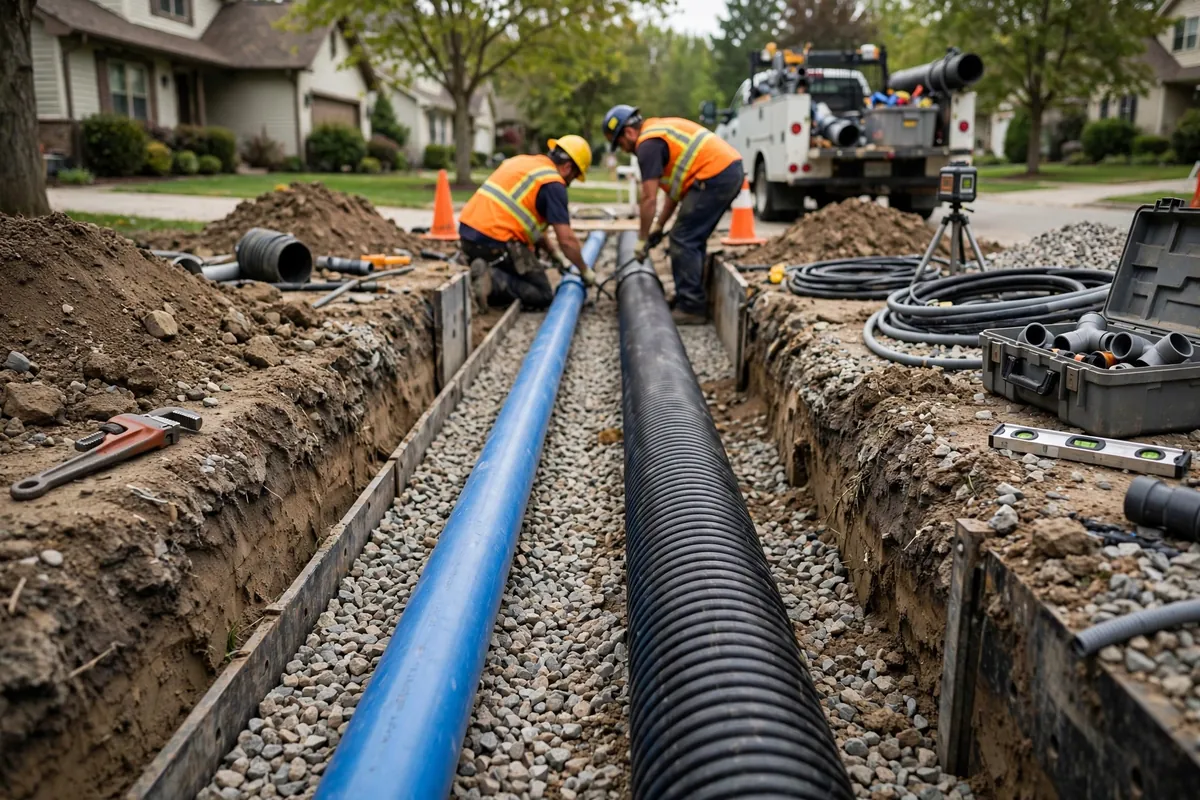
Depending on the pipe's age and condition, the fix is either a section replacement at the break or a full line replacement from meter to house. When the old line shows its age throughout, replacement usually wins on total cost and future reliability.
Seeing the signs now? Our water service line leak service handles detection and repair, and emergency service is available around the clock if water is surfacing heavily or the meter is racing.