A soggy spot in the yard with no recent rain usually has an active source underground. The most common culprits are a leaking buried water line (a pressurized supply pipe seeping into the soil), a failing service line between the meter and the house, or — the innocent explanation — an irrigation problem overwatering one zone. Telling these apart is straightforward: irrigation wetness dries up when the system is off, while a leak-fed spot stays soggy no matter the weather, and the water meter test confirms a pressurized leak in minutes.
This guide walks through the signs, the simple tests that sort irrigation from plumbing, what to do right now, and how professionals pinpoint buried leaks without trenching your yard on a guess.
A persistently soggy yard spot is most often a buried water line leak, a service line leak, or an irrigation malfunction. Turn the irrigation off for two dry days: if the spot dries, it was the sprinklers; if it stays wet, suspect a pipe. A water meter that spins with everything off confirms a pressurized leak feeding the spot.
In This Article
What To Do Right Now
A soggy spot is a yard investigation, not an indoor emergency — work it methodically:
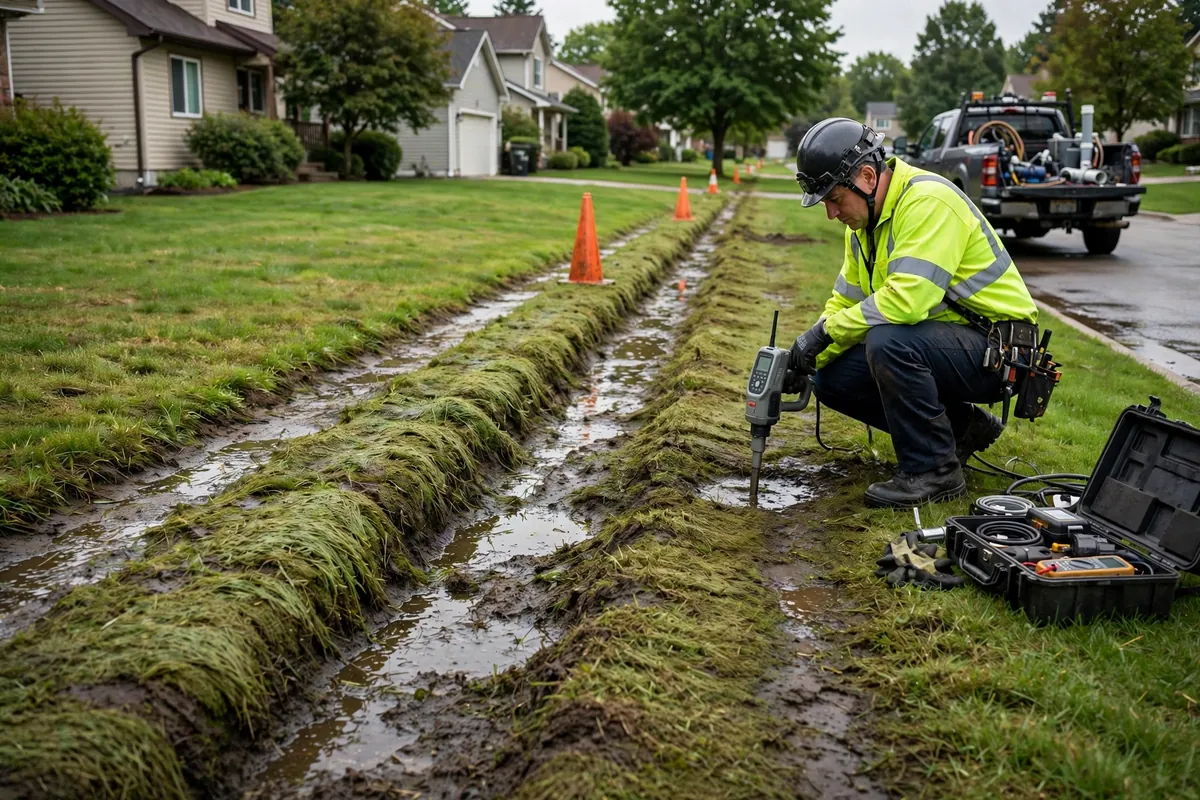
- Note the spot's character. Is it a defined patch or a long stripe? A stripe following a straight path suggests a pipe route; a round patch near a sprinkler head suggests irrigation. Photograph it.
- Smell it. A sulfur or sewage odor means a possible sewer issue — keep kids and pets away and treat it as the more urgent problem. No smell leans toward a clean water source.
- Turn off the entire irrigation system. Not just one zone — the whole system, for two to three dry days. This is the single most informative test you can run. With the system off, any remaining wetness points below ground, not at the sprinkler heads.
- Run the meter test. With everything off — including irrigation — watch the water meter. Movement means a pressurized leak is feeding the soggy spot.
- Probe gently with your foot, not a shovel. Feel whether the soil is merely damp or deeply saturated and spongy, and whether the ground is settling. Do not dig — buried utilities make amateur excavation dangerous.
- Keep traffic off the area. Vehicles and heavy foot traffic compact saturated soil and can collapse voids forming underneath. Rope it off if needed.
- Call a professional. If the spot persists with irrigation off, or the meter moves, a buried line leak specialist traces the pipe and pinpoints the break.
If water is actively surfacing, the ground is visibly sinking, or there is any sewage odor, call now — active erosion and wastewater exposure get worse every hour the leak runs.
Signs To Look For
Buried line leaks paint a recognizable picture in the yard:
- Wetness that ignores the weather. The defining sign. Rain puddles dry; leak puddles persist through dry spells because the supply never stops.
- A stripe or patch of unusually green grass. The leaking pipe fertilizes its own route — one lush band crossing the lawn maps the pipe for you.
- Spongy or sunken soil. Press your foot down: saturated soil feels soft and may visibly settle as water washes fine particles away. New depressions forming over weeks indicate ongoing erosion below.
- Water surfacing or bubbling. Larger breaks push water to the surface visibly, sometimes as a steady seep or an actual small spring in the lawn.
- Hissing from the ground. In a quiet yard, press your ear near the wettest point — pressurized escape sometimes transmits audibly through saturated soil.
- A climbing water bill. The service line version of this leak runs through the meter, so the bill climbs while your habits stay flat.
- Warmth in the wet soil. If the leaking line carries hot water (rare outdoors, but possible on pool or spa lines), the soggy patch may feel warm — a useful detail to report.
Common Causes
What breaks a buried yard line:
- Corrosion and age. Older metal service lines corrode in soil until pinholes open — the most common cause for lines with decades of service.
- Ground movement. Florida's sandy soil shifts with wet-dry cycles, and settling flexes rigid pipe until joints separate. The same soil forces that stress under-slab pipe work in the yard too.
- Root intrusion. Roots exploit any joint weakness and wedge it wider — our full guide to tree roots and underground pipes covers the mechanism.
- Physical damage. Fence posts, landscaping stakes, and previous digging nick or crush shallow lines. If the soggy stripe starts where someone recently dug, that is your prime suspect.
- Cold-snap freezing. Shallow irrigation laterals and exposed backflow preventers are the usual freeze victims in Florida; a split appears at the first thaw.
- High pressure. Excessive street pressure stresses every buried fitting year after year until the weakest one yields.
What Happens If You Wait
Outdoor leaks tempt benign neglect — the water just soaks in, right? The reality:
- Soil erosion accelerates. Continuous flow washes fine soil from around the pipe, creating voids. The surface settles, then sinks, then cracks any hardscaping above it.
- The break enlarges. Pressurized water erodes the break's edges over time. Small seeps become large ones; repair scope grows with them.
- Your bill funds the leak. Every gallon passes through the meter. A leak you cannot see still invoices you every month.
- Landscaping dies unevenly. Chronic saturation drowns roots in the wet zone while the leak's pressure can undermine nearby plantings — the yard degrades in patches.
- Mosquitoes move in. Standing water in Florida breeds mosquitoes fast. A persistent soggy spot becomes a pest problem on top of a plumbing problem.
- Roots join the problem. Constant saturation stresses nearby plantings, and stressed roots grow toward the leak — potentially turning a simple pipe break into a root-intrusion repair as well.
The encouraging counterpoint: buried yard leaks are among the most straightforward to fix once located — a targeted excavation, a section replacement, backfill, and the lawn recovers.
Before calling anyone, turn the whole irrigation system off for two dry days. This free test eliminates the most common false alarm and gives the professional a clean starting point if the spot persists.
Safe DIY Checks Vs When To Call A Professional
Yard diagnosis is very DIY-friendly up to the property line of excavation:
| Check Or Task | DIY Or Professional |
|---|---|
| Two-day irrigation shutoff test | DIY — the most informative free test |
| Water meter spin test | DIY — confirms pressurized leak |
| Observing, photographing, and smelling the spot | DIY — document everything |
| Feeling for spongy or settling soil | DIY — feet, never a shovel |
| Tracing the exact pipe route | Professional — electronic locators |
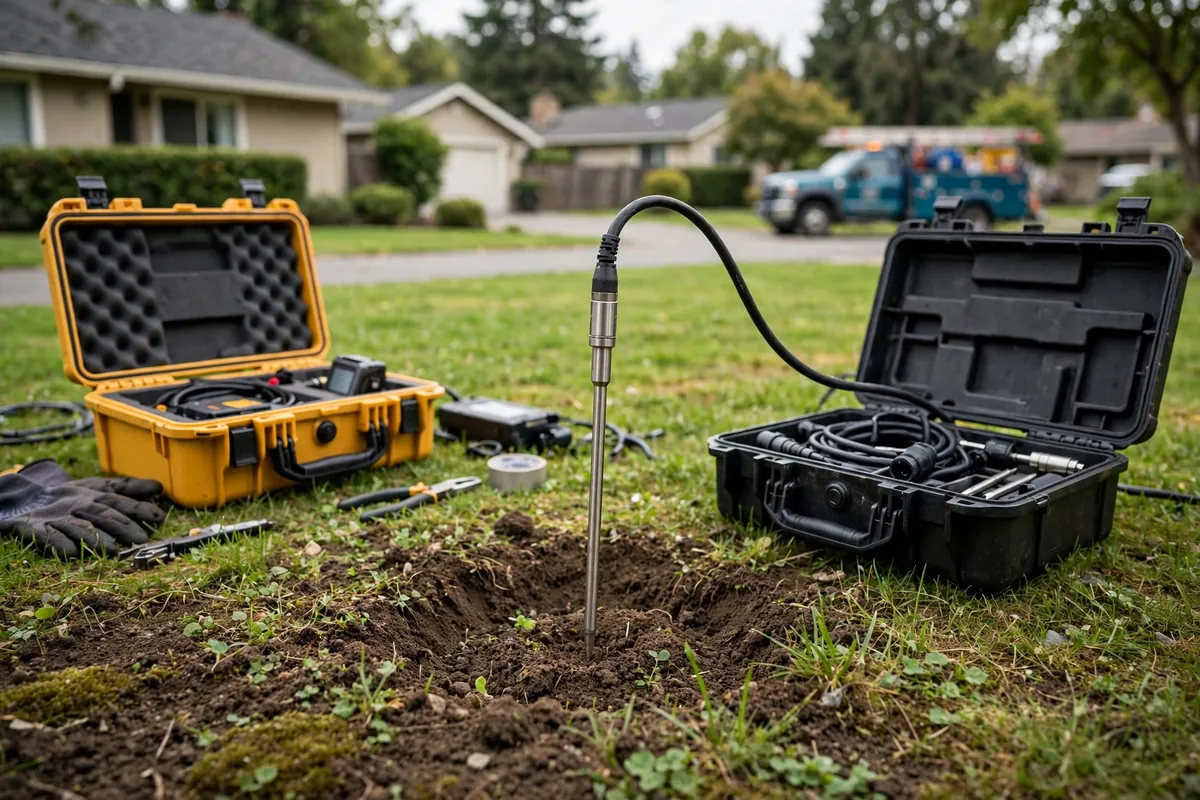
| Pinpointing the break underground | Professional — acoustic detection |
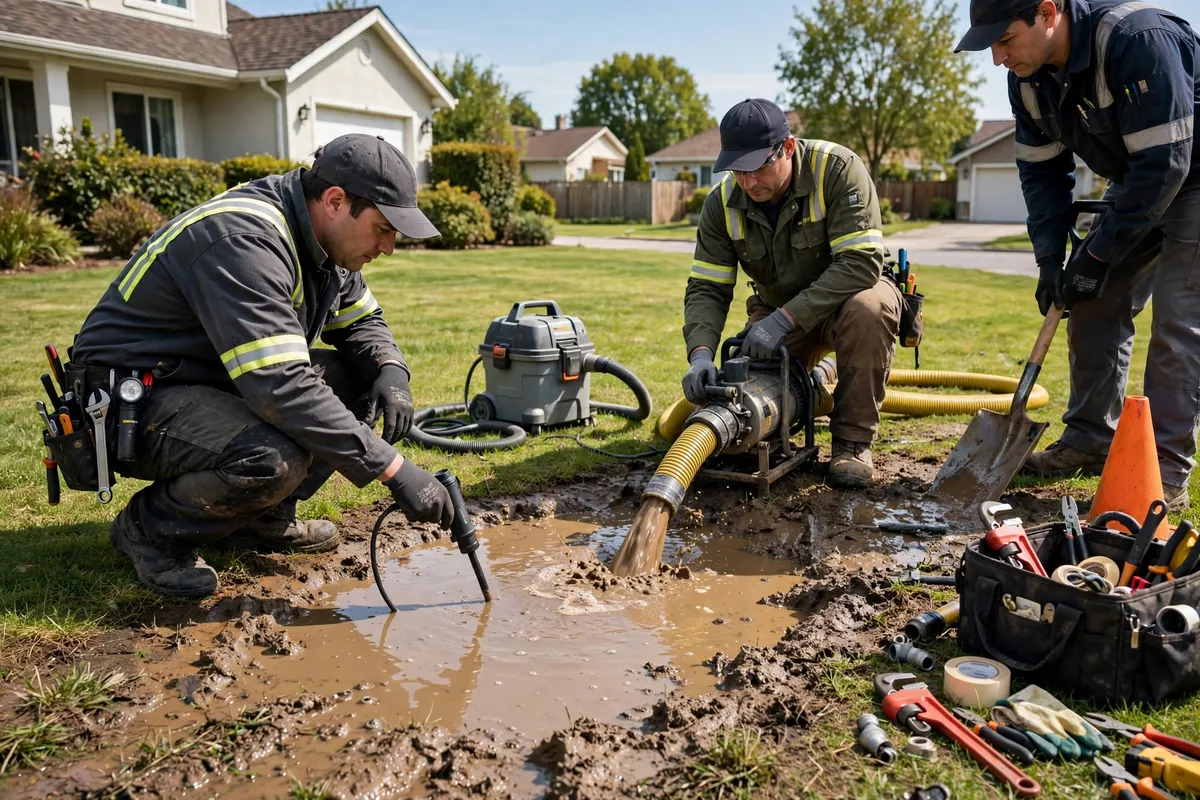
| Excavating and repairing the line | Professional — buried utilities, safety risk |
The irrigation shutoff test and the meter test together resolve most cases to a confident answer: sprinklers, supply leak, or neither. What they cannot do is mark the exact break point or expose the pipe safely — that is where professional underground detection takes over, with acoustic equipment and line locators that find the break before any digging starts.
How The Service Fixes It
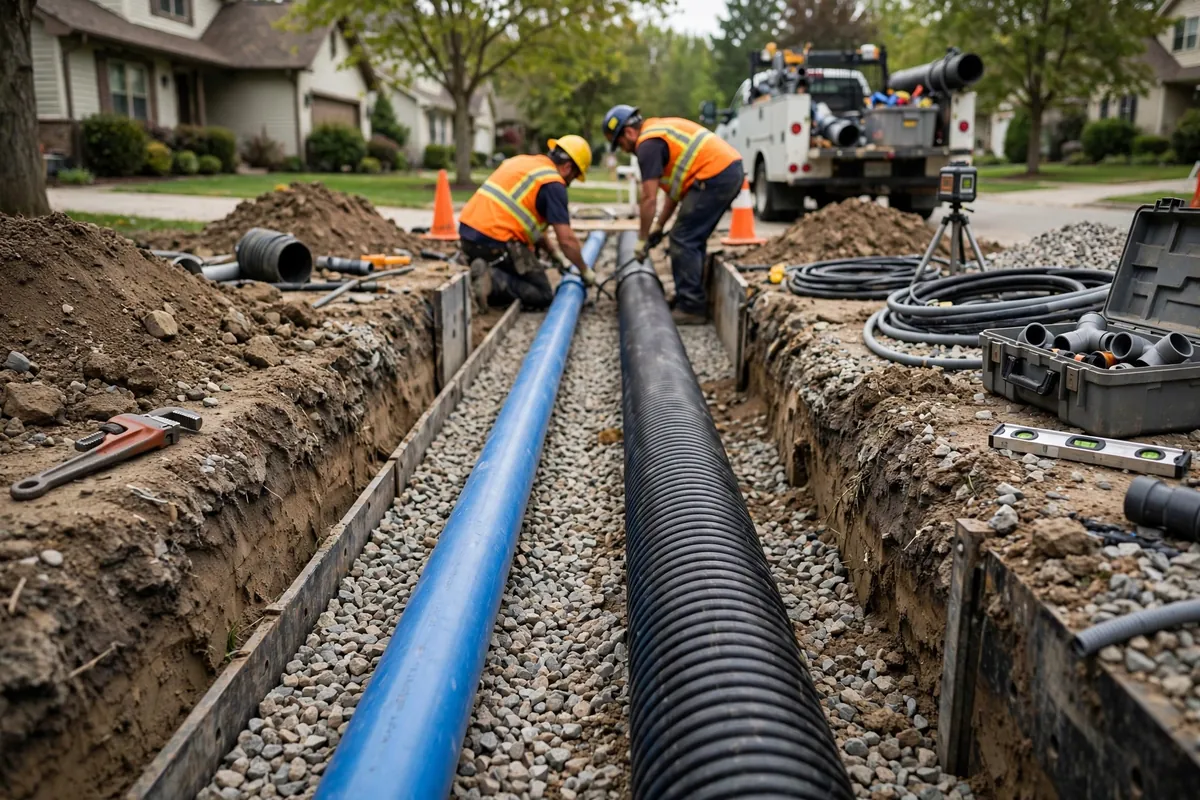
Professional buried-line work follows the find-first rule: the technician traces the pipe route with a locator, confirms the leak with meter and pressure testing, and pinpoints the break acoustically. The repair opens one controlled excavation at the mark — the pipe section is replaced, the trench is backfilled and compacted, and the surface is restored.
When the line's overall condition is poor — multiple weak joints, aging material throughout — replacement of the full run is often the better value than a patch. And where the pipe is a good candidate, trenchless repair methods can sometimes renew it without an open trench at all.
Soggy spot that will not dry? Our buried line leak service handles detection and repair, and emergency service runs around the clock when water is surfacing heavily or the ground is actively settling.